

The U.S. State Department has issued a renewed global caution for American citizens, alerting them to the rising conflicts, increasing security threats, attacks on diplomatic facilities, and unexpected airspace closures that are significantly disrupting international travel and complicating key global routes.
Subscribe for the latest news delivered directly to your inbox!
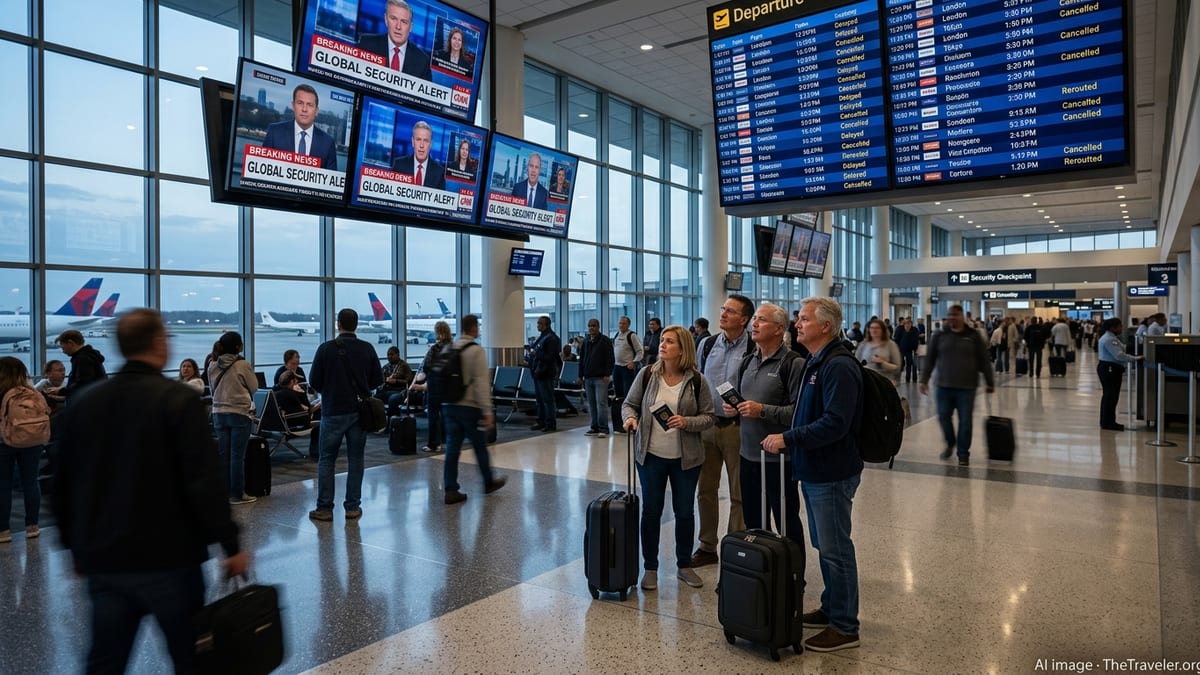
Worldwide Caution Highlights Elevated Global Risk Environment
Recent updates on the State Department’s advisory pages stress that U.S. citizens abroad should remain vigilant, closely monitor local conditions, and be ready for rapidly evolving security situations. This advisory follows U.S. combat operations in Iran that started in 2025, leading to regional escalations and expanding the risks for American travelers beyond the Middle East.
Authorities note that this caution is global and not tied to a specific threat. Rather, it reflects a broader climate in which U.S. citizens and facilities might experience increased risks of terrorism, politically motivated violence, wrongful detention, and civil unrest. Travelers are urged to check country-specific advisories, which range from general caution to “do not travel” warnings, based on local contexts.
This advisory is part of a multi-tiered system already identifying several regions as high-risk due to conflict, lawlessness, or state actions that restrict U.S. assistance to its citizens. Indicators like armed conflict, terrorism, civil unrest, kidnapping, and detention are becoming more frequent in country listings, with updates extending into early 2026.
Attacks on U.S. Diplomatic Posts Underscore Security Concerns
In the period leading up to this warning, numerous incidents involving American diplomatic facilities have heightened concerns about targeted violence. Reports indicate repeated assaults on U.S. installations in Iraq amid the ongoing conflict, with instances of rocket and drone attacks occurring near embassy compounds. Additionally, an assault on the U.S. consulate in Karachi in 2026 led to a temporary cessation of American diplomatic operations in Pakistan.
Recent years have also witnessed deadly confrontations near U.S. missions, such as an armed clash at the embassy complex in Haiti in late 2025 amidst significant gang violence and a political crisis. These incidents reflect a troubling trend where embassies, consulates, and American-affiliated sites frequently become focal points for unrest and violence.
Consequently, such events often result in restricted access, reduced public services, and, in some cases, the evacuation of non-essential personnel and their families. For instance, in early 2026, the State Department instructed nonemergency personnel to leave the embassy in Beirut due to rising tensions linked to the Iran conflict. Advisory notices related to these measures commonly urge U.S. citizens to rethink their presence in affected areas and to prepare for limited consular support during emergencies.
Airspace Closures and Reroutings Disrupt Global Flight Networks
In addition to ground-based security threats, air travel has become increasingly unstable. Reports from aviation authorities highlight a complex array of airspace closures and warnings regarding conflict zones stretching from the Middle East to South Asia and beyond. During a critical phase of the Iran conflict in 2025, several countries temporarily shut down parts of their airspace, necessitating significant adjustments for long-haul flights between Europe, Asia, and North America.
International aviation briefings indicate that airspace restrictions tied to crises are becoming a standard aspect of global traffic planning. Such limitations lead to longer routes, increased fuel consumption, and added operational challenges, even as overall flight volumes remain relatively stable. Airlines are often compelled to redesign routes, which may necessitate emergency refueling stops or total service suspensions for specific routes.
The disruption is not limited to overseas conflict zones. For example, in February 2026, the U.S. Federal Aviation Administration quickly imposed temporary flight restrictions over parts of Texas and New Mexico due to security concerns, effectively halting traffic at El Paso International Airport for several hours. This incident highlighted how abruptly airlines and travelers may be affected by local airspace closures, which can trigger extensive repercussions throughout wider travel networks.
Travelers Face Heightened Uncertainty and Planning Challenges
For travelers, the convergence of geopolitical tension, security incidents, and unpredictable airspace has translated into a more uncertain travel experience from booking to arrival. Public travel guidance emphasizes that demonstrations, strikes, or attacks can occur with little warning, resulting in airport lockdowns, curfews, or sudden movement restrictions. In some areas, border crossings and evacuation routes may repeatedly open and close, creating narrow and unpredictable opportunities for entering or departing.
Travel industry reports suggest that airlines are adopting a more cautious approach to routes that traverse or approach active conflict zones, frequently canceling flights days or weeks ahead, while other times, making last-minute decisions based on new air mission guidance. Passengers on multi-leg journeys are particularly susceptible to missed connections and unexpected layovers when a single closure or security concern disrupts global schedules.
Insurance companies and risk consultants are adjusting their coverage options regarding war, terrorism, and political risks, stressing the importance of flexible tickets and contingency planning. However, information available to consumers remains inconsistent. Passengers may receive nothing more than abrupt text alerts or airport announcements during security disruptions, often leaving them to arrange onward travel or accommodations in unfamiliar situations.
What the Worldwide Caution Means for Future International Trips
While the worldwide caution does not prohibit American citizens from traveling, it signals a long-term trend towards a more fragile and fragmented global mobility landscape. Statements from the State Department indicate that heightened vigilance may be a continual expectation as conflicts like the one in Iran persist, regional rivalries intensify, and non-state actors target symbols associated with the United States.
Experts note that worldwide cautions have historically been rare and are typically issued during periods when the U.S. government perceives a broad and diffuse risk rather than a limited emergency. The recurrence of these alerts since 2022 and 2023, including the current one related to the Iran conflict, suggests that an ongoing cycle of elevated risk may now be the norm for American travelers.
For individuals planning international trips in 2026 and beyond, the latest advisory highlights the value of monitoring country-specific advisories right up to the departure date, understanding local protest dynamics, and remaining prepared for potential alterations in routes over or near conflict zones. Although many destinations remain open and accessible, the overarching message is that international travel now comes with a higher likelihood of disruption, and American citizens abroad must be ready to adapt swiftly to deteriorating security conditions.



