

The Greek island of Skiathos is emerging as a frontrunner in inclusive travel, introducing a new tourism program specifically designed for individuals on the autism spectrum. This initiative aims to make the island more accessible, predictable, and inviting for neurodivergent visitors and their families.
Subscribe for the latest updates!
From Accessible Beaches to Autism-Friendly Initiatives
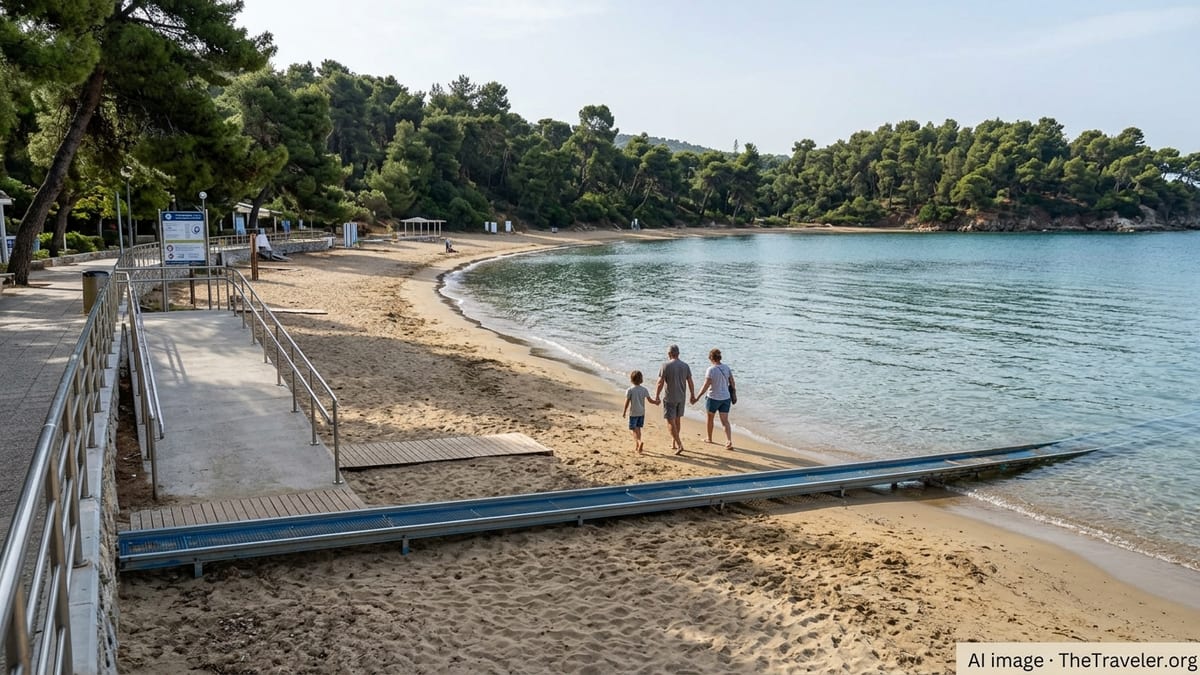
Skiathos has already established itself as one of Greece’s most accessible islands, marked by significant investments in barrier-free infrastructure, inclusive public transport, and autonomous sea-access facilities at popular beaches. The UN Tourism has recognized the island as a model for accessible tourism, showcasing features like Seatrac-equipped beaches, an adapted trail at Koukounaries, and a modern bus system for travelers with mobility challenges.
Building on this foundation, local officials are expanding their focus towards cognitive and sensory accessibility, aiming to establish Skiathos as Greece’s first “autism-friendly island.” The initiative emphasizes that accessibility is not only a human-rights issue but also a strategic move to attract visitors who seek quieter environments, clear information, and consistent support during their stays.
This new program is part of a national discussion on inclusive tourism in Greece, which has recently aimed to enhance both visitor access and job opportunities for individuals on the autism spectrum. Skiathos stands out as a pilot destination, utilizing its manageable size and established infrastructure to demonstrate what an autism-friendly travel experience can entail.
Structured Support for Neurodivergent Travelers
The initiative includes practical tools designed to alleviate uncertainty and sensory stress for autistic visitors. These tools provide clear pre-arrival information about key transit points, guidance on peak times, noise levels, and potential sensory triggers across the island’s main attractions and beaches.
The program promotes predictable routines and environments. Plans publicly available detail collaborative efforts with local businesses to ensure that staff are equipped to accommodate guests who may communicate differently, need additional processing time, or prefer quieter settings and simpler check-in procedures. Visual aids, calm spaces, and flexible dining arrangements are among the strategies implemented to assist families in managing routine changes.
Additonally, the island’s existing accessible pathways and beach facilities are being reformulated to cater to a wider array of needs. Current trails and waterfront areas, already adapted for physical accessibility, are now being detailed from an autism-inclusive perspective, providing information on gradients, surfaces, shade, and expected crowd levels for better planning.
Training, Partnerships, and Employment Opportunities
Skiathos’ efforts toward autism inclusion align with a broader shift in Greek tourism policy favoring specialized training and employment for neurodivergent individuals. National-level initiatives launched in late 2025 aim to support skills development and job placements for those on the autism spectrum within the tourism and hospitality sectors, with collaboration among research institutions, NGOs, and significant industry players.
These national programs focus on practical skill-building, on-the-job support, and employer training, targeting stable long-term positions rather than temporary roles. As a prominent tourist destination, Skiathos is poised to gain from this initiative by integrating staff trained in autism awareness into hotels, restaurants, transport services, and cultural attractions.
Local tourism stakeholders are increasingly engaging with these developments, recognizing autism inclusion as a vital aspect of overall quality enhancement. Training in communication, sensory-responsive design, and crisis management is being framed as a means to improve services for all guests, including those with hidden disabilities, rather than merely a specialized offering.
Recognition on the Global Accessible Tourism Stage
The recent autism-centered initiatives follow Skiathos’ international recognition as a model of accessible tourism. The UN Tourism’s compilation of best practices in accessible destinations features Skiathos among a select group of global locations that have effectively combined infrastructural improvements with community awareness initiatives, reinforcing its image as a pioneer for “tourism for all.”
Skiathos has leveraged this recognition to refine its positioning in world markets. Instead of solely depending on its famous beaches and nightlife, it promotes itself as a destination where travelers with disabilities and their families can expect considerate design, transparent information, and a cohesive accessibility strategy from arrival to departure.
This global spotlight is also emphasizing autism inclusion as a competitive advantage. By taking early action in this area, Skiathos aims to stand out among other Aegean islands, attracting visitors who may otherwise consider larger resorts or specialized autism-friendly complexes in the Mediterranean.
What an Autism-Friendly Holiday in Skiathos Could Look Like
For travelers and families, the evolving program in Skiathos is designed to create more predictable and less stressful holiday experiences. An autism-aware arrival could involve clearer signage at the port and airport, staff trained in alternative communication methods, and information about quieter transfer times to accommodations.
On the beaches, enhancements to existing accessibility features are expected to include sensory-related guidance regarding crowd sizes, typical noise levels, and the availability of shaded, calmer areas. For many autistic travelers, this type of detailed information is as crucial as ramps or lifts, allowing them to select times and spaces that align with their sensory preferences.
In town, hotels and guesthouses participating in the initiative are working towards consistent room layouts, clearer signage, and optional aids like visual schedules or simple social stories explaining local customs and daily routines. Restaurants are encouraged to establish quiet corners, minimize abrupt sensory changes like loud music, and allow guests to review menus and layouts in advance.
While the initiative is still in progress and not every service may be fully autism-adapted yet, Skiathos’ direction is clear. With recognition from international tourism organizations and alignment with national inclusion policies, the island is positioning itself as a valuable case study for how a mainstream Mediterranean destination can thoughtfully welcome autistic travelers.



