

Hundreds of passengers at Minneapolis Saint Paul International Airport faced hours of disruption on Saturday as a wave of delays and cancellations affected flights operated by Delta Air Lines, Southwest, SkyWest, Endeavor Air and other carriers, snarling travel to major US destinations including Los Angeles, Denver and Nashville.
Get the latest news straight to your inbox!
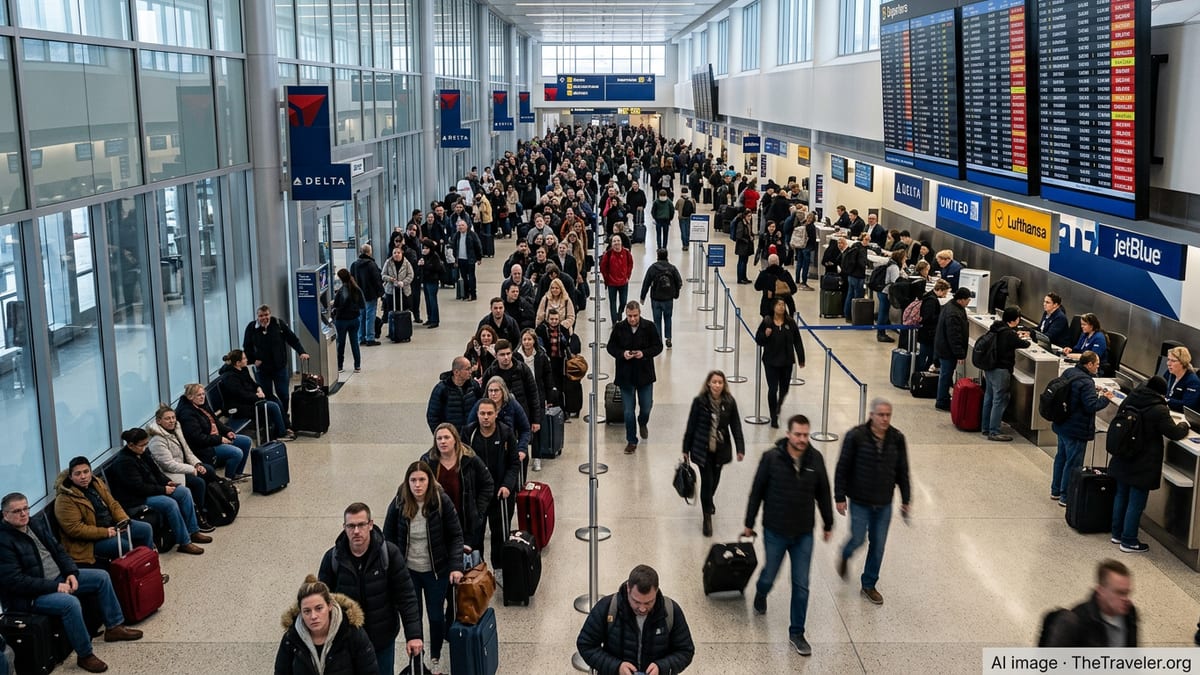
Dozens of Delays and Cancellations Ripple Across Key Routes
Publicly available flight tracking boards for Minneapolis Saint Paul International Airport on Saturday showed around 70 delayed departures and at least 10 cancellations, affecting a mix of mainline and regional services. The disruption hit a range of US routes, with several services to hubs such as Los Angeles, Denver and Nashville facing extended waits at the gate or being removed from the schedule altogether.
Delta Air Lines, the dominant carrier at the airport, appeared among the most affected, alongside low cost and regional operators including Southwest, SkyWest and Endeavor Air. Regional affiliates operating under major airline brands were particularly exposed, with cancellation patterns consistent with previous disruption events in which smaller aircraft and feeder routes are often the first to be trimmed to stabilise schedules.
Information from past operational disruptions suggests that once delays begin to stack up at a major hub, the impact can spread quickly across the national network. Even a limited number of cancellations in Minneapolis can complicate aircraft rotations and crew assignments on later services, prompting rolling schedule changes throughout the day.
Passengers connecting through Minneapolis to onward flights reported missed connections or the prospect of overnight stays as they attempted to rebook onto later departures. With multiple large carriers affected at the same time, available seats on alternative itineraries were limited, particularly on popular westbound and sunbelt routes.
Delta, Southwest and Regional Partners at the Center of the Turmoil
Delta Air Lines and its regional partners SkyWest and Endeavor Air together account for a significant share of operations at Minneapolis Saint Paul International Airport, a status reflected in recent planning and financial documents for the hub. When schedule irregularities emerge, these linked networks can experience compounding effects as aircraft and crews move through multiple cities in a single operating day.
Southwest Airlines, which also runs a substantial domestic network through Minneapolis, has faced its own recent operational strains across the United States, as highlighted by earlier coverage of extended delay waves at other airports. When staffing constraints, high summer demand and weather or airspace restrictions coincide, carriers with dense, point to point schedules can find it harder to recover quickly once large numbers of flights begin running late.
Regional airlines such as SkyWest and Endeavor Air are especially vulnerable when conditions tighten. Industry analysis and previous disruption episodes show that regional flights are more likely to be cancelled ahead of larger mainline services, in part because they serve smaller markets and operate with more limited spare capacity. This dynamic appeared to be reflected once again in Saturday’s pattern of cancellations involving feeder routes and shorter haul connections.
Because many regional flights carry the same branding as their mainline partners, passengers often experience these cancellations as part of a broader airline wide problem, even when the underlying operations are handled by a separate company under contract.
Knock on Effects for Travelers Bound for Los Angeles, Denver and Nashville
Minneapolis Saint Paul serves as a central connecting point for passengers traveling between the Upper Midwest and major US cities such as Los Angeles, Denver and Nashville. Delays on these routes can therefore affect not only local origin and destination traffic, but also large numbers of through passengers who rely on tight connections to reach the West Coast and southern states.
Data from past scheduling patterns at the airport indicates that flights to Los Angeles and Denver typically operate several times per day on a mix of mainline and regional aircraft. When one or more of those departures is delayed or cancelled, rebooking options can quickly narrow, especially on peak summer weekends when cabins are already near capacity.
Travelers heading to Nashville face similar constraints. While the route is served by multiple airlines, much of the capacity is focused into specific morning and evening waves. Cancellations during those periods can force passengers to wait many hours for the next available seat, or seek circuitous routings through secondary hubs.
The timing of Saturday’s disruptions meant that some passengers who began their journeys early in the day encountered knock on effects late into the afternoon and evening. Each late arriving aircraft reduced the margin for recovery, leading to further schedule slippage on subsequent legs.
Congestion, Weather and Network Complexity Intensify Summer Strains
Although precise causes for each delayed or cancelled flight on Saturday vary by airline and route, recent industry coverage points to a combination of chronic staffing pressures, tightly packed summer schedules and intermittent airspace or weather constraints as recurring factors at US airports. When these conditions intersect at a major hub such as Minneapolis, the result can be a rapid escalation in disruption within a few hours.
Passenger experiences during previous large scale disruption events suggest that even limited thunderstorms, low visibility or air traffic control flow programs at other points in the network can have significant repercussions for flights departing from Minnesota. Aircraft and crews arriving late from earlier legs elsewhere in the country can trigger knock backs on subsequent departures, even when local skies remain clear.
Operational data from earlier seasons has also highlighted how network complexity makes recovery more challenging. Airlines now rely on finely tuned aircraft rotations that maximize utilization but leave less buffer when something goes wrong. This efficiency driven approach can amplify the impact of a single outage, staffing gap or weather delay, leading to widespread schedule changes across multiple hubs on the same day.
For travelers, the practical effect is often seen at the departure board, where clusters of flights roll from minor delays to more substantial holds, before some services are canceled outright when recovery within crew duty limits becomes unrealistic.
Passengers Face Long Lines, Rebookings and Limited Options
As the delays accumulated at Minneapolis Saint Paul International Airport on Saturday, travelers contended with long lines at check in desks and service counters, as well as heavy demand on airline apps and call centers. Publicly available accounts from recent disruption days at US airports illustrate how passengers can spend hours rebooking itineraries or seeking hotel and meal accommodations when their original flights are significantly delayed or cancelled.
Those with onward international connections or time sensitive travel plans were among the hardest hit, particularly where itineraries depended on narrow connection windows. With multiple airlines experiencing difficulties at the same time, rebooking across carriers was constrained by limited remaining seat availability on similar routes.
Consumer advisories issued during prior large disruption events typically encourage travelers to monitor their flights closely, use mobile applications for same day changes where possible, and build extra time into itineraries during peak travel periods. The pattern of delays and cancellations emerging in Minneapolis on Saturday aligns with these broader warnings that the summer travel season may continue to test the resilience of airline and airport operations across the United States.



