Retiring in Vietnam is attractive for obvious reasons: excellent food, dramatic landscapes, energetic cities, warm coastal communities and living costs that can remain lower than in many Western countries. Da Nang has become a favorite for beach-oriented expats; Ho Chi Minh City provides international services; Hanoi delivers deep culture; and smaller coastal cities offer slower alternatives.
Yet Vietnam has one decisive disadvantage as a retirement destination: there is no dedicated retirement visa. A pension, age and bank balance do not by themselves create long-term residence. The 90-day e-visa makes scouting easy, but a genuine move normally requires family, work or investment eligibility. Any guide that skips this is selling a lifestyle without explaining the legal foundation.
Why Retire in Vietnam?
Vietnam offers an intense quality of daily life. Neighborhood markets open early, cafés fill the streets, local meals are inexpensive and domestic travel ranges from northern mountains to the Mekong Delta. Retirees can build active routines around walking, swimming, golf, language study, food and regional travel.
The country’s infrastructure is improving quickly. Major cities have modern apartments, fiber internet, ride-hailing, private hospitals and international airports. Da Nang is particularly appealing because it combines a long urban beach, airport, growing healthcare and a manageable footprint. Ho Chi Minh City and Hanoi provide deeper services but more congestion and pollution.
The tradeoffs include traffic danger, construction noise, humid weather, air pollution and administrative uncertainty. English is less universal than in Malaysia or the Philippines. Foreign property ownership is time-limited and does not include ordinary land rights. Complex healthcare may require Bangkok or Singapore.
Vietnam’s retirement advantages
- Low-to-moderate everyday living costs
- Exceptional regional cuisine
- Beach, mountain and urban choices
- Affordable domestic travel
- Fast internet and expanding modern housing
- Useful private healthcare in major cities
- Dynamic culture and welcoming communities
- 90-day e-visa makes extended scouting practical
Critical disadvantages
- No dedicated retirement visa
- Visitor status requires recurring departures and applications
- Traffic and pedestrian safety challenges
- Air pollution in Hanoi and Ho Chi Minh City
- Foreigners do not own land outright
- Housing rights are time-limited and quota-controlled
- Specialist medicine is less deep than Bangkok or Singapore
- Language and bureaucracy can be difficult
Vietnam Visas and Realistic Long-Stay Routes
The 90-day e-visa
Vietnam’s official National Electronic Visa portal says e-visas can be issued for up to 90 days with single or multiple entry. Applicants outside Vietnam apply through the official system, select permitted entry points and receive approval tied to the passport and dates.
This is useful for slow travel and scouting. It is not a residence card, does not authorize work and does not guarantee renewal. A retiree depending on repeated e-visas may need to leave, wait abroad for approval and adjust to policy changes. Avoid signing a lease longer than the immigration plan can support.
Family and spouse routes
A foreign spouse or qualifying close family member of a Vietnamese citizen can receive sponsorship for a family visa and may qualify for a visa-exemption certificate or temporary residence card depending on circumstances. Foreign civil documents need legalization or apostille treatment accepted by Vietnam, translation and registration.
Marriage provides a genuine long-term route, but it should not be entered for immigration convenience. The Vietnamese spouse’s records, residence and sponsorship matter. Same-sex marriages do not receive equivalent recognition for family sponsorship.
Employment and work permits
Qualified foreign workers may obtain employer-sponsored work status and a temporary residence card. Work permits depend on role, education, experience, health and criminal records, with exemptions for limited categories. Retirement age does not itself prohibit work, but an employer must justify and document eligibility.
Teaching English, consulting or managing a company on an e-visa is not a safe workaround. A lawful job can create residence, but the status may end with employment. Anyone calling themselves retired while still working remotely needs tax and immigration advice.
Investor residence
Vietnam has investor visa categories tied to a foreigner’s capital contribution in a Vietnamese legal entity. Larger qualifying investment can support longer visas or temporary residence cards. Capital must be transferred through the correct investment capital account and recorded in enterprise and investment certificates.
A shell company is not a retirement visa. It creates accounting, tax, licensing, reporting and possibly employment obligations. Before investing, ask what business will actually operate, how capital can be repatriated, who controls the company and what happens if it closes.
Permanent residence
Permanent residence is not the ordinary endpoint of living in Vietnam for years. It is restricted to statutory groups, including some people with contributions to Vietnam, scientists or experts, and certain family-sponsored applicants. Tourist history alone does not qualify.
Three Practical Retirement Strategies
| Strategy | Advantages | Risks |
|---|---|---|
| Seasonal resident using e-visas | Flexible, low commitment, easy scouting | No permanence; repeated approvals and exits |
| Family-based temporary residence | More stable and renewable when eligible | Depends on genuine family relationship and documentation |
| Genuine investor or worker status | Can provide visa/TRC and business purpose | Capital, compliance, tax and sponsor dependency |
The best choice for a pension-only retiree without Vietnamese family may be a seasonal model: spend part of the year in Vietnam and maintain primary residence in a country with a secure long-stay visa. This reduces immigration and tax uncertainty while preserving the lifestyle benefits.
Cost of Living in Vietnam
Vietnam can be affordable, but online “live for $1,000” budgets often omit international health insurance, visa trips, imported food, premium rent and emergency flights. A realistic retirement budget should be comfortable enough to avoid riding unsafe motorbikes solely to save money or living far from appropriate hospitals.
| Monthly category for two | Value-oriented | Comfortable | Premium |
|---|---|---|---|
| Rent | US$450–$750 | $750–$1,400 | $1,400–$3,000+ |
| Utilities, internet, phones | $90–$160 | $150–$250 | $250–$450 |
| Food and household | $300–$500 | $500–$850 | $850–$1,500 |
| Transport | $80–$180 | $180–$350 | $350–$700 |
| Healthcare and insurance | $180–$400 | $350–$750 | $750–$1,500+ |
| Leisure, help and visa travel | $250–$450 | $450–$800 | $800–$1,500 |
| Illustrative total | $1,500–$2,400 | $2,400–$4,000 | $4,000–$7,500+ |
Planning ranges only. City, exchange rates, insurance age, air conditioning and visa travel can change totals substantially.
Annual costs include flights for visa compliance, legal advice, dental work, travel insurance, deposits and emergency evacuation. Electricity can be significant with constant air conditioning. Serviced apartments cost more but simplify registration, maintenance and short-term flexibility.
Best Places to Retire in Vietnam
Da Nang
Da Nang is the strongest all-around candidate for many retirees. It has a major airport, long beaches, modern apartments, international restaurants and growing private healthcare. My An and An Thuong are popular with foreigners; Son Tra provides beach and mountain access; Hai Chau is more urban and Vietnamese.
Central Vietnam has a storm and wet season, with flooding in vulnerable areas. Beachfront buildings face salt and wind. Complex care may require Ho Chi Minh City, Hanoi, Bangkok or Singapore, so insurance and evacuation planning matter.
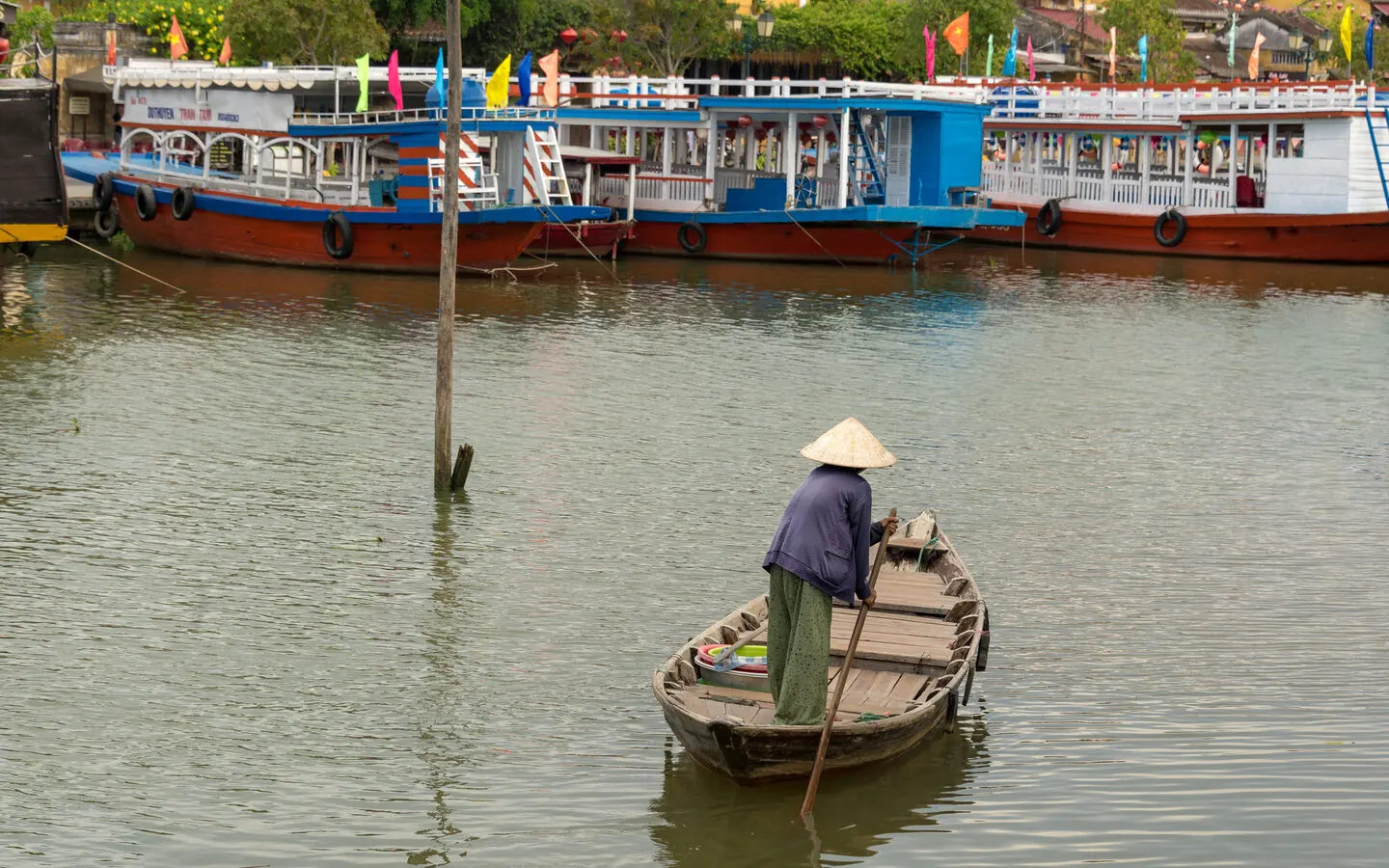
Hoi An
Hoi An is beautiful, walkable in selected districts and rich in food and culture. An Bang provides beach life, while Cam Chau and other neighborhoods offer rice-field settings. Tourism crowds, summer heat and severe seasonal flooding are major tradeoffs. Da Nang supplies the nearest deeper hospitals and airport.
Ho Chi Minh City
Ho Chi Minh City offers Vietnam’s largest international community, deepest private services, restaurants and business connections. Districts 1 and 3 are central; Thao Dien and An Phu in Thu Duc are popular international areas; Phu My Hung in District 7 is planned and spacious.
Traffic, noise, heat, flooding and air pollution can be tiring. Choose a neighborhood around hospital and daily needs rather than assuming taxis make every distance easy. Apartment fire safety and elevator backup deserve scrutiny.
Hanoi
Hanoi offers lakes, historic neighborhoods, museums and distinct seasons. Tay Ho is the main international district; Ba Dinh and Hoan Kiem provide central access; newer western developments offer modern apartments.
Winter can be damp and gray, summer extremely hot, and air pollution serious. Street crossing and sidewalks are challenging. Hanoi suits retirees who prioritize culture and urban life and can manage environmental conditions.
Nha Trang
Nha Trang has an urban beach, high-rise apartments, regional airport access through Cam Ranh and a significant foreign community. It can offer good value and year-round services. Tourism density, construction and storm exposure vary by neighborhood.
Vung Tau
Vung Tau is a coastal city within reach of Ho Chi Minh City, popular for weekend escapes and offshore-industry services. It offers sea air, lower density and reasonable hospitals. Weekends are busy, and the beach environment is more urban than island-like.
Da Lat
Da Lat provides cooler highland weather, flowers, cafés and scenery. It appeals to retirees who dislike tropical heat. The airport and regional hospitals are useful, but highly specialized care requires travel. Steep streets, damp weather and tourist congestion may affect mobility.
Hue
Hue offers history, lower costs and a respected medical university and hospital ecosystem. It is quieter than Da Nang and has a cooler, wetter winter. Flooding and limited international amenities are considerations.
Phu Quoc
Phu Quoc offers beaches and a special tourist environment, but island living brings higher costs, development pressure, waste and water issues and limited specialist care. It is better for seasonal stays than medically complex retirement.
Healthcare, Insurance and Medical Evacuation
Vietnam’s private healthcare is improving. Ho Chi Minh City and Hanoi have international hospitals and foreign-trained doctors. Da Nang has useful private hospitals and clinics. Routine consultations, imaging, dentistry and basic procedures can be affordable.
Capability varies, and language can become a problem outside international facilities. For complex cancer care, neurosurgery, major cardiac intervention or severe trauma, an insurer may recommend Bangkok, Singapore or repatriation. Confirm evacuation before moving, not during crisis.
Insurance should cover inpatient care, outpatient needs, chronic conditions, evacuation and repatriation. Review maximum age, renewal guarantees, geographic coverage and direct billing. Original Medicare generally does not cover routine Vietnam care.
Carry a medical summary, generic medicine names and several weeks of reserve medication. Counterfeit or poorly stored drugs are a risk outside reputable pharmacies. Controlled medication can require documentation.
Taxes and the 183-Day Test
A person can become Vietnamese tax resident after 183 days in a calendar year or defined twelve-month period, or through regular-residence rules when unable to prove tax residence elsewhere. Residents can face tax on worldwide taxable income; nonresidents are generally taxed on Vietnam-source income at different rules or rates.
Visa runs do not necessarily solve tax residence. Day counts, leases and habitual living facts matter. A retiree working remotely or managing an investment company can create additional obligations. Keep a travel calendar and obtain advice before crossing the threshold.
Foreign pensions, Social Security, annuities, dividends and capital gains require classification under Vietnamese law and any applicable treaty. Americans generally continue filing U.S. returns and foreign-account reports. Coordinate advisers before large withdrawals or property transfers.
Property Rights for Foreign Retirees
Vietnam’s land system is not Western freehold ownership. Land belongs to the people and is administered by the state through land-use rights. Foreign individuals can own qualifying housing in approved commercial projects, but do not ordinarily own the underlying land.
Foreign apartment ownership is capped, commonly at 30% of units in a condominium building. Landed project housing has area-based limits commonly described as 250 houses in a ward-equivalent area. Projects in national-defense or security areas may be excluded.
Foreign individual ownership is generally limited to 50 years from issuance of the certificate, with extension subject to law and approval. Marriage to a Vietnamese citizen can change the analysis. Buying does not provide residence status.
Due diligence
- Use an independent Vietnamese lawyer.
- Confirm the project is approved for foreign ownership.
- Verify remaining foreign quota in writing.
- Review developer land-use rights, permits and financing.
- Confirm ownership term and certificate process.
- Check management fees, sinking fund and short-term rentals.
- Inspect fire systems, elevators, waterproofing and flood access.
- Use lawful bank transfers and preserve remittance evidence.
- Plan resale to foreign and Vietnamese buyers.
Off-plan purchases carry developer, construction and title-certificate risk. A reservation agreement is not ownership. Avoid informal nominee structures, cash transfers and promises that a local friend will hold land for you.
Banking, Currency and Repatriation
The Vietnamese dong is the domestic currency. Foreigners can open accounts when they meet bank requirements, but short visitor status can limit products. Banks request passport, visa or residence card, address, tax information and source of funds.
Investment capital must travel through designated accounts and match licensing records. Property payments should follow the contract and legal banking channels. Preserve inward-remittance evidence if sale or investment proceeds will later be sent abroad.
Digital payment is widespread, but foreign card acceptance and local app access vary. Maintain an overseas emergency account and two cards. Watch for fake bank messages, QR-code substitution and hacked messaging accounts.
Daily Life, Language and Culture
Vietnamese daily life is social, early and street-oriented. Noise from traffic, karaoke, construction and commerce is normal. Apartment choice should consider schools, bars, temples, markets and future construction rather than interior design alone.
Learning Vietnamese is valuable. Pronunciation and tones take work, but numbers, food, directions and medical phrases quickly improve independence. Use a professional interpreter for legal and medical decisions.
Respect family structures, national history, religious spaces and public order. Avoid political activity and demonstrations. Dress modestly at pagodas, remove shoes where expected and ask before photographing people.
Transportation and Road Safety
Ride-hailing makes car-free living possible in major cities. Da Nang is easier to navigate than Hanoi or Ho Chi Minh City. Buses and urban rail are developing, while domestic flights and trains connect the country.
Motorcycles dominate and road behavior can be overwhelming. Do not assume an international driving permit is accepted; Vietnam participates in a specific road-traffic convention, and many common permits do not qualify. Insurance may deny claims without correct licensing.
Older retirees should choose housing where groceries, cafés and clinics are reachable without crossing high-speed roads. Sidewalks may be occupied or uneven. Use reputable cars at night and wear seat belts when available.
Climate, Pollution and Natural Hazards
Vietnam spans multiple climates. Hanoi has cool damp winters and hot summers. Ho Chi Minh City is tropical with wet and dry seasons. Central Vietnam faces typhoons, intense rain and flooding. Da Lat is cooler; northern mountains can become cold.
Air pollution is a major issue in Hanoi and can affect Ho Chi Minh City. Track PM2.5, use HEPA filtration and choose sealed bedrooms. Flood history should be checked at both building and access-road level.
Central-coast retirees need storm shutters or secure windows, emergency supplies and evacuation plans. Mold, humidity and salt corrosion require maintenance. Dengue prevention matters nationwide.
Safety, Laws and Scams
Vietnam is generally safe from violent street crime, but snatch theft from motorcycles is common in some cities. Carry phones away from the roadway, use cross-body bags and avoid displaying jewelry. Cyber fraud, romance scams and property fraud require skepticism.
Drug laws are severe. Controlled medicines should be documented. Photography around military or government sites and political activity can create problems. Vietnamese law restricts speech and public protest differently from Western countries.
Traffic is the biggest daily physical risk. Cross predictably, avoid sudden movements and follow local pedestrians when learning. Do not ride a scooter simply because rental is easy.
Aging in Place
Vietnam can suit an active retiree, but formal assisted living and dementia care are less developed than in some retirement countries. Families traditionally provide much elder care. Foreign retirees may hire helpers, but household support is not the same as trained nursing.
Choose an elevator building with generator coverage, step-free shower, wide access and a route an ambulance can reach. Identify stroke, cardiac and orthopedic capacity. If health needs increase, be prepared to move from Hoi An or an island to Da Nang, Ho Chi Minh City or another country.
Create local and home-country wills, medical powers, emergency contacts and accessible funds. Clarify who can consent to treatment and receive medical information. An unmarried partner may lack authority.
A 12-Month Vietnam Retirement Plan
- Months 12–10: Decide whether Vietnam will be seasonal or based on genuine family, work or investment residence.
- Month 9: Compare Da Nang, Ho Chi Minh City and Hanoi against healthcare and climate.
- Month 8: Obtain cross-border tax advice and begin travel-day tracking.
- Month 7: Price international insurance and evacuation.
- Month 6: Make a 60- to 90-day scouting stay using only the official e-visa portal.
- Month 5: Rent a serviced apartment and test ordinary routines.
- Month 4: If eligible, retain counsel for family, work or investor residence.
- Month 3: Prepare legalized civil, police, medical and financial documents.
- Month 2: Build banking, medication, pet and emergency plans.
- Month 1: Confirm visa dates, entry point and accommodation registration.
- First 90 days: Establish doctors, language lessons and realistic transport.
- Months 4–9: Experience the least comfortable climate season.
- Months 10–12: Continue renting unless durable residence and legal due diligence justify purchase.
Common Mistakes
- Calling the 90-day e-visa a retirement visa.
- Signing a year lease without a year-long legal status.
- Assuming repeated e-visas will always be approved.
- Creating a shell company only to obtain residence.
- Buying an apartment before securing a durable immigration plan.
- Believing home ownership includes land or guarantees renewal after 50 years.
- Riding a motorcycle without a license accepted in Vietnam.
- Ignoring air pollution, flooding and typhoon seasons.
- Underbudgeting evacuation and specialist healthcare.
- Letting an agent control the company, bank and immigration accounts.
Is Vietnam Right for You?
Vietnam is excellent for adventurous, healthy retirees who value food, energy, culture and affordable urban or coastal living. It is especially attractive as a seasonal base or for people with a genuine Vietnamese family connection.
It is a weaker choice for a pension-only retiree who wants predictable permanent residence. Thailand, Malaysia and several Latin American countries offer clearer retirement-specific paths. Vietnam should be chosen with eyes open: enjoy the lifestyle, but build the plan around actual immigration law.
Frequently Asked Questions
Does Vietnam have a retirement visa?
No. Vietnam currently has no dedicated retirement visa based simply on age, pension or savings. Foreign retirees commonly scout on an e-visa, but a durable long-term stay normally requires another legal basis such as marriage or family sponsorship, qualifying employment, or a genuine investment and company structure. Repeated tourist entries are not permanent residence.
How long can I stay with an e-visa?
Vietnam’s official immigration portal states that an e-visa can be valid for a maximum of 90 days and can be issued for single or multiple entry. The approved dates, entry points and passport details must be followed exactly. An e-visa is a visitor document and does not authorize employment or guarantee another e-visa after departure.
Can I live in Vietnam by making visa runs?
Some long-stay foreigners have used consecutive visitor visas, but this is not secure retirement status. Approval is discretionary, travel costs add up, rules can change and Immigration can question whether repeated tourism matches actual residence. A retiree relying on e-visas should keep a backup country, flexible lease and emergency departure fund.
Can I extend an e-visa inside Vietnam?
Do not assume a routine in-country extension is available. The official portal notes that an e-visa holder may be considered for a new visa when invited or guaranteed by an eligible Vietnamese authority, organization or individual under immigration law. Most ordinary tourists should plan to leave by the approved expiry unless a lawful new status is arranged.
Can marriage provide long-term residence?
Marriage to a Vietnamese citizen can support a family visa, visa-exemption certificate and, when statutory conditions are met, a temporary residence card. Marriage must be genuine and civil documents must be properly registered or legalized. A spouse-based route is not available to an unmarried partner simply because the couple lives together.
Can an investor retire in Vietnam?
A genuine investor in a Vietnamese entity may qualify for an investor visa or temporary residence card, with category and validity tied to capital contribution and legal structure. Creating a shell company solely to obtain residence can create corporate, tax and immigration exposure. Capital must be documented through proper investment and bank accounts, and the company needs ongoing compliance.
Can I work while retired?
Only with the visa, work authorization and employment arrangements required by Vietnamese law. A tourist e-visa does not allow employment. Remote work, consulting, teaching, content creation and managing a local company can have immigration and tax consequences even when clients or payment are overseas.
What is a temporary residence card?
A temporary residence card, or TRC, allows qualifying foreigners to reside and re-enter during its validity. Categories include certain investors, workers and family members. Eligibility, duration and sponsor obligations depend on the underlying category. A TRC is not an open retirement permit and can end when employment, investment or family eligibility ends.
Can retirees obtain permanent residence?
Vietnamese permanent residence is limited to narrow statutory groups, such as certain contributors, scientists or experts, and eligible close family members sponsored by Vietnamese citizens, subject to conditions. Ordinary years spent on e-visas or temporary cards do not automatically mature into permanent residence.
When do I become a Vietnamese tax resident?
A person can become tax resident by spending 183 days or more in Vietnam in a calendar year or specified twelve-month period, or by having a regular residence under Vietnamese rules without proving tax residence elsewhere. Tax residence and visa status are separate. Track travel days and lease facts.
Does Vietnam tax foreign pensions?
Vietnamese tax residents can be taxed on worldwide taxable income, but pension treatment depends on source, payment type and treaty. Some pensions or social-security benefits may receive specific treatment; investment withdrawals and annuities can differ. Obtain Vietnam and home-country advice before remitting or withdrawing large amounts.
Can foreigners buy apartments?
Foreign individuals permitted to enter Vietnam can generally buy eligible commercial-housing units in approved projects, subject to national-security exclusions and foreign ownership quotas. The familiar limit is up to 30% of apartments in a condominium building. Verify the project’s current foreign quota and eligibility with independent counsel.
Can foreigners own land?
No private individual owns land outright in the Western freehold sense; land is owned by the people and administered by the state through land-use rights. Foreign individuals do not receive ordinary residential land-use rights in the same way as Vietnamese citizens. A foreign home purchase is a time-limited housing right, not freehold land ownership.
How long does foreign home ownership last?
Foreign individual ownership of qualifying housing is generally limited to 50 years from the ownership certificate, with extension subject to current law and approval. A foreigner married to a Vietnamese citizen may have different treatment. Never accept a developer’s verbal promise about automatic renewal.
What is the 250-house rule?
Foreign ownership is limited not only in apartment buildings but also in areas containing landed houses, commonly described as no more than 250 individual houses within a ward-equivalent area, subject to government rules and security restrictions. The relevant authority must confirm quota availability before completion.
Should I buy property without long-term residency?
Usually not early in the process. A property right does not create a retirement visa. A buyer can own an apartment but still have only short visitor status. Rent first, establish a durable immigration route and investigate resale, foreign quota, ownership term, title certificate and remittance rules before purchasing.
How good is healthcare?
Vietnam has improving private and international hospitals in Ho Chi Minh City and Hanoi, with useful private facilities in Da Nang and other major centers. Routine care, dentistry and diagnostics can offer good value. Complex cancer, cardiac, neurological or trauma cases may still prompt treatment in Bangkok, Singapore or the retiree’s home country.
Does Medicare cover Vietnam?
Original U.S. Medicare generally does not cover routine treatment in Vietnam. Some supplementary plans offer limited emergencies abroad but are not long-term resident coverage. Retirees should compare international insurance, eligible local policies, evacuation benefits and self-pay reserves.
How much should a retired couple budget?
A couple might plan US$1,500–$2,400 per month for a locally oriented life, US$2,400–$4,000 for a modern apartment, regular dining, transport and private insurance, and more than US$4,000 for premium housing and frequent international travel. Ho Chi Minh City and central Hanoi cost more than smaller cities.
Where is the best place for retirees?
Da Nang offers the strongest balance of beach, airport, modern apartments and manageable scale. Ho Chi Minh City has the deepest private services and international energy. Hanoi offers culture and seasons but challenging pollution and traffic. Hoi An is charming but flood-prone and medically dependent on Da Nang. Nha Trang and Vung Tau offer coastal alternatives.
Is Vietnam safe?
Violent crime against foreigners is relatively uncommon, but phone and bag snatching, pickpocketing, cyber fraud, traffic crashes and property scams occur. Road safety is the largest daily concern. Secure phones away from the traffic side, use reputable transport and verify contracts and bank instructions.
Can I drive in Vietnam?
Foreign licenses and international permits are accepted only under specific treaty, category and documentation rules. Many common IDPs used by Americans may not satisfy Vietnam’s convention requirements. Long-term residents may need conversion to a Vietnamese license. Motorcycle riding without valid licensing and insurance creates major risk.
Can I open a bank account?
A foreigner’s ability to open and use accounts depends on passport, lawful stay, visa duration, address, tax information and bank policy. Temporary residents have more options than short visitors. Investment capital must use proper direct-investment channels. Keep transfer evidence for tax and repatriation.
Can I bring a dog or cat?
Vietnam allows pet entry with veterinary documentation, rabies vaccination, health certification and customs or quarantine procedures. Airlines and transit countries add rules. Apartment buildings may restrict animals. Confirm the current process with Vietnam’s animal-health authority and an experienced pet shipper.
What happens to my property when I die?
Vietnamese succession law, the remaining foreign ownership term, project quotas and the heir’s eligibility can affect the result. An heir unable to own may be limited to receiving value rather than retaining the home. Coordinate a Vietnamese will with foreign estate documents and use independent counsel.
Is Vietnam welcoming to LGBTQ+ retirees?
Same-sex relationships are legal and visible in major cities, but same-sex marriage is not recognized in the same way as opposite-sex marriage. Social attitudes vary, and a foreign partner may lack family-sponsored residence or automatic medical and inheritance rights. Private legal planning is important.
What is the best season to scout?
Scout twice if possible. Visit central Vietnam during its wetter storm period, Hanoi during both humid summer and cool gray winter, and the south during heavy rains. A neighborhood that looks perfect in February can flood or become unbearably hot later.
Should I learn Vietnamese?
Yes. English is common in international hospitals, tourism and younger urban circles, but landlords, local clinics, police and tradespeople may use little English. Vietnamese pronunciation is challenging but basic greetings, numbers, addresses and medical vocabulary greatly improve independence.
Is Vietnam a good choice for aging in place?
It can work for an active retiree near a major private hospital, but sidewalks, traffic, stairs and limited formal assisted living create challenges. Choose an elevator building with backup power, map emergency transport and budget for trained home care or eventual relocation to a deeper medical center.
Official and Practical Resources
- Official Vietnam eVisa portal
- Vietnam Immigration Department
- General Department of Taxation
- Vietnam Ministry of Health
- U.S. State Department: Vietnam
- U.S. Mission Vietnam
Explore More Retirement Guides
Continue comparing destinations in the Investing Travels retirement series:
Americas
- Retiring in Argentina
- Retiring in Belize
- Retiring in Bolivia
- Retiring in Brazil
- Retiring in Chile
- Retiring in Colombia
- Retiring in Costa Rica
- Retiring in Dominican Republic
- Retiring in Ecuador
- Retiring in El Salvador
- Retiring in Guatemala
- Retiring in Honduras
- Retiring in Mexico
- Retiring in Nicaragua
- Retiring in Panama
- Retiring in Peru
- Retiring in Uruguay
Europe
Retirement Guides by CountryTags: Vietnam retirement, retire in Vietnam, retiring in Vietnam, moving to Vietnam, Vietnam expat guide, Vietnam retirement visa, Vietnam e-visa, Da Nang retirement, Hoi An retirement, Vietnam healthcare, Vietnam cost of living, Vietnam property, retirement in Asia, retirement abroad