Tunisia offers a rare combination for retirees: a Mediterranean coast, layered Arab, Amazigh, African and European culture, good private medicine in major cities, short flights to Europe and everyday costs that can remain moderate by international standards. It is not, however, a plug-and-play retirement destination. Residence is locally administered, the dinar is controlled, foreign property purchases need careful authorization, and Arabic or French is often necessary. The successful retiree is patient, documentation-minded and willing to rent before committing.
Why Retire in Tunisia?
The appeal begins with geography. From the northern suburbs of Tunis to Cap Bon, Hammamet, the Sahel coast and Djerba, residents can live near beaches, markets, cafés, Roman sites and olive country. Tunis-Carthage Airport connects the capital with European and regional hubs, while ferries link Tunisia with parts of Europe. Winter is generally mild on the coast, although homes can feel cold and damp when they were designed for summer rather than year-round comfort.
Food is another strength. Produce, seafood, bread, olive oil, dates and neighborhood meals can be excellent value. Daily life often revolves around family, cafés and local commerce rather than gated expatriate enclaves. Retirees who learn polite Tunisian Arabic phrases and workable French usually gain much more from the country than those who remain within tourist districts.
Strong reasons to consider it
- Mediterranean climate and long coastline
- Potentially moderate local living costs
- Capable private clinics in major cities
- Rich archaeology, cuisine and culture
- Convenient access to Europe
- Foreign-pension tax treatment may be favorable when conditions are met
Reasons to pause
- No simple one-number retirement visa
- Controlled currency and transfer paperwork
- French or Arabic often needed
- Property authorization and agricultural-land limits
- Security exclusions in border and mountain areas
- Specialist medicine is concentrated geographically
Residence: The Long-Stay Reality
Tunisia does not advertise a universally standardized retirement visa with a fixed monthly pension figure. A short visitor entry and a right to reside are different things. The U.S. State Department currently states that U.S. citizens may visit for up to 90 days without a tourist visa and need a residence permit for a longer stay. Other passports have different rules; confirm yours with a Tunisian diplomatic mission.
Long-stay foreigners commonly pursue a carte de séjour, or residence card, after arrival. The responsible office is normally tied to the applicant's Tunisian address. Practical checklists vary, so obtain the current list directly from the police station or foreigners service that will accept the file. A typical application may request a valid passport and copies, entry evidence, photographs, a lease or property documents, a pension letter or other proof of adequate resources, Tunisian bank evidence, birth or marriage records, medical or insurance evidence, fiscal stamps and a police record. Some foreign records may require legalization and sworn Arabic or French translation.
Begin before the lawful visitor period ends. Overstaying can produce recurring fines and problems at departure. Keep copies of every submission and a dated receipt while the application is pending. Ask how long the first card is valid, where renewals are filed and how far before expiry the renewal can begin. Moving to another police district can change the office managing the file.
A safer document strategy
Bring newly issued long-form civil documents, certified pension statements, several months of bank records, proof of private medical coverage, passport photographs and a police certificate. Carry originals and color copies in separate bags, plus encrypted scans. Obtain written confirmation before paying an intermediary who promises guaranteed approval. Immigration discretion remains with the authorities.
Family members and work
Spouses and dependants may need their own files and proof of relationship. Marriage and birth documents can require legalization and translation. Residence based on adequate private resources should not be treated as work authorization. Paid local work, consulting, company management and even remote work can raise separate immigration, tax and social-security questions.
Cost of Living and a Realistic Budget
Tunisia can cost less than North America or Western Europe, but a foreign retiree's basket is rarely identical to a local household's. A modern coastal apartment, imported groceries, comprehensive insurance, a car and frequent flights can absorb much of the apparent advantage. Inflation and exchange-rate movements make fixed dollar promises unreliable.
| Monthly category for a couple | Value-conscious plan | Comfortable plan | Premium plan |
|---|---|---|---|
| Rent | US$450–$750 | US$750–$1,300 | US$1,300–$2,200+ |
| Utilities, phones, internet | $90–$160 | $150–$250 | $250–$400 |
| Food and household | $300–$500 | $500–$800 | $800–$1,200 |
| Transport | $100–$220 | $220–$450 | $450–$750 |
| Healthcare and insurance | $150–$350 | $300–$650 | $600–$1,200+ |
| Leisure and travel reserve | $200–$400 | $400–$700 | $700–$1,200 |
| Illustrative total | $1,600–$2,300 | $2,300–$3,500 | $3,500–$5,500+ |
Planning ranges, not quotations. Actual rent, insurance and exchange rates can differ greatly. Obtain local quotes in TND before moving.
Budget separately for deposits, residence documents, translations, furnishings, vehicle purchase, international shipping, dental work, flights home and emergency evacuation. Keep a reserve in an accessible hard-currency account outside Tunisia; do not rely on selling property quickly during an emergency.
Best Places to Retire in Tunisia
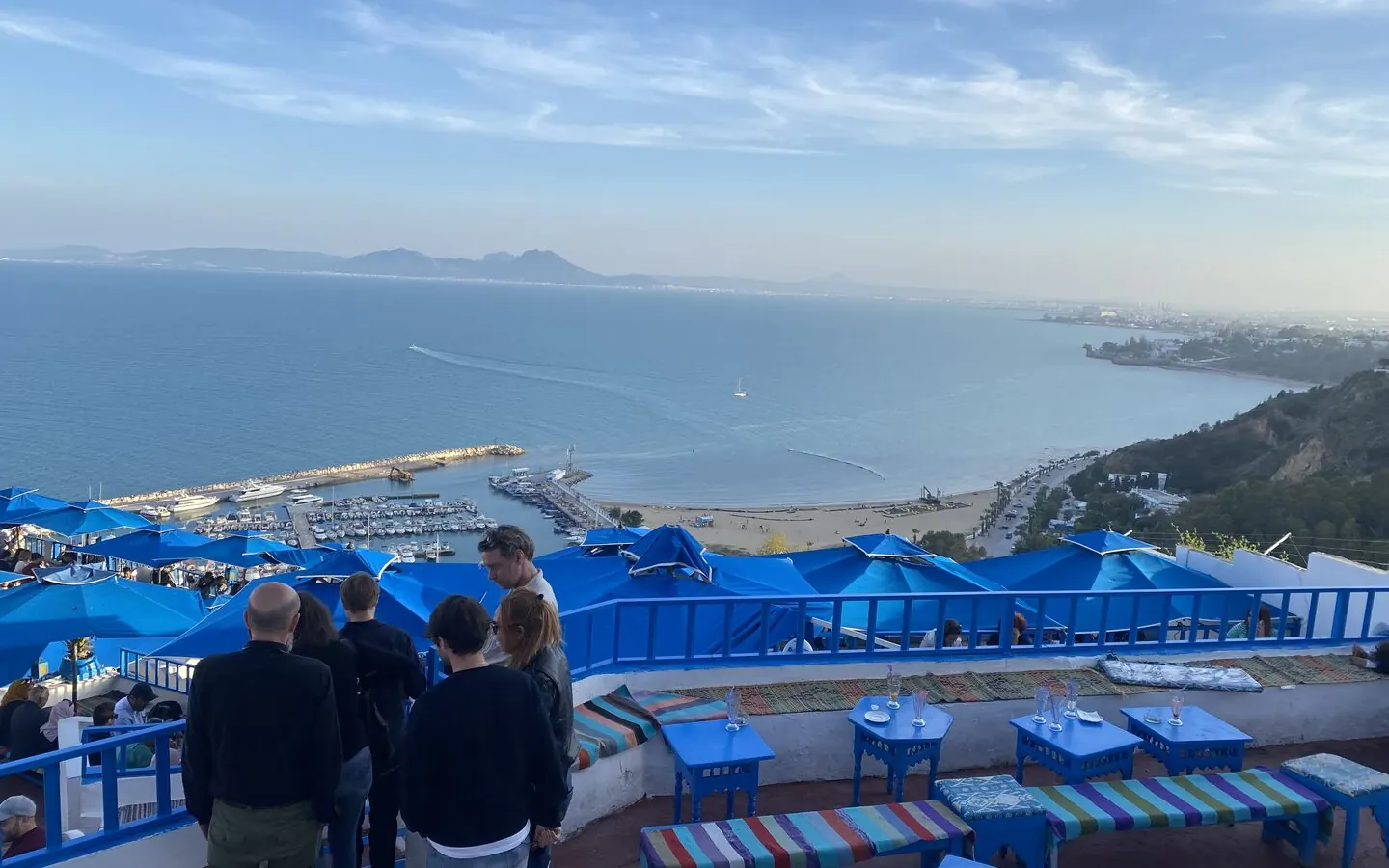
La Marsa, Carthage and Sidi Bou Said
The northern Tunis suburbs provide coastal atmosphere, restaurants, embassies, private clinics and relatively easy airport access. La Marsa is more practical for daily life than postcard-pretty Sidi Bou Said. Housing can be among Tunisia's most expensive, traffic is significant and older homes need checks for damp, insulation, plumbing and heating.
Central Tunis and Les Berges du Lac
Central Tunis suits retirees who want museums, the medina, hospitals and urban energy. Les Berges du Lac offers newer buildings and business services, often at premium prices. Noise, parking and traffic vary block by block. Greater Tunis gives the strongest overall access to specialists and international administration.
Hammamet and Nabeul
Hammamet combines beaches, tourism infrastructure and access to Tunis. Nabeul is more of a working town with markets and pottery traditions. Both can be lively in summer and quieter in winter. Verify year-round services, neighborhood drainage, humidity and the drive to a preferred hospital.
Sousse and Port El Kantaoui
Sousse offers a large city, medina, rail connections, private medicine and a long waterfront. Port El Kantaoui has resort-style housing and marina life. Summer crowds and tourist pricing affect some districts; a residential neighborhood can deliver a more stable year-round experience.
Monastir and Mahdia
Monastir offers an airport, university and medical facilities in a manageable coastal city. Mahdia is quieter, historically rich and known for beaches and fishing. The tradeoff in smaller communities is a thinner choice of specialists, international groceries and bilingual professional services.
Djerba
Djerba attracts people seeking island pace, beaches, winter sun and a distinctive culture. It can be attractive for seasonal retirement, but a permanent resident should test summer heat, transport, healthcare depth and off-season life. Island geography makes medical evacuation and some administrative errands more complicated.
Sfax, Bizerte and Tabarka
Sfax is a major commercial city with serious medical services but a less resort-oriented feel. Bizerte offers northern-coast scenery within reach of Tunis. Tabarka is green and beautiful, yet remote and close to an area where official advisories impose border-distance cautions; precise location matters. Match the town to medical and transport needs, not scenery alone.
Healthcare, Insurance and Aging
Tunisia has a long medical tradition and can offer good-value private consultations, diagnostics and dentistry. The deepest choice of private hospitals and specialists is in Greater Tunis, with important facilities in Sousse, Monastir and Sfax. Quality and equipment vary by institution, and highly complex treatment may still prompt care in Europe or repatriation.
Before choosing a town, map the nearest emergency department, cardiac and stroke capacity, oncology services, imaging and pharmacy. Ask whether the facility accepts the chosen insurer directly or requires payment first. Carry translated medical summaries and generic medication names. Some drugs sold under familiar brands abroad may have different formulations or availability.
Insurance should include inpatient care, outpatient needs, chronic conditions and medical evacuation. A cheap travel policy intended for holidays is not a retirement solution. Check maximum enrollment age, lifetime limits, renewability, exclusions and whether evacuation is to the nearest adequate facility or to a country of your choice. U.S. Medicare generally does not cover ordinary care abroad.
For aging in place, evaluate elevators, reliable heating and cooling, shower access, backup power for medical devices and proximity to family or paid help. Formal assisted-living options may be narrower than in North America. A plan based on informal care must still address respite, nursing skills, legal authority and emergency transport.
Taxes and the Foreign-Pension Deduction
Tax deserves advice before, not after, a move. A person may become Tunisian tax resident through a principal home, habitual residence or a day-count test often described as 183 days in the calendar year. Residents can face Tunisian taxation on a wider income base, while nonresidents are generally taxed on Tunisian-source income. Exact characterization, treaty residence and filing duties depend on facts.
Tunisia's Ministry of Finance describes an 80% deduction for qualifying pensions and annuities from abroad that are transferred to Tunisia. This means that, when all conditions are satisfied, 20% may remain in the taxable base before application of relevant rates; it does not mean an 80% tax. Confirm what qualifies as a pension, how the transfer must be documented, which account to use and whether your nationality's tax treaty changes the result.
Americans generally continue filing U.S. federal returns and reporting applicable foreign accounts even when living abroad. Other countries have their own residence, pension and exit rules. Coordinate Tunisian and home-country advisers before taking large retirement-account distributions, realizing gains or selling a former home.
Property: Authorization Before Emotion
A foreigner may be able to purchase non-agricultural residential property, but the transaction can require authorization from the governorate and evidence that foreign funds entered through proper banking channels. Non-Tunisians are generally prohibited from owning agricultural land. Rural-looking villas, olive groves and mixed-use parcels require exceptional caution because classification matters more than marketing language.
Hire an independent Tunisian lawyer and a notary. Verify the seller, title registry, cadastral description, liens, co-owners, inheritance claims, planning permission, building conformity, taxes and utility debts. Confirm the exact authorization path and make the contract conditional on approvals and clean title. Never hand substantial cash to a broker or rely only on an unregistered private agreement.
Preserve SWIFT records, bank certificates and official currency-conversion documents. They may be essential when selling and requesting permission to repatriate proceeds. Buying property does not grant residence. Renting first remains the most effective protection against selecting the wrong town, building or legal structure.
Banking, Currency and Getting Money In and Out
The Tunisian dinar is controlled and generally may not be exported. Foreign-exchange rules therefore shape daily financial planning. The U.S. State Department notes declaration requirements for larger amounts of cash and advises retaining official exchange receipts. Rules and thresholds can change, so check customs and bank instructions before every large transfer or journey.
Ask a bank about resident, nonresident and convertible-dinar accounts, incoming pension transfers, fees, card limits and documentation needed for outward remittance. Keep a separate record for every property and investment transfer. Do not use informal exchangers. Maintain at least two international payment methods and an overseas emergency account, because card blocks and transfer delays happen.
ATMs are widely available in cities and tourist areas, but per-transaction limits and foreign fees can be inconvenient. Cards are accepted in many formal businesses, while cash remains important in markets and smaller shops. Notify home banks of the move and keep a phone number capable of receiving authentication codes.
Daily Life: Language, Transport and Culture
Arabic is official and Tunisian Arabic dominates informal conversation. French is deeply embedded in medicine, business and administration. English alone may work in hotels and parts of Tunis, but not reliably with landlords, police offices, tradespeople or rural services. A retiree who studies French and basic Tunisian Arabic gains independence and trust.
Public transport includes trains, metro services in Tunis, buses, shared taxis and ordinary taxis. Coverage and comfort vary. Many retirees prefer a car outside central urban districts, yet driving can be demanding. Road markings, night lighting, scooters and pedestrian movement require defensive habits. Check licensing and insurance obligations after residence.
Tunisia is a Muslim-majority society with regional variation. Dress and behavior that seem normal in a resort may feel inappropriate in a conservative town. Ramadan changes business hours and daily rhythm. Public alcohol rules, photography around government or military sites and laws concerning drugs should be treated seriously. Respect, curiosity and discretion go a long way.
Safety and Where Not to Travel
Official security guidance must be checked immediately before travel. The U.S. State Department currently rates Tunisia Level 2 because of terrorism, crime and unrest. It says not to travel within 16 kilometers of the Algerian border, except Tabarka and Ain Draham; within 16 kilometers of the Libyan border; to specified mountains in Kasserine and Gafsa governorates; or to the military zone south of Remada. Advisories from the retiree's own government may differ.
In ordinary urban life, theft, pickpocketing, scams and burglary are more common concerns. Avoid demonstrations, which can become unpredictable, and monitor local news. Use reputable transport after late arrivals, keep valuables unobtrusive and inspect a building's doors, street lighting and evacuation routes. Women living alone should test neighborhoods at different times and speak candidly with local residents about harassment patterns.
Emergency numbers commonly listed are 197 for police and 190 for ambulance. Save the nearest clinic, insurer and embassy contacts offline. Enroll in your government's traveler-alert service if offered, and create a family communication plan for internet or transport disruptions.
Climate, Water and Housing Comfort
Northern and coastal Tunisia has a Mediterranean pattern: hot, dry summers and cooler, wetter winters. The south is much more arid and summer heat can be extreme. Coastal humidity, dust, flash flooding and water shortages can affect comfort. Climate change is increasing pressure on heat and water planning.
Inspect air conditioning, heating, insulation, window sealing, roof waterproofing, drainage, water tanks and pump pressure. A beautiful tile home can be uncomfortable in January without effective heating. Ask about municipal water interruptions and never assume a backup tank is clean or legally installed. In low-lying areas, visit after heavy rain if possible.
A Practical 12-Month Move Plan
- Months 12–10: Compare Tunisia with two alternatives. Identify medical, language, climate and flight requirements.
- Month 9: Ask a Tunisian consulate about entry and long-stay procedure for your passport.
- Month 8: Obtain cross-border tax advice and model pension transfers under current rules.
- Month 7: Make a scouting trip to Greater Tunis and at least two coastal alternatives.
- Month 6: Price insurance, medications and possible evacuation. Select a rental area.
- Month 5: Order civil records and police certificates; clarify legalization and translation.
- Month 4: Arrange a documented banking pathway and maintain an overseas reserve.
- Month 3: Sign only a carefully reviewed rental with address evidence suitable for residence.
- Month 2: Build paper and encrypted document files; confirm pet or customs requirements.
- Month 1: Recheck entry, safety and currency declarations; book flexible travel.
- First 30 days: Confirm the residence checklist with the responsible local office and apply early.
- Months 2–6: Establish doctors, banking, language study and a tax calendar.
- Months 7–12: Experience a second season before considering property.
Common Mistakes to Avoid
- Treating a 90-day visit as renewable permanent residence.
- Trusting an unofficial fixed income threshold for the residence card.
- Calling the pension deduction an 80% tax.
- Buying an attractive rural parcel without confirming agricultural classification.
- Sending money without preserving the foreign-exchange trail.
- Assuming property ownership guarantees residency.
- Selecting a beach town without testing specialist healthcare and winter life.
- Depending on English for contracts or government procedures.
- Importing a car before receiving a written customs assessment.
- Moving every reserve into Tunisia instead of retaining emergency liquidity abroad.
Is Tunisia Right for You?
Tunisia is strongest for culturally curious retirees who enjoy Mediterranean life, tolerate administrative uncertainty and are prepared to learn French or Arabic. It offers real depth beyond the tourist coast and can reward people who build local relationships slowly.
It is a weaker match for anyone who needs a completely predictable immigration formula, easy currency conversion, an English-only environment or nearby super-specialist care in every town. The low-risk approach is deliberately reversible: scout, rent, confirm residence and tax treatment, live through contrasting seasons and only then evaluate buying.
Frequently Asked Questions
Can a foreigner retire in Tunisia?
Yes. A retiree can live in Tunisia after obtaining the immigration status appropriate to a stay longer than the visitor allowance. Tunisia does not market one standardized retirement visa with a single published income minimum. Long-stay residents normally apply locally for a residence card, called a carte de séjour, and demonstrate lawful entry, accommodation and adequate resources. Confirm the current procedure with the Tunisian consulate and the police office responsible for the intended address before moving.
Do Americans need a visa for Tunisia?
The U.S. State Department currently says U.S. tourists do not need a visa for visits of 90 days or less and that a residence permit is required for a longer stay. Passport, nationality and purpose of travel can change the rule, so travelers of every nationality should verify the current requirement with a Tunisian embassy. A visa-free entry is permission to visit; it is not permission to settle indefinitely or work.
Is there a Tunisian retirement visa income requirement?
There is no broadly published, universal retiree-income number comparable with the pensionado thresholds advertised by some Latin American countries. Applicants are commonly asked to prove reliable means, often with pension letters, bank statements and proof that funds can support life in Tunisia. The office handling the residence card can decide which documents and translations it will accept. Never build a move around an unofficial online threshold.
How do I obtain a carte de séjour?
After securing an address, ask the territorially responsible police station or foreigners office for its current checklist. A typical file may include the passport and entry stamp, application, photographs, lease or ownership evidence, proof of resources or pension, bank evidence, civil-status documents, insurance or medical evidence and fiscal stamps. Some documents may need legalization and Arabic or French translation. Apply well before visitor status expires and keep stamped receipts and copies.
Can I work while retired in Tunisia?
Do not assume that residence based on private resources authorizes employment, consulting or a local business. Work and commercial activity can require separate permissions, registrations and tax treatment. Remote work for an overseas client can still create immigration, tax, social-security or permanent-establishment questions. Obtain written advice before earning income from Tunisian territory.
Will Tunisia tax my foreign pension?
Tax residence and pension classification matter. Tunisia generally taxes residents more broadly than nonresidents, subject to domestic rules and any tax treaty. Tunisia's Ministry of Finance describes an 80% deduction for qualifying pensions and annuities from abroad that are transferred to Tunisia; that is an 80% deduction, not an 80% tax rate. Conditions, transfer evidence and treaty rules must be checked with a Tunisian tax professional.
When do I become tax resident?
Tax residence can arise from having a principal home or habitual residence in Tunisia or from meeting a day-count test, commonly discussed as at least 183 days in a calendar year. Facts can matter more than a single count, and another country may also regard you as resident. A treaty tie-breaker may help where applicable. Get advice before the move year, when pension withdrawals, property sales and investment gains can have cross-border effects.
Can foreigners buy property in Tunisia?
Foreigners can buy some non-agricultural residential property, but the transaction is not as frictionless as in many countries. Governorate authorization is commonly required, and foreign-exchange and Central Bank documentation can affect both purchase and eventual repatriation of sale proceeds. Non-Tunisians generally cannot buy agricultural land. Use an independent Tunisian lawyer and notary, and never confuse a preliminary agreement with completed, registered title.
Does buying a home provide residency?
No. Property ownership and immigration status are separate. A home can provide evidence of accommodation, but it does not automatically create a right to reside, work or become a citizen. Keep the residence application viable on its own merits and do not buy until a lawyer has verified title, permits and the currency trail.
Should I rent before buying?
Yes, in most cases. Rent for six to twelve months through both hot and cool seasons. This reveals street noise, humidity, summer crowds, winter damp, water pressure, internet reliability, transport and the real drive to hospitals. Renting also gives time to complete residence and banking steps without tying up capital in a transaction that may need authorization.
How good is healthcare in Tunisia?
Tunisia has capable doctors and private clinics, particularly in Greater Tunis, Sousse, Monastir and Sfax. Private care is the usual planning choice for foreign retirees because access and comfort can be more predictable than in the public system. Capacity, English use and complex specialty care vary. Identify a primary doctor, emergency hospital and evacuation plan before a crisis, especially if living on an island or away from a major city.
Does Medicare cover care in Tunisia?
Original U.S. Medicare generally does not pay for routine care in Tunisia. Some private Medicare Advantage or supplemental policies offer narrowly defined foreign emergency benefits, but these are not substitutes for long-term overseas coverage. Compare international medical insurance, eligible local cover and self-pay reserves. Read age limits, pre-existing-condition exclusions, evacuation terms and renewal rules rather than comparing premiums alone.
Is Tunisia safe for retirees?
Many retirees live ordinary lives in Tunisia, but risk is location-specific. The U.S. State Department currently lists Tunisia at Level 2, Exercise Increased Caution, and identifies border, mountain and far-southern zones where Americans should not travel. Petty theft, scams, demonstrations and some violent crime occur. Choose housing carefully, avoid protests, monitor official advisories and use heightened caution after dark.
What language do I need?
Arabic is the official language, while French is widely used in administration, medicine, banking and business. English is increasingly heard in tourism and among younger Tunisians but should not be assumed. Functional French makes retirement much easier; Tunisian Arabic improves daily relationships. Hire an independent interpreter for contracts and legal meetings, not someone supplied only by the other party.
Can I open a Tunisian bank account?
Residents and nonresidents may have different account types and documentation. Expect passport, residence evidence, address and source-of-funds checks. Because the dinar is controlled and generally not freely convertible, ask the bank how incoming foreign currency will be recorded and what proof will be needed to send lawful proceeds abroad later. Keep transfer confirmations and official exchange receipts indefinitely.
Can I drive on my foreign license?
A visitor can often drive temporarily with a valid home license and, when required, an international driving permit. Long-term residents should verify when a Tunisian license or exchange becomes necessary. Road behavior can be assertive, night visibility inconsistent and pedestrian traffic unpredictable. Insurance, roadside assistance and a pre-purchase mechanical inspection are essential.
Can I bring my car or household goods?
Tunisia's customs and vehicle-import rules are technical, and taxes or eligibility can make importing an ordinary car unattractive. Do not ship until a licensed customs broker has assessed your residence status, vehicle age, engine, ownership period and temporary-versus-permanent import route in writing. For household goods, use a mover experienced with Tunisian customs and prepare a detailed inventory.
Can I bring a dog or cat?
Pet entry normally requires advance veterinary preparation, including identification, a current rabies vaccination and a health certificate in the required form and timing. Airline and transit-country rules can be stricter. Requirements can change and some breeds or routing choices may cause difficulty, so confirm with the Tunisian veterinary authority, airline and an accredited veterinarian before booking.
What happens to my estate?
Tunisian inheritance and family law may produce results different from those expected under a home-country will. Nationality, religion, marital property, property location and treaty rules can affect the analysis. Have a bilingual Tunisian estate lawyer coordinate wills, beneficiary designations, powers of attorney and incapacity planning with counsel in your home country. Do not assume one will controls every asset.
Is Tunisia welcoming to LGBTQ+ retirees?
Same-sex relations remain criminalized in Tunisia, and social attitudes are conservative. LGBTQ+ retirees can face legal, privacy and personal-safety risks that are materially different from those in many Western retirement destinations. Review current human-rights and government travel guidance, protect private information and make a personal risk assessment before relocating.
How much should a retired couple budget?
A useful planning range for a comfortable couple is roughly US$1,600 to US$3,200 per month on the mainland, with US$2,000 to US$4,000 possible in premium coastal or northern Tunis neighborhoods. Housing, imported food, private healthcare, cars and frequent flights drive the result. These are planning scenarios, not price promises; build a budget in dinars, stress-test exchange rates and keep an emergency reserve abroad.
Official and Practical Resources
- Tunisia Ministry of Foreign Affairs
- Tunisia Ministry of Finance
- Tunisian Customs
- Central Bank of Tunisia
- U.S. State Department: Tunisia
- U.S. Embassy in Tunisia
Explore More Retirement Guides
Continue comparing retirement destinations by region:
Africa
- Retiring in South Africa
- Tunisia — you are here
Additional African retirement guides will be added here.
Europe
Americas
- Retiring in Argentina
- Retiring in Belize
- Retiring in Bolivia
- Retiring in Brazil
- Retiring in Chile
- Retiring in Colombia
- Retiring in Costa Rica
- Retiring in Dominican Republic
- Retiring in Ecuador
- Retiring in El Salvador
- Retiring in Guatemala
- Retiring in Honduras
- Retiring in Mexico
- Retiring in Nicaragua
- Retiring in Panama
- Retiring in Peru
- Retiring in Uruguay
Tags: Tunisia retirement, retire in Tunisia, retiring in Tunisia, moving to Tunisia, Tunisia expat guide, Tunisia residence permit, carte de séjour Tunisia, Tunisia pension tax, Tunis retirement, Hammamet retirement, Tunisia healthcare, Tunisia cost of living, retirement in Africa, retirement abroad