Retiring in Nicaragua can combine warm weather, dramatic volcanic landscapes, colonial cities, Pacific beaches and a cost structure that remains lower than many better-known retirement destinations. Granada offers walkable historic neighborhoods, San Juan del Sur has an established international community, and the northern highlands provide cooler temperatures.
The country also demands unusually careful risk analysis. As of May 14, 2026, the U.S. State Department rates Nicaragua Level 3—Reconsider Travel—because of crime, health risks, wrongful detention and arbitrary enforcement of local laws. It warns that residency may be revoked, entry or exit may be denied, and property may be seized without warning or legal justification. Those issues belong at the center of a retirement decision, not in the fine print.
Nicaragua Retirement at a Glance
| Planning question | Practical answer |
|---|---|
| Pensionado | Commonly cited minimum: US$600 monthly qualifying lifetime pension; confirm current dependent amounts and rules |
| Rentista | Commonly cited minimum: US$750 monthly qualifying stable passive income; confirm eligible sources |
| Investor route | Often described around a US$30,000 approved investment, but qualifying assets and current administration require legal confirmation |
| Healthcare | Routine local care plus private Managua hospitals; evacuation coverage is important |
| Tax system | Generally territorial in structure, but residence, source and local activities require professional analysis |
| Property | Foreign ownership generally possible, with major title, coastal, communal, border-zone and political risks |
| Currency | Nicaraguan córdoba; U.S. dollars are also commonly accepted |
| Safety | U.S. Level 3 advisory dated May 14, 2026 |
Why Retire in Nicaragua?
Nicaragua appeals to retirees who value outdoor life, Spanish-language culture and a slower pace. The Pacific side has a long dry season, the colonial cities offer lively markets and architecture, and distances between Managua, Granada, Masaya and many Pacific communities can be manageable. Basic services and household help may cost less than in the United States or Costa Rica.
Why Nicaragua appeals
- Long-established pensionado and rentista programs
- Relatively low day-to-day costs
- Colonial cities, lakes, volcanoes and beaches
- Warm climate with cooler northern highlands
- Established expat pockets in Granada and San Juan del Sur
- U.S. dollars commonly accepted in many businesses
- Direct regional connections through Managua
Challenges to plan around
- Level 3 U.S. travel advisory in 2026
- Wrongful-detention and arbitrary-enforcement risk
- Comprehensive healthcare concentrated in Managua
- Property seizure and title risks
- Weak infrastructure outside major corridors
- Earthquakes, volcanoes, hurricanes and flooding
- Limited English in government and daily life
Climate, Seasons and Natural Hazards
Most of western Nicaragua has a dry season roughly from November through April and a rainy season from May through October, though timing and intensity vary. Managua, Granada and León are hot; Pacific beaches add humidity. Matagalpa and Estelí are cooler because of elevation. The Caribbean is wetter and more remote.
Rain changes roads, drainage and access. A beautiful hillside property can become difficult to reach, while low-lying neighborhoods can flood. Nicaragua also experiences earthquakes, volcanic activity, tropical storms and hurricanes. Evaluate slope stability, drainage, roof design, water storage and evacuation routes before signing a long lease or buying.
Language, Culture and Daily Life
Spanish is essential outside a narrow band of tourism and private medicine. Government forms, contracts, emergency calls, utility disputes and most trades operate in Spanish. Learning the language makes the move safer and creates a much richer daily life.
Relationships matter. Introductions, patience and courteous conversation often accomplish more than urgency. At the same time, retirees should document deposits, repair scopes and property agreements. Avoid political commentary and demonstrations. The 2026 U.S. advisory says authorities may review devices and social media and may act against expression or associations they perceive as political.
Residency: Pensionado, Rentista and Investor Routes
Nicaragua’s special residence framework for foreign pensioners and people of independent means has long used relatively low income thresholds. Published 2026 legal and relocation summaries continue to cite at least US$600 per month in qualifying pension income for pensionado status and roughly US$750 per month in qualifying passive income for rentista status. An investor route is often described around a US$30,000 approved investment.
Do not treat those figures as self-executing guarantees. Confirm the current age rule, dependent amount, eligible income sources, investment certification, permitted work and physical-presence obligations directly with the Nicaraguan Tourism Institute (INTUR), the immigration authority and an independent attorney. Approval, renewals and continued status are subject to government administration.
Typical application file
- Valid passport and complete entry record
- Apostilled or legalized birth certificate
- Apostilled police clearance from the required jurisdiction
- Health certificate in the required form
- Marriage and dependent records when applicable
- Official pension or income certification
- Spanish translations completed to local standards
- Photographs, application forms, fees and local registrations
Document age limits and authentication rules matter. Order records only after confirming the current checklist. Keep copies outside Nicaragua and do not ship household goods or purchase property based solely on a pending application.
Pensionado Incentives and Their Limits
The pensionado and rentista program has historically offered tax or customs benefits for qualifying household goods and a vehicle, subject to caps, timing and administrative approval. Benefits can change and are not automatic. Obtain a written eligibility opinion and customs estimate before shipping anything.
A tax exemption does not eliminate freight, port storage, broker, registration or compliance costs. Used vehicles can be expensive to import and maintain. Compare the all-in result with purchasing locally, and never assume a foreign-plated vehicle can remain indefinitely.
Taxes for Foreign Retirees
Nicaragua generally uses a territorial approach, focusing income tax on Nicaraguan-source income. A foreign pension or investment distribution may therefore receive different treatment from rent on Nicaraguan property, a local business or services performed in Nicaragua. Residency does not by itself answer the source question.
Before moving, obtain coordinated advice on tax residence, local-source income, capital gains, municipal property charges, business activity and estate planning. U.S. citizens remain subject to U.S. tax filing on worldwide income and may also have foreign-account and entity reporting duties. Never rely on a residency promoter for tax advice.
Cost of Living and a Realistic Budget
Nicaragua can be affordable, but lifestyle choices drive the result. Imported groceries, air conditioning, a secure modern rental, private healthcare, a vehicle, backup power and frequent international travel can erase much of the headline savings. Beach and colonial-center rents vary sharply by season and exact location.
| Expense | Lean local lifestyle | Comfortable expat lifestyle |
|---|---|---|
| Housing | Simple local apartment or house | Secure, furnished home in a preferred neighborhood |
| Food | Markets and local products | Mix of local food, restaurants and imports |
| Utilities | Fans and limited air conditioning | Regular air conditioning, backup power and water storage |
| Transport | Buses and taxis | Private vehicle, insurance and maintenance |
| Healthcare | Routine self-pay care | Private/international insurance plus evacuation coverage |
| Contingency | Basic repair reserve | Emergency flights, legal help and relocation reserve |
As a planning range rather than a promise, a single retiree may target roughly US$1,200–US$2,000 per month and a couple roughly US$1,800–US$3,000, excluding major medical events, property purchases and frequent flights. Build your own budget from actual rental quotes, insurance underwriting and a 60-day trial stay.
Best Places to Retire in Nicaragua
Granada
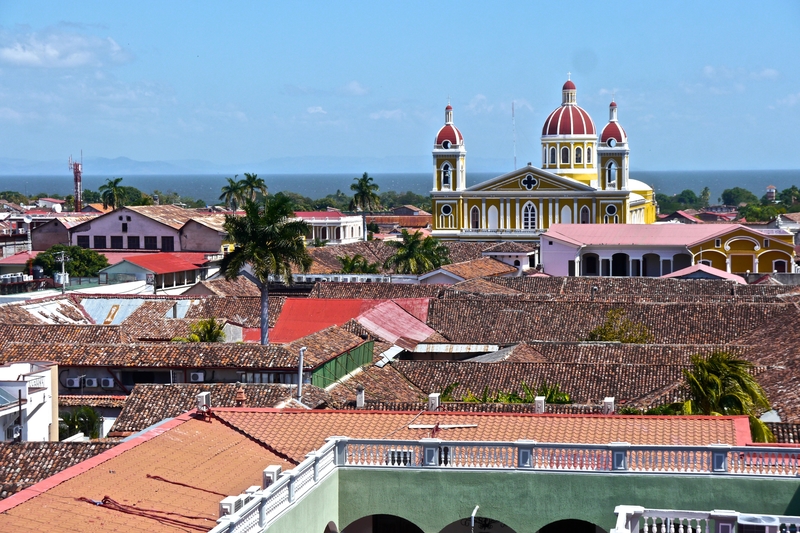
Granada has colorful architecture, restaurants, markets and an established foreign community. It offers a more walkable daily routine than many Nicaraguan destinations and reasonable access to Managua. Heat, tourist-zone petty crime, uneven sidewalks and limited local specialist medicine are the main tradeoffs.
San Juan del Sur and the Southern Pacific
San Juan del Sur offers beaches, surfing, restaurants and a strong international network. The region suits retirees who prioritize coastal life and can handle humidity, seasonal tourism, steep roads and higher prices. Serious medical care may require a long trip to Managua, so evacuation and nighttime transport planning matter.
Managua and the Carretera Masaya Corridor
The capital region provides the country’s deepest private healthcare, shopping, airport access and professional services. Many retirees prefer gated communities or the corridor toward Masaya and Granada rather than central Managua. Traffic, heat, earthquakes and neighborhood-specific security are significant considerations.
León
León is a university and cultural city with striking colonial architecture and easy access to Pacific beaches. It is very hot, sidewalks can be difficult, and advanced healthcare options are thinner than in Managua.
Matagalpa and Estelí
The northern highlands offer cooler nights, coffee country and a more local experience. They can work well for Spanish-speaking retirees who do not require frequent specialist care. Expat infrastructure and English-language services are limited.
Las Peñitas, Tola and Other Beach Areas
Smaller Pacific communities provide quiet, surf and ocean views. Service reliability, water, road access, security, title history and emergency medicine vary property by property. These are places to rent through both seasons before buying.
Nicaragua Retirement Location Comparison
| Location | Strongest advantage | Main caution | Best fit |
|---|---|---|---|
| Granada | Walkability and expat network | Heat and limited specialist care | Colonial-city lifestyle |
| San Juan del Sur | Beach life and community | Medical distance and seasonal costs | Active coastal retirees |
| Managua corridor | Best healthcare and services | Traffic, heat and security variation | Retirees prioritizing medicine |
| León | Culture and university energy | Extreme heat | Spanish-speaking city lovers |
| Matagalpa/Estelí | Cooler highland climate | Fewer expat and specialist services | Independent retirees |
| Smaller Pacific beaches | Quiet and nature | Roads, utilities, title and emergency access | Self-sufficient beach residents |
Healthcare: Build the Plan Around Managua
The 2026 U.S. advisory says routine and emergency medical services are limited and comprehensive quality care is available only in Managua. It notes that clinics outside the capital may lack basic resources and supplies and that public hospitals are understaffed. That warning should determine where a retiree with serious chronic conditions lives.
Private hospitals in Managua, including Hospital Vivian Pellas and Hospital Militar, are commonly used by foreign residents. Confirm specialties, emergency capacity, payment requirements and insurance acceptance directly. Even in Managua, some cases may require evacuation abroad.
Original Medicare generally does not cover routine treatment in Nicaragua. Options include international insurance, locally available plans, direct payment and a dedicated emergency fund. Medical-evacuation coverage should specify the destination, medical-necessity test, preauthorization process and whether the insurer arranges transport.
Heat, Mosquitoes, Water and Medication
Dengue and other mosquito-borne diseases occur. Use screened housing, repellent and standing-water control. Heat and dehydration are significant on the Pacific side, while smoke and air quality can worsen seasonally.
The U.S. advisory states that tap water is generally not potable and recommends bottled water. Individual local advice differs, but retirees with gastrointestinal vulnerability should use a reliable drinking-water system. Confirm medication availability by generic name, bring a medical summary in Spanish and keep enough supply for disruptions while respecting customs rules.
Renting Before Buying
Rent through the rainy season before purchasing. Test water pressure, cistern capacity, drainage, roof leaks, mold, backup power, internet, cellular coverage, nighttime noise, road access and security. Visit after a storm and at night.
A written lease should identify currency, deposit, repairs, utilities, furnishings, pets, garden and pool work, early termination and inventory. Confirm the landlord’s identity and authority to lease. Keep wire instructions independently verified and receipts for every payment.
Buying Property: Title and Political Risk
Foreigners can generally own titled real estate, but Nicaragua requires exceptional due diligence. Title chains may involve historic agrarian reform, conflicting claims, possession rather than registered ownership, coastal restrictions, communal or indigenous rights, or inaccurate boundaries. A corporation does not cure a defective title.
In 2025 Nicaragua adopted a new border-territory framework affecting land within 15 kilometers of international borders. Anyone considering land near Costa Rica or Honduras needs current, independent advice on whether ownership, control or use is permitted. Coastal concessions and environmental restrictions also require specialized review.
Use an attorney who represents only you and an independent surveyor. Obtain registry history, cadastral survey, tax clearance, land-use confirmation, access and easement evidence, water rights, environmental review and seller identity checks. Investigate prior confiscation or agrarian claims. Avoid irrevocable commitments until every issue is documented.
Banking, Córdobas and Moving Money
The córdoba is the official currency; U.S. dollars are commonly accepted, but damaged notes may be refused. The U.S. State Department listed an exchange rate of C$36.78 per US$1 in its June 2026 country guidance. Policies can change, so confirm the live rate when budgeting.
Banks may request extensive source-of-funds and residence documentation. Keep a dependable account outside Nicaragua, use regulated transfer channels and maintain more than one way to access cash. U.S. citizens should review FBAR, Form 8938 and foreign-entity reporting with a qualified adviser.
Safety, Law Enforcement and Political Risk
The U.S. State Department’s May 14, 2026 Level 3 advisory cites crime, health, wrongful detention and arbitrary enforcement of laws. It says U.S. nationals face a serious risk of wrongful detention, authorities may impose exit bans, and foreigners may be denied entry or expelled. It also warns that permanent residence has been revoked for perceived political actions or associations.
Petty theft, vehicle burglary and occasional armed robbery occur. Avoid isolated areas and night driving, secure phones and bags, and choose housing with appropriate lighting and controlled access. The advisory restricts U.S. government employees from public transportation and most driving after dark outside Managua and the Carretera Masaya corridor.
Avoid demonstrations and political activity. Public photography may be restricted, especially around government buildings or police, and drones are illegal according to the advisory. Maintain a family check-in plan, copies of documents and an exit strategy that does not depend on consular rescue.
Earthquakes, Volcanoes, Hurricanes and Flooding
Nicaragua lies in an active seismic and volcanic zone. Managua has suffered destructive earthquakes, while volcanoes near populated corridors can produce ash and gas hazards. The Caribbean side is exposed to hurricanes, and tropical systems can bring flooding and landslides across the country.
Choose structurally sound housing, learn evacuation routes and keep water, food, medications, lights, cash, batteries and communications backups. Ask who maintains the access road and whether bridges or culverts fail in heavy rain.
Driving and Transportation
Major roads can be good, but lighting, animals, pedestrians, motorcycles, potholes and unmarked hazards make night driving risky. A short map distance can become a long emergency transfer. Test the drive from a potential home to the airport and a capable hospital at the time of day you would actually travel.
Vehicle import and registration rules can change. Before using a foreign license or buying a vehicle, confirm validity, insurance, inspection and title-transfer requirements. Never surrender a passport at a roadside checkpoint unless legally required and always remain calm and respectful.
Pets and Household Goods
Dogs and cats typically need current veterinary documents and vaccination records that meet Nicaragua’s entry requirements, while airlines impose separate crate, temperature and breed rules. Verify requirements immediately before travel.
Pensionado incentives may help with qualifying household goods and a vehicle, but advance approval, value caps and time limits can apply. Shipping delays and port charges can overwhelm the benefit. Bring only what is difficult to replace after receiving written customs guidance.
Aging in Place and Long-Term Care
A cheap hillside home loses its appeal when driving becomes difficult. Favor level access, a main-floor bedroom, safe bathrooms, reliable water and power, and a route to Managua that remains usable during storms. Identify who can respond if a spouse falls or becomes confused.
Home help may be affordable, but formal long-term-care and dementia options are limited. Check training, references, overnight coverage, medication management and hospital-transfer procedures. Retirees with progressive disease should plan a trigger for relocating closer to family or advanced care.
Estate Planning, Ownership and Incapacity
Coordinate a Nicaraguan will and powers of attorney with your home-country plan. Personally owned real estate, company shares, bank accounts and beneficiary designations can transfer differently. Clarify marital rights, succession, incapacity and tax consequences before choosing an ownership structure.
Keep a bilingual emergency file outside the home and with a trusted person abroad. Include passport copies, medications, insurance, lawyers, banks, property records and instructions for pets and bills. Limit any local power of attorney to the authority and duration genuinely needed.
A 12-Month Nicaragua Retirement Plan
| Timing | Priority actions |
|---|---|
| 12–9 months | Read current advisories, evaluate political-risk tolerance, compare regions and medical needs |
| 9–6 months | Take a trial trip, choose a residence route, confirm documents and obtain insurance underwriting |
| 6–3 months | Order apostilled records, arrange a rental, create an exit plan and build emergency reserves |
| First 30 days | Map hospitals, test transport and utilities, secure communications and confirm lawful status |
| Months 2–6 | Advance residence, study Spanish, establish banking carefully and experience the rainy season |
| Months 6–12 | Review tax and renewal duties, reassess safety and healthcare, then consider a longer lease |
Common Mistakes When Retiring in Nicaragua
- Treating low residency thresholds as proof the move is low risk
- Ignoring the Level 3 advisory and political environment
- Buying property during a vacation
- Using the seller’s attorney as the only adviser
- Assuming a registry entry eliminates historic claims
- Living hours from Managua without an evacuation plan
- Budgeting without air conditioning, backup power or emergency travel
- Assuming Medicare works abroad
- Relying on border runs instead of lawful residence
- Discussing politics or attending demonstrations
- Driving after dark on unfamiliar roads
- Concentrating retirement savings in one Nicaraguan asset
Is Nicaragua Right for Your Retirement?
Nicaragua can suit an independent, Spanish-learning retiree who values climate, culture and affordability, has modest medical needs, keeps assets diversified and accepts meaningful political and legal uncertainty. It is a poor fit for anyone who needs predictable rule of law, advanced healthcare close by or guaranteed freedom to enter and leave.
Use stages: make a short research visit, then rent through both seasons, keep most assets outside the country, test healthcare and transport, and reconsider the decision whenever official advisories change. Compare the country with alternatives through the complete retirement guide directory.
Frequently Asked Questions About Retiring in Nicaragua
Can a U.S. citizen retire in Nicaragua?
Nicaragua has residence categories commonly used by foreign retirees, including pensionado and rentista. Approval is discretionary, and current requirements should be confirmed before moving.
How much pension income is required?
The long-published minimum is US$600 per month in qualifying lifetime pension income, with additional income for dependents. Confirm the current threshold, age rule and documentation with INTUR and immigration.
What is the rentista requirement?
Published 2026 summaries commonly cite about US$750 per month in qualifying stable passive income. Confirm which sources qualify and how long the income must be guaranteed.
Can foreigners buy property?
Foreigners can generally own titled property, but coastal, communal, agrarian-reform and border-zone land require heightened review. Political and expropriation risks also deserve explicit consideration.
Is Nicaragua safe for retirees?
The U.S. State Department rated Nicaragua Level 3—Reconsider Travel—on May 14, 2026 because of crime, health, wrongful detention and arbitrary enforcement of local laws.
Where is the best healthcare?
The most comprehensive private care is concentrated in Managua. Retirees living elsewhere need a realistic transport and medical-evacuation plan.
Does Medicare work in Nicaragua?
Original Medicare generally does not cover routine care in Nicaragua. Most retirees use private or international insurance, self-pay funds and medical-evacuation coverage.
Where do expats retire?
Popular bases include Granada, San Juan del Sur, Managua and the Carretera Masaya corridor, León, Pacific beach communities and cooler northern cities such as Matagalpa and Estelí.
Should I buy a home immediately?
No. Rent first, experience the rainy season, test medical access and utilities, and obtain independent title, survey, tax, zoning and political-risk advice before buying.
Official and Planning Resources
- Nicaragua Ministry of the Interior and immigration information
- Nicaraguan Tourism Institute (INTUR)
- General Directorate of Revenue (DGI)
- Nicaragua judicial and public-registry information
- Ministry of Health
- National disaster-prevention system
- U.S. State Department Nicaragua advisory
- U.S. Embassy Managua
- CDC Nicaragua travel health information
Explore More Retirement Guides
Compare Nicaragua with other completed retirement destinations:
Country guides
Browse every destination
Use the main directory for all published and upcoming retirement guides.
Retirement Guides by CountryTags: Nicaragua retirement, retire in Nicaragua, retiring in Nicaragua, moving to Nicaragua, Nicaragua expat guide, pensionado residency, rentista residency, Nicaragua healthcare, Nicaragua taxes, Nicaragua cost of living, retirement abroad