Retiring in Georgia attracts expats with long visa-free stays for many nationalities, relatively low costs, dramatic Caucasus scenery, ancient wine culture and straightforward apartment ownership. Tbilisi provides urban energy and private medicine; Batumi offers the Black Sea; Kutaisi delivers a slower, less expensive alternative.
The easy entry policy can be misleading. A one-year visa-free stay is not permanent residence, tax immunity or guaranteed re-entry. Healthcare is private for most foreigners, banks conduct strict compliance reviews, agricultural land is restricted and regional security requires awareness. Georgia works best for retirees who enjoy an emerging system and keep contingency plans.
Why Retire in Georgia?
Georgia sits between Europe and Asia with a distinct language, alphabet, Orthodox Christian tradition and celebrated hospitality. Food and wine are central to social life. Domestic travel reaches vineyards, cave cities, ski regions and Black Sea beaches within a compact country.
Housing and local services can remain affordable compared with Western Europe, although prime Tbilisi and Batumi prices have risen. Internet is strong, mobile service inexpensive and many administrative services efficient. The tradeoffs include chaotic driving, inconsistent sidewalks, air pollution in Tbilisi, weak building enforcement in some projects and limited long-term eldercare.
Georgia’s advantages
- Up to one-year visa-free entry for many nationalities
- Moderate housing and everyday costs
- Foreign ownership of most apartments
- Fast internet and useful digital services
- Private healthcare and dentistry at reasonable prices
- Mountains, wine regions and Black Sea coast
- Strong hospitality and food culture
- Convenient links to Turkey and Europe
Important tradeoffs
- No automatic permanent status from visa-free stays
- Complex medicine may require treatment abroad
- Agricultural land restrictions
- Traffic and pedestrian hazards
- Language barrier outside expat settings
- Political demonstrations and regional conflict
- Cold winters or humid Batumi conditions
- Limited formal assisted living
Visa-Free Stay and Residence Permits
The one-year visa-free framework
Citizens of a long list of countries, including the United States, Canada, the United Kingdom, EU states, Australia and others, have commonly been allowed to enter and stay without a visa for one full year. The official Georgian consular portal is the controlling source. Passport validity, insurance requirements and border discretion still apply.
Visa-free stay is generous but temporary. It may allow renting, opening some accounts and living normally, yet it does not create a residence card. Re-entry after a border trip is not a legal promise. Border officers can ask about purpose, accommodation, funds and insurance.
Property-based short-term residence
Ownership of qualifying non-agricultural real estate above the required market value can support a short-term residence permit. The frequently cited threshold is US$100,000 equivalent, measured by an accredited valuation rather than merely the contract price. Renewals depend on continued eligibility.
Never buy solely for residence without confirming the current threshold and qualifying title. Off-plan contracts, hotel rooms, fractional interests and agricultural parcels may not work as expected. Residence for dependants and the eventual route to longer status need separate review.
Investment, work and family permits
Georgia offers residence categories for qualifying investments, employment or entrepreneurial activity, family reunification and other grounds. Investment status involves a higher commitment and continuing evidence. Work residence requires genuine economic activity and documentation rather than a paper company.
Permanent residence and citizenship
Permanent residence can become available through qualifying years or family and investment provisions, but continuous lawful residence, absences and category rules matter. Citizenship normally requires a longer commitment, Georgian language and knowledge tests, lawful income or property and discretionary approval. Visa-free years do not automatically turn into citizenship.
Health insurance at entry
Georgia has moved toward mandatory medical and accident insurance for foreign visitors, with implementation details receiving revisions. Because requirements can change, carry a policy valid for the entire stay and verify current minimum coverage on official sites immediately before travel.
Cost of Living
Georgia remains good value when retirees use local food, public transport and apartments outside the most fashionable districts. Imported goods, central furnished rentals, international insurance, winter energy and frequent flights quickly raise costs.
| Monthly expense for two | Value lifestyle | Comfortable | Premium |
|---|---|---|---|
| Rent | US$500–$800 | $850–$1,400 | $1,600+ |
| Utilities, internet, phones | $120–$220 | $180–$300 | $350+ |
| Food and dining | $450–$700 | $700–$1,050 | $1,200+ |
| Transport and household help | $100–$250 | $250–$450 | $600+ |
| Insurance and healthcare | $250–$550 | $500–$900 | $1,100+ |
| Leisure and travel reserve | $150–$300 | $350–$650 | $800+ |
| Planning total | $1,570–$2,820 | $2,830–$4,750 | $5,650+ |
These are planning scenarios. Batumi prices rise in summer, ski towns in winter and Tbilisi in central expat districts. Heating efficiency can transform winter costs. Keep a foreign-currency reserve because lari exchange rates move.
Best Places to Retire in Georgia
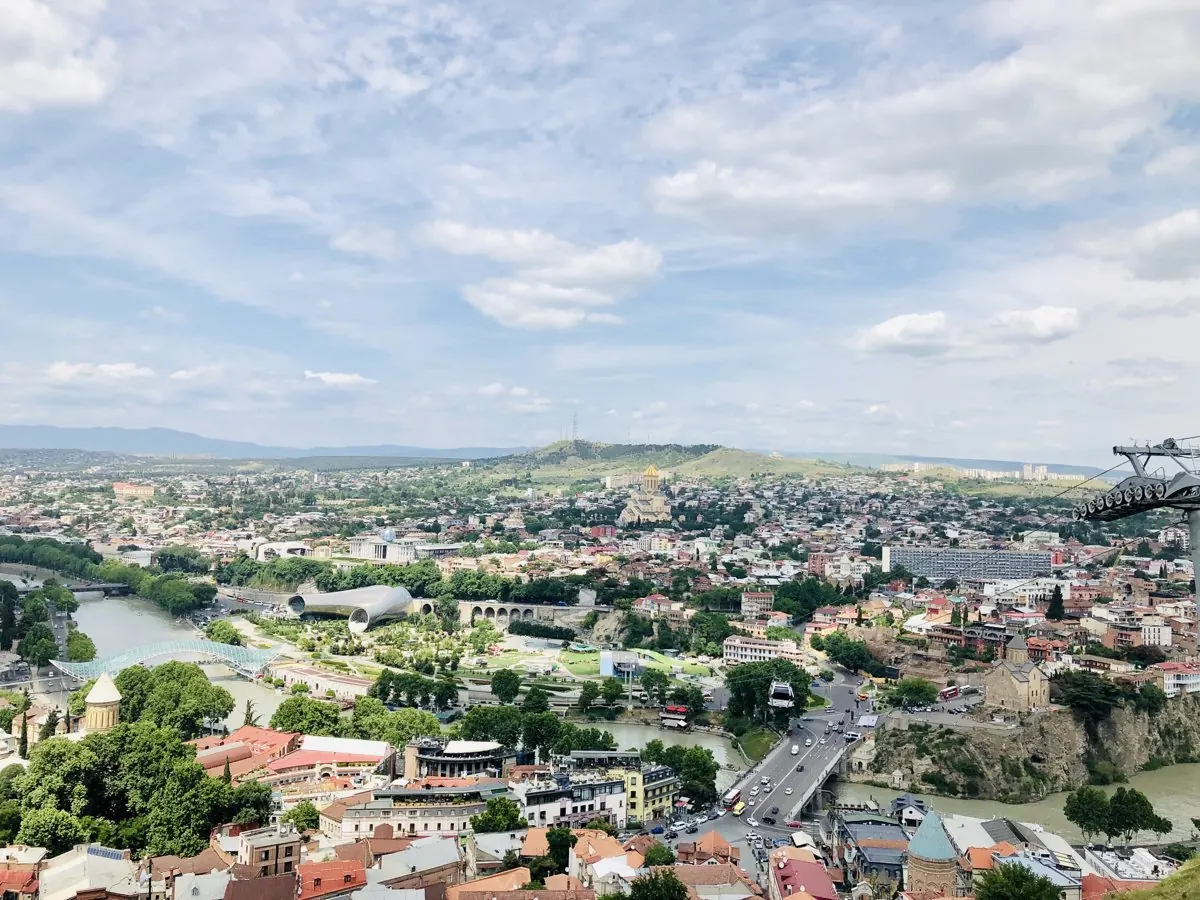
Tbilisi
Tbilisi has the country’s best hospitals, specialists, embassies, banks, restaurants and flight connections. Vake is green and upscale; Vera is central and atmospheric; Saburtalo offers metro access and medical facilities; Chugureti has historic character; Didi Dighomi provides newer housing but greater car dependence.
The city is hilly, traffic-heavy and sometimes polluted. Old buildings may lack lifts or have unsafe wiring, while new towers need management and fire-safety review. Live near a metro or the hospital you would use.
Batumi
Batumi offers a long promenade, sea views, international residents, casinos, restaurants and a growing skyline. It can suit active retirees who enjoy walking and mild temperatures. Summer tourism, heavy construction, subtropical rain, winter damp and mold are major realities.
Many apartments are investment studios rather than comfortable full-time homes. Inspect soundproofing, ventilation, elevators, generator, reserve fund and legal status. Test January or February, not only July.
Kutaisi
Kutaisi is smaller, greener and less expensive, with a regional airport and access to western Georgia. It offers markets, cafés and useful healthcare without Tbilisi scale. Specialist depth and English are more limited. It suits independent retirees comfortable with a smaller foreign network.
Telavi and Kakheti
Wine-country living around Telavi is beautiful and community-oriented. Costs can be low, but rural healthcare, transport and winter utility reliability require attention. Kakheti summers are hot and a car is helpful.
Borjomi
Borjomi offers forest, mineral-water history and a cooler mountain environment. Winter can be snowy and specialist care limited. It works better for healthy retirees or seasonal residence than for complex medical needs.
Gori, Zugdidi and smaller cities
Secondary cities provide authentic daily life and low rents, but services and language support thin rapidly. Gori’s proximity to an occupation boundary creates special security awareness. Zugdidi is a gateway to Samegrelo and mountains but wet and medically dependent on larger centers.
Healthcare, Insurance and Medical Evacuation
Georgia’s private system provides rapid appointments, imaging, dentistry and many routine procedures at prices below Western Europe or the United States. Quality and infection-control standards vary by facility and practitioner. Seek hospitals accredited or trusted by international insurers.
Tbilisi has the deepest care. Batumi and Kutaisi can manage routine and some emergency treatment, while rural areas are limited. Complex cancer care, advanced neurosurgery, unusual cardiac procedures or rehabilitation may lead retirees to Turkey, Germany or their home country.
Insurance should cover inpatient and outpatient care, chronic conditions, medicines, evacuation and repatriation. Local plans may be inexpensive but have low caps or narrow networks. International plans become costly with age. Confirm whether treatment in Turkey is covered and whether insurer preauthorization is required.
Call 112 for emergencies. Save the address of a chosen hospital in Georgian, carry a translated medication list and keep funds for deposits. Apartment access matters: narrow streets, locked courtyards and failing elevators can delay care.
Tax Residence, Pensions and the 1% Myth
Georgia’s general residence test commonly uses 183 days in a continuous twelve-month period ending in a tax year. Special high-net-worth residence is possible under separate rules. Visa-free status does not postpone tax residence.
Georgia’s tax system is often described as territorial, but sourcing rules are technical. Work physically performed in Georgia can be Georgian-source even when the payer is abroad. Pensions, government benefits, annuities, dividends, capital gains, rent and business receipts do not all follow one rule.
Small-business status
The famous 1% rate applies to qualifying turnover of an eligible individual entrepreneur holding small-business status, generally below a statutory annual ceiling. It is not a blanket 1% rate on worldwide retirement income. Certain professions and activities are excluded, and monthly filings can apply.
Americans continue U.S. returns and foreign-account reporting. Georgia has tax treaties with many countries, but not every retiree’s home country. Obtain written advice before 183 days, registering a business or selling investments.
Property Ownership and Due Diligence
Foreigners can generally buy registered apartments, houses and commercial property that are not agricultural land. Registration through the National Agency of Public Registry can be fast, but speed does not replace diligence.
Agricultural land is restricted. A rural house may sit on land classified agricultural, and marketing translations can hide that distinction. Nominees, local companies and side agreements add legal and tax risk.
Before paying
- Use an independent Georgian lawyer and certified translator.
- Obtain a current Public Registry extract and cadastral plan.
- Confirm land classification and permitted use.
- Check mortgages, seizures, co-owners and litigation.
- Compare actual area with registered area.
- Review construction permit and commissioning status.
- Inspect structure, wiring, gas, heating, damp and seismic resilience.
- For apartments, examine management, lifts, fire exits and debts.
- Use an authorized valuation if residence depends on value.
Off-plan construction carries delay, permit, developer and completion risk. Payment schedules should track verified milestones, and the contract must explain refunds, late delivery, title registration and currency conversion.
Banking, Currency and Money Safety
Bank of Georgia, TBC and other banks offer modern apps and multicurrency products, but foreign onboarding has tightened. Expect passport, Georgian phone, address, tax-residence declarations, occupation and source-of-funds evidence. Large transfers need documentation.
Never structure transfers to evade checks. Preserve pension letters, brokerage statements and sale contracts. Property scams can involve substituted account details or a person who is not the registered owner. Confirm large payment instructions independently.
The lari is the legal currency. Rent and property may be indexed to dollars, exposing a retiree paid in euros or pounds to two exchange rates. Write the payment currency and conversion source into contracts.
Language, Culture and Daily Life
Georgian has its own alphabet and is unrelated to most languages retirees know. Learning the script, numbers and greetings pays off quickly. English is increasingly common among younger urban professionals; Russian is widely understood by many older people but can be politically sensitive.
Hospitality is generous, and supra feasts involve elaborate toasts. Retirees should respect the Georgian Orthodox Church, family traditions and conservative norms. Invitations and food are important forms of relationship. Calm personal connections often solve daily problems better than impatience.
Public transport in Tbilisi is affordable, with metro, buses and taxis. Batumi is walkable along the coast. Sidewalks can be uneven or blocked, and snow or ice adds difficulty. Bolt and other apps reduce the need to drive.
Climate, Earthquakes and Environmental Risk
Georgia has major microclimates. Tbilisi is hot and dry in summer with cold winter spells. Batumi is mild, humid and exceptionally rainy. Kutaisi is wetter than Tbilisi. Mountain regions face snow, avalanches and road closures.
Georgia is seismically active. Inspect structural condition, secure heavy furniture and keep an emergency kit. Gas heaters require professional installation, ventilation and carbon-monoxide detectors. Carbon-monoxide poisoning is a serious winter hazard.
Tbilisi air quality can deteriorate from traffic, construction and geography. People with respiratory or cardiac disease should test different districts and use filtration. Flooding and landslides affect some valleys and mountain roads.
Safety, Politics and Regional Boundaries
Ordinary street life is generally safe, but use normal precautions against theft, scams and drink tampering. Road behavior is the more consistent physical risk. Use seat belts and avoid inexperienced mountain drivers.
Demonstrations in central Tbilisi can become confrontational and disrupt roads. Foreign retirees should avoid political gatherings. Abkhazia and South Ossetia are outside Georgian government control; administrative boundary lines can be poorly marked, and entry from prohibited directions can violate Georgian law.
Drug laws can be strict despite reforms in personal-use cases. Carry prescription documentation. Photographing military, border or sensitive infrastructure can draw attention.
Aging in Place
Georgia can serve an active retiree well, especially in a lift-equipped central Tbilisi apartment. Formal assisted living, dementia care, rehabilitation and hospice are less developed than in Western Europe. Affordable household help does not guarantee trained nursing.
Choose step-free housing, dependable elevators, safe heating and ambulance access. Establish a Georgian-speaking advocate, medical power arrangements and accessible emergency funds. If health declines, be ready to move from a small town to Tbilisi or abroad.
A 12-Month Moving Plan
- Months 12–10: Verify official entry rights and insurance rules for your passport.
- Month 9: Compare Tbilisi, Batumi and Kutaisi against healthcare and climate.
- Month 8: Obtain cross-border tax advice and begin day counting.
- Month 7: Price international insurance and treatment in Turkey.
- Month 6: Scout in winter or the least comfortable season.
- Month 5: Rent a furnished apartment and test ordinary errands.
- Month 4: Decide whether visa-free status or residence is appropriate.
- Month 3: Prepare civil, pension, bank and insurance documents.
- Month 2: Create medication, banking and emergency plans.
- Month 1: Reconfirm border, insurance and political conditions.
- First 90 days: Establish doctors, phone, bank and language study.
- Before day 183: Finalize tax-residence and business treatment.
- First year: Keep renting until every season and renewal risk is understood.
Common Mistakes
- Calling visa-free admission permanent residence.
- Assuming a border run guarantees another year.
- Using the 1% business rate for pensions or passive income.
- Buying agricultural-classified land through a nominee.
- Purchasing a Batumi studio without testing winter humidity.
- Crossing 183 days without tax advice.
- Relying on low-cap local insurance for major illness.
- Choosing a walk-up apartment that cannot support aging.
- Ignoring carbon-monoxide and seismic safety.
- Traveling near occupation boundaries without current advice.
Is Georgia Right for You?
Georgia is highly attractive for independent retirees who want value, culture, scenery and an easy initial stay. It is strongest for people comfortable with change, private healthcare and learning enough Georgian to navigate daily life.
It is weaker for retirees requiring advanced chronic care, regulated assisted living or a simple guaranteed path from visitor to permanence. Rent first, keep a medical fallback and treat tax planning as seriously as immigration.
Frequently Asked Questions
Does Georgia have a retirement visa?
Georgia does not have a conventional pensionado visa. Many nationalities can enter visa-free for up to one full year, while longer-term settlers may qualify for work, family, investment, property-owner or other residence permits. Always verify nationality-specific entry rights before travel.
Can U.S. citizens stay for one year visa-free?
U.S. citizens are among the nationalities commonly permitted to enter Georgia visa-free for one full year. This is permission to stay, not permanent residence, tax exemption or a right to work without complying with other laws. Border admission remains discretionary.
Can I reset the year by leaving and returning?
Many foreigners have historically departed and re-entered to receive a new period, but admission is never guaranteed and policy or border practice can change. Repeated runs are weaker than a residence permit for banking, tax, family security and long-term planning.
Must I have health insurance to enter?
Georgia has introduced or considered mandatory visitor-insurance rules with effective dates and implementation details that can change. Carry comprehensive coverage and verify the current minimum benefits, language and validity immediately before travel through official Georgian sources.
Can property ownership provide residence?
Qualifying ownership of non-agricultural real estate above the statutory market-value threshold can support a short-term residence permit. The widely cited threshold has been US$100,000 equivalent, based on an authorized valuation, but current law and valuation rules must be checked before purchase.
Can an investment provide residence?
A qualifying investment under Georgian immigration law may support investment residence, historically with a materially higher threshold than property residence. Capital, turnover, reporting and dependant rules are technical. Do not transfer funds until an independent lawyer confirms current requirements.
Can foreigners buy apartments?
Foreigners can generally own apartments and other non-agricultural real estate. Title should be checked through the Public Registry. Agricultural land is restricted, and a building or rural parcel can include agricultural classification even when marketed as a home.
Can foreigners own agricultural land?
Foreign ownership of agricultural land is constitutionally and statutorily restricted, with narrow exceptions. Never use a nominee or informal promise to bypass restrictions. Verify land classification, cadastral boundaries and permitted use before paying a deposit.
Does buying property guarantee entry?
No. Ownership and border admission are separate. A property may support a residence application if it meets current rules, but it does not guarantee visa-free admission or approval. Maintain lawful status throughout the process.
When do I become a Georgian tax resident?
The general domestic test is presence for 183 days or more in any continuous twelve-month period ending in a tax year, with specific counting rules. Treaty residence and special high-net-worth procedures can alter analysis. Track every day.
Are foreign pensions taxed in Georgia?
Treatment depends on tax residence, source, treaty and classification. Georgia’s territorial features do not mean every foreign receipt is automatically tax-free. Pension, Social Security, annuity, investment and remittance treatment should be reviewed individually.
What is Georgia’s 1% tax regime?
Qualifying individual entrepreneurs with small-business status may pay 1% on eligible Georgian business turnover below the statutory ceiling, rising under specified conditions. It is not a retirement or passive-income tax rate and does not automatically cover salaries, dividends, pensions or every profession.
Can I work remotely while visa-free?
Visa-free admission and tax/work compliance are separate. Remote workers can create Georgian tax residence, individual-entrepreneur obligations or employer risks. Retirees doing occasional consulting should obtain advice before assuming foreign clients remove Georgian consequences.
How much does a retired couple need?
A couple may plan roughly US$1,500–$2,300 monthly for a locally oriented life, US$2,300–$3,500 for a modern central apartment, private insurance and regular dining, and more than US$3,500 for premium housing and frequent international travel. Tbilisi and summer Batumi cost more.
What is the best Georgian city for retirees?
Tbilisi has the deepest hospitals, flights, banking and international services. Batumi offers sea access and a large foreign community but humid winters and seasonal crowds. Kutaisi is calmer and cheaper with useful transport, while smaller towns require more independence.
How good is healthcare?
Tbilisi has modern private hospitals, diagnostic centers, dental care and pharmacies. Batumi and Kutaisi handle routine needs, but capability varies. Complex oncology, neurological, cardiac or trauma cases may prompt treatment in Tbilisi, Turkey or another European center.
Does Medicare cover Georgia?
Original U.S. Medicare generally does not cover routine care in Georgia. Retirees should compare international or Georgian private policies, age limits, chronic-condition exclusions, direct billing, evacuation and treatment in Turkey or Europe.
Can I obtain Georgian public healthcare?
Georgia’s universal programs principally serve citizens and defined eligible groups. Foreign residents should not assume comprehensive public coverage. Verify any eligibility and keep private insurance and self-pay reserves.
Can I open a bank account?
Foreigners can apply, but banks conduct increasingly strict KYC, source-of-funds, tax-residence and sanctions checks. Some applicants are rejected without detailed explanation. Bring residence, address and income evidence, and keep an overseas backup account.
Is the Georgian lari stable?
The lari floats and can move against the dollar, euro and pound. Some rents and property prices are quoted in foreign currency even when payment occurs in lari. Hold a diversified reserve and understand the exchange-rate clause in every lease.
Is Georgia safe?
Georgia is generally considered safe for ordinary life, with relatively low violent street crime. Traffic, mountain conditions, earthquakes, winter carbon-monoxide exposure, petty theft and political demonstrations are more practical risks. Avoid protests and occupied-region boundary areas.
Can I travel to Abkhazia or South Ossetia?
These regions are outside Georgian government control, and travel can be illegal under Georgian law depending on route. Consular assistance is extremely limited. Retirees should follow official travel advisories and avoid administrative boundary lines.
Can I drive with a foreign license?
Foreign-license validity depends on residence status, document language and current law. An international driving permit can help. Georgian driving can be aggressive, mountain roads hazardous and winter equipment essential. Confirm insurer requirements.
Can I bring a pet?
Pets generally need a microchip or identification, valid rabies vaccination, veterinary health certificate and compliance with Georgian import rules and airline requirements. EU onward travel requires separate EU-compliant documentation and rabies timing.
Is Georgia welcoming to LGBTQ+ retirees?
Same-sex activity is legal and anti-discrimination protections exist in some contexts, but society remains conservative and public hostility has occurred. Same-sex marriage is not recognized. Privacy, neighborhood choice and legal planning for partners are important.
Do I need to speak Georgian?
Basic Georgian greatly improves daily life and signals respect. Russian and English are also used, but their prevalence varies by age, city and political sensitivity. Government documents and rural services may require Georgian or a translator.
What is winter like?
Tbilisi has cold spells and occasional snow; mountain regions have severe winters; Batumi is milder but very wet and humid. Heating quality, insulation and carbon-monoxide safety matter. Inspect a home in winter before buying.
Is Batumi a good year-round retirement base?
Batumi offers a promenade, new apartments, restaurants and flights, but summer crowds, construction, humidity, mold, rain and winter quiet can surprise buyers. Test a full winter and verify building management, waterproofing and title before purchase.
Can I age in place in Georgia?
It can work in central Tbilisi near strong private hospitals, but sidewalks, hills, older elevators and limited formal assisted living create challenges. Home help is available but not equivalent to regulated nursing. Maintain a care and evacuation plan.
What should I do first?
Confirm entry rights on Georgia’s official consular portal, buy comprehensive insurance, make a long scouting stay in two seasons and obtain tax advice before 183 days. Rent before buying and use an independent lawyer for any property or residence application.
Official and Practical Resources
- Georgia Consular Services
- Public Service Development Agency
- National Agency of Public Registry
- Georgia Revenue Service
- Georgia emergency service
- U.S. State Department: Georgia
Explore More Retirement Guides
Compare Georgia with other Investing Travels retirement destinations:
Tags: Georgia retirement, retire in Georgia, retiring in Georgia, moving to Georgia, Georgia expat guide, Georgia visa free, Georgia residence permit, Tbilisi retirement, Batumi retirement, Georgia healthcare, Georgia taxes, Georgia cost of living, Georgia property, retirement in Europe, retirement abroad