Ecuador remains one of Latin America's most practical retirement candidates, but the best move depends on much more than affordability. This guide connects immigration, tax, healthcare, altitude, security and natural-hazard planning so you can compare destinations realistically.
Ecuador Retirement at a Glance
| Planning question | Practical answer |
|---|---|
| Currency | U.S. dollar, eliminating day-to-day exchange-rate conversion for Americans. |
| Language | Spanish is essential; Kichwa and other Indigenous languages are important regionally. |
| Residence | Temporary pensioner and rentista visas are valid for two years under current official guidance. |
| Income benchmark | Current pensioner/rentista evidence is linked to three Unified Basic Salaries; confirm the current annual dollar equivalent. |
| Healthcare | Public, IESS social-security and private systems; best private specialist depth in Quito, Guayaquil and Cuenca. |
| Best first move | Rent near a preferred clinic for six to twelve months and test the difficult season before buying. |
Why Retire in Ecuador?
Ecuador compresses an extraordinary range of retirement lifestyles into a country roughly the size of Colorado: historic Andean cities, warm valleys, Pacific beaches, Amazonian towns and the Galápagos. It uses the U.S. dollar, offers defined temporary-residence categories for pensioners and people with recurring income, and has several cities with established international communities.
The advantages are substantial: familiar currency, fresh food, relatively affordable services, mild highland climates and private medical care in major cities. The cautions are equally important. Ecuador's security situation varies sharply by province, earthquakes and volcanoes are real planning issues, and the country's attractive Andean cities sit high enough to affect some retirees.
Ecuador works best when the decision begins with healthcare and neighborhood security rather than a generic cost-of-living promise. Cuenca, Quito, Loja, Vilcabamba, Cotacachi, Manta and other coastal communities offer very different medical networks, climates, risks and travel connections.
Why Ecuador appeals
- U.S. dollar is the official currency
- Defined pensioner and rentista residence routes
- Strong private-care options in major cities
- Several climates within short distances
- Fresh markets, culture and outdoor access
Challenges to plan around
- Regional violent-crime and kidnapping risks
- Altitude in Quito, Cuenca and mountain towns
- Earthquakes, volcanoes, floods and landslides
- Bureaucracy and Spanish-language processes
- Specialist care concentrated in larger cities
Dollarization simplifies budgeting, but it does not make Ecuador immune from inflation, banking limits or tax complexity. Imported items, private insurance and secure housing in preferred neighborhoods can cost far more than optimistic expat budgets suggest.
Geography, Climate and Elevation
Ecuador has four broad geographic zones: the Pacific coast, the Andean highlands, the Amazon and the Galápagos. The coast is warm and humid, with rainy-season flooding and stronger security concerns in some provinces. The highlands offer springlike days and cool nights, but their elevation matters medically. Amazonian areas are hot, wet and more limited in specialist care.
Quito sits around 2,850 meters, Cuenca around 2,550 meters, Loja around 2,060 meters and Vilcabamba around 1,500 meters. Manta and most beach communities are near sea level. Retirees with heart, lung, blood or sleep conditions should test highland cities slowly and seek medical advice before committing.
Microclimates matter. Two neighborhoods at different elevations can have different rain, fog, wind and temperatures. Coastal humidity accelerates mold and corrosion; mountain homes may feel cold indoors because insulation and central heating are uncommon. Visit in the least attractive season.
History, Culture and Everyday Life
Ecuador's identity reflects Indigenous civilizations, the Inca period, Spanish colonial rule, African-Ecuadorian heritage and strong regional cultures. Quito and Cuenca preserve major historic centers, while markets, craft traditions and community festivals keep regional identities visible.
Relationships and courtesy shape daily life. Greet people before making a request, use formal Spanish until invited otherwise and expect administrative processes to take patience. Retirees who learn Spanish gain independence in healthcare, government, contracts and friendships.
Food changes by altitude and region. Highland staples include potatoes, corn, soups, roasted pork and llapingachos; coastal cooking emphasizes seafood, plantains, rice and coconut. Markets can make a fresh-food budget economical, but water and food hygiene remain important for older adults.
Pensioner Residence: Visa de Jubilado
Ecuador offers a temporary residence category for retirees who receive a pension from abroad. Current official rules require the applicant to document a qualifying monthly pension, meet the general visa requirements and carry health insurance valid in Ecuador for the visa period.
The pension benchmark is linked to three Unified Basic Salaries, not a permanently fixed U.S.-dollar figure. Because Ecuador updates the salary benchmark, applicants must calculate the current requirement in the year they file. Supporting documents from abroad may need apostille or legalization and Spanish translation.
Current official guidance places applications in the online e‑VISAS system and indicates a two-year visa period. Fees, payment timing and the exact document list can change. Applicants age 65 or older may qualify for a fee reduction under current published rules, but should confirm how the reduction applies to both application and issuance fees.
Rentista and Remote-Work Routes
The rentista residence category is designed for people receiving lawful recurring income, such as rents, investment returns or similar resources. Official guidance currently requires documents showing monthly lawful income equal to at least three Unified Basic Salaries and health insurance covering Ecuador.
To sponsor dependents, current guidance requires an additional $250 per dependent each month. The underlying income documents must match the category: a bank balance alone may not prove a recurring pension or rent, and a remote salary may fit the separate remote-work rentista route more clearly.
Retirees who still consult, operate a company or work online should not assume the pensioner category authorizes every activity. Match immigration status to actual work and obtain tax advice about services performed while physically in Ecuador.
Documents, Apostilles and the e‑VISAS Process
General requirements commonly include a passport valid for at least six months, a current digital photograph, criminal-record certificates from the country of origin and countries of residence during the relevant period, payment of fees and proof of lawful means. Adults should treat police-certificate timing carefully because official guidance uses a limited validity window.
Foreign public documents may require apostille or consular legalization and an authorized Spanish translation. Names must match across pension letters, civil records and passports. Resolve initials, compound surnames and date differences before uploading.
The application is submitted through Ecuador's official online platform. If applying while in Ecuador, the applicant must maintain lawful immigration status. Pay attention to same-day payment deadlines and platform notices; an unpaid application can be removed automatically.
Visa Registration, Cédula and Permanent Residence
After approval, complete every required visa registration and identity step. The Ecuadorian cédula becomes central to banking, contracts, healthcare, utilities, taxes and many online services. Keep copies of the visa grant, payment receipts and registration evidence.
Temporary residents may become eligible for permanent residence after satisfying the statutory residence and absence requirements. Do not assume eligibility solely because two years have passed. Count travel days and confirm the current limits before extended trips.
Naturalization is a separate process with its own residence, language, integration and documentation tests. Property ownership does not create residence or citizenship.
Ecuadorian Tax Residence and Worldwide Income
Ecuador's tax-residence analysis includes physical-presence tests centered on 183 days as well as family and economic-interest criteria. A retiree can become tax resident even when immigration status is still temporary. Keep a precise travel calendar.
Ecuadorian tax residents are generally subject to income tax on global income under current law, while nonresidents are generally taxed on Ecuadorian-source income. Pension treatment, retirement-account distributions, dividends, interest, capital gains, foreign rentals and remote work need separate classification.
A foreign tax credit may help with income taxed abroad, but limits and documentation matter. Before moving, obtain a written projection from an Ecuadorian adviser who regularly handles foreign retirees and coordinate it with home-country advice.
U.S. Taxes, Social Security and Medicare
U.S. citizens and green-card holders generally keep filing U.S. federal returns abroad. Foreign bank and investment accounts can trigger FBAR and Form 8938 reporting. Foreign companies, trusts and certain pooled funds create more complex disclosures.
The United States and Ecuador do not currently have a Social Security totalization agreement. Retirees who continue working should obtain advice about self-employment and payroll coverage. Many Social Security beneficiaries can receive payments in Ecuador, subject to SSA rules.
Original Medicare generally does not cover routine care in Ecuador. Some retirees retain Medicare for future U.S. care and buy local or international coverage for Ecuador. Include travel, temporary lodging and medical escort costs in that decision.
Cost of Living and a Realistic Budget
Ecuador is often less expensive than the United States, but the retirement budget depends on city, security, healthcare and imported preferences. Cuenca and Loja can offer value, while premium Quito neighborhoods, international insurance and newer coastal buildings cost more.
| Monthly category | Planning range (USD) | Variables |
|---|---|---|
| Rent | $500–$1,600+ | City, neighborhood, security, furnishing, elevator and view |
| Utilities and internet | $80–$250 | Cooling, hot water, building fees and backup power |
| Food and dining | $300–$750 | Local markets versus imported products |
| Healthcare | $150–$1,000+ | Age, conditions, deductible, network and evacuation |
| Transport | $75–$500 | Walkability, taxis, private car and domestic travel |
| Contingency | $300–$900 | Security, medical travel, visa costs and repairs |
These figures are planning bands, not quotes. Obtain age-specific insurance proposals and current rents at the exact address. Keep a separate reserve for medical evacuation, family emergencies and natural disasters.
Best Places to Retire in Ecuador
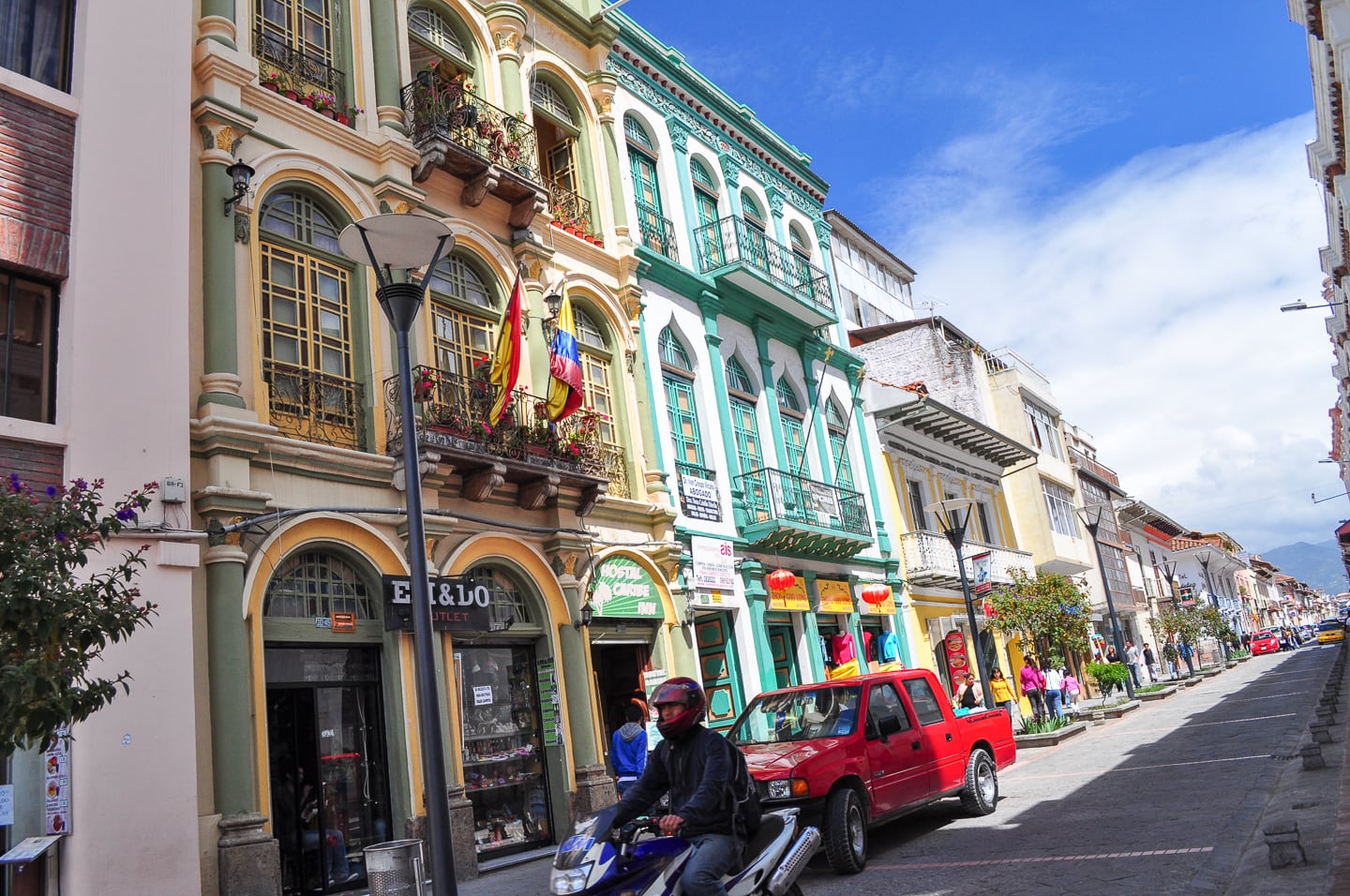
Cuenca: Ecuador's established retirement center
Cuenca offers a UNESCO-listed center, rivers, markets, private hospitals, a tram and a large international community. Its scale is manageable and its climate is mild. Drawbacks include elevation, cool wet periods, traffic pollution, rising rents in preferred districts and the risk of living mostly inside an expat bubble.
Quito: best specialist depth and international access
Quito has leading hospitals, an international airport, culture and government services. It also has extreme elevation, steep geography, volcanic exposure and significant neighborhood variation. Retirees should prioritize clinic access and security over proximity to tourist attractions.
Loja: a quieter university city
Loja appeals to retirees seeking music, culture, manageable size and a lower elevation than Cuenca or Quito. It has regional healthcare and domestic flights, but fewer high-complexity specialists and a smaller English-speaking community.
Vilcabamba: valley living with rural tradeoffs
Vilcabamba has a warm valley climate, natural scenery and an established alternative-lifestyle community. Medical depth, road access, water rights, title quality and property security deserve careful review. The famous longevity narrative should not substitute for evidence-based health planning.
Cotacachi and the northern Andes
Cotacachi offers a smaller highland lifestyle near markets and scenery. Complex care generally means travel toward Quito. Road disruption, altitude and limited local specialists should be part of the decision.
Manta and the Pacific coast
Manta provides beaches, an airport, private services and sea-level living. The tradeoffs are heat, humidity, earthquake and tsunami exposure and regional security concerns. Verify the current advisory for Manabí and the exact neighborhood before considering a move.
Guayaquil: major medicine, major security screening
Guayaquil has sophisticated hospitals, commerce and international flights, but the metropolitan security picture is highly uneven. Current official advisories designate parts of the city at elevated risk. It is not a place to choose without recent, block-level professional guidance.
City Comparison for Retirees
| Location | Approx. elevation | Best fit | Main caution |
|---|---|---|---|
| Manta | Sea level | Beach life and low altitude | Heat, humidity, seismic and security risk |
| Vilcabamba | 1,500 m | Warm valley and nature | Limited complex care and rural property issues |
| Loja | 2,060 m | Quiet culture and university services | Smaller specialist network |
| Cuenca | 2,550 m | Best all-round expat infrastructure | Altitude and cool wet periods |
| Quito | 2,850 m | Specialists, airport and culture | High altitude, steep terrain and volcanic exposure |
Healthcare: MSP, IESS and Private Care
Ecuador's system includes Ministry of Public Health facilities, the IESS social-security network and private hospitals and insurers. Access, contribution rules, provider choice and waiting times differ. Immigration insurance and long-term healthcare planning are related but not identical.
Foreign residents may explore voluntary IESS affiliation when they satisfy current identification and contribution rules. Do not assume immediate access to every specialist or medication. Verify waiting periods, contribution basis, referral pathways and whether care is available locally.
Private hospitals in Quito, Guayaquil and Cuenca provide the broadest specialist networks. Before buying insurance, request written terms covering age limits, pre-existing conditions, annual maximum, deductible, copayments, network, prescriptions, cancer care, dialysis and evacuation.
Some providers require payment or a guarantee before treatment. Keep accessible emergency funds and understand the insurer's authorization procedure. Retirees in smaller towns should map both a local stabilizing facility and the higher-level hospital they would use.
Altitude, Dengue, Water and Medication
Altitude can cause headache, fatigue, poor sleep and shortness of breath; severe illness requires urgent care and descent. Spend the first days quietly and seek clinician advice before moving to Quito or Cuenca with cardiopulmonary disease.
Dengue and other mosquito-borne diseases affect coastal and lower areas. Use current Ministry of Health guidance, screens, repellent and standing-water control. Yellow-fever vaccination may be relevant for Amazon travel but should be individualized for older adults.
Medication names and strengths differ. Bring a Spanish medical summary and verify availability by generic name before moving. Water quality and storage-tank maintenance vary by building; ask how tanks are cleaned and whether local residents filter drinking water.
Renting Before Buying
Rent for at least six to twelve months. Use a written Spanish lease that defines rent, deposit, building fees, utilities, repairs, inventory and early termination. Confirm the owner's identity and authority to lease.
Inspect water pressure, hot water, gas, wiring, internet, elevator backup, seismic condition, mold and noise. On the coast, inspect corrosion, drainage and air conditioning. In the highlands, ask about sun exposure, dampness and indoor temperature.
Test the walking route to groceries and clinics. Cobblestones and slopes in historic districts can become barriers after injury. Visit morning, evening, weekends and after heavy rain.
Buying Property in Ecuador
Foreigners can generally buy Ecuadorian property under rules similar to citizens, but ownership does not grant residence. Special environments—including the Galápagos, protected land, communal territory, coastlines and rural water areas—require specialized review.
Independent counsel should verify the Property Registry, title chain, liens, municipal taxes, boundaries, permits, condominium debts, water rights, seller authority and pending litigation. Rural listings may rely on informal descriptions that do not match registered boundaries.
Use a lawful banking trail and coordinate the purchase with tax, inheritance and marital-property planning. Before coastal purchases, study tsunami and liquefaction risk; before hillside purchases, examine landslides and drainage.
Banking, Dollars and Money Transfers
Ecuador's use of the U.S. dollar eliminates currency conversion for Americans but does not eliminate transfer and compliance issues. Banks may require a cédula, address, visa evidence, tax declarations and proof of funds.
Keep accounts and cards in more than one institution. Cash is still important in smaller towns, while large U.S. bills can be difficult to use. Contact the receiving bank before sending property-sized transfers and preserve pension, sale and investment records.
Ecuador may tax or require declaration of certain cash movements. Confirm current customs and tax rules before entering or leaving with significant funds.
Security, Crime and Regional Risk
Ecuador's national advisory currently calls for increased caution because of crime, terrorism, unrest and kidnapping, while designating specific coastal and border areas at higher levels. The map changes, so every scouting trip and property decision should use the live advisory.
Violent crime connected to organized criminal groups is concentrated in some regions, but theft, robbery and express kidnapping can occur elsewhere. Use trusted transport, keep phones away from vehicle windows, avoid displaying jewelry and choose housing with professional local security advice.
Demonstrations and roadblocks can halt interprovincial travel. Avoid gatherings, keep medication and food reserves and maintain an evacuation plan that does not depend entirely on government help.
Earthquakes, Volcanoes, Tsunamis and El Niño
Ecuador sits on an active seismic and volcanic zone. Quito lies near active volcanoes; the coast faces earthquake and tsunami exposure; mountain roads can experience landslides; El Niño can intensify rain and flooding.
Use official hazard maps before signing a lease. Ask about building age, structural assessment, evacuation routes, gas shutoff, water storage and past flood performance. Coastal residents should know the fastest tsunami evacuation route to high ground.
Maintain water, food, medications, headlamps, radio, battery packs, cash, sturdy shoes, document copies and pet supplies. Natural-hazard planning should influence property choice, not sit at the end of the checklist.
Transportation, Driving and Flights
Quito has a modern metro, buses and taxis; Cuenca has a tram and buses. Walkability varies by hills, traffic and sidewalk quality. Ride services and trusted taxi contacts are useful after dark.
Driving requires a current understanding of license validity, conversion rules, vehicle inspection and insurance. Mountain roads can be slow, foggy or blocked by slides. Avoid unnecessary night driving.
Quito and Guayaquil provide the main international gateways, with domestic connections to Cuenca, Loja, Manta and other cities. Retirees in small towns should budget the full door-to-airport time and disruption risk.
Language, Utilities and Household Setup
Spanish determines how independent retirement will be. Learn medical vocabulary, emergency phrases and the language of leases and repairs. Relying on a translator for every appointment becomes expensive and risky.
Internet can be excellent in urban neighborhoods but must be verified at the exact address. Keep a second mobile provider if connectivity is important. Ask about water storage and backup power, particularly where outages occur.
Ecuador generally uses 120-volt, 60-Hz electricity and North American-style plugs, making U.S. appliances easier to use. Always check device labels and use surge protection where supply is unstable.
Pets and Household Goods
Agrocalidad controls pet entry. Dogs and cats generally need a valid official health certificate and vaccination and parasite documentation that meets current timing rules. Airlines impose additional crate and temperature requirements.
Household-goods treatment depends on immigration status, timing and inventory. Returning-resident exemptions do not automatically apply to foreign retirees. Obtain written customs and moving guidance before shipping.
Estate Planning and Inheritance
Ecuadorian succession, marital-property and protected-heir rules can affect local assets. A U.S. will is not a complete plan for an Ecuadorian apartment or bank account. Coordinate counsel in both countries.
Create valid powers for healthcare, banking and property management. Decide who can act if you are hospitalized and how they will access records and funds. Foreign documents may require apostille, translation and local notarization.
Aging in Place
Evaluate elevators, stairs, cobblestones, slopes, bathroom access, grocery delivery, home nursing and rehabilitation before choosing a home. An attractive historic apartment can become difficult after a fall.
Assisted-living and home-care options vary in standards and cost. Visit providers before a crisis, review staffing and emergency transfer protocols, and maintain a plan for care in another city or country if needs become complex.
A 12-Month Ecuador Move Plan
| Timing | Key actions |
|---|---|
| 9–12 months | Model taxes, assess altitude tolerance, begin Spanish and shortlist two cities. |
| 6–9 months | Scout neighborhoods, clinics and difficult-season weather; confirm the current visa benchmark. |
| 3–6 months | Order police and civil records; arrange apostilles; compare insurance and document pension or rent income. |
| 1–3 months | Apply through e‑VISAS as instructed; arrange temporary housing, medication and pet documents. |
| First 90 days | Complete visa and cédula steps; establish phone, banking, clinics and emergency contacts. |
| Months 4–12 | Track tax residence and travel days, experience the difficult season and delay property purchase. |
Common Mistakes Retirees Make
The biggest mistakes are using an outdated fixed visa-income number, assuming residency and tax residence are identical, choosing a coastal city without current security research, buying before renting and ignoring altitude.
Other errors include relying solely on IESS without checking access, choosing insurance by premium alone, underestimating damp highland homes and treating a rural deed as self-validating. The safer sequence is legal and tax review, scouting, temporary housing, residence, healthcare setup and only then purchase.
Frequently Asked Questions About Retiring in Ecuador
Can a U.S. citizen retire in Ecuador?
Yes. Ecuador offers temporary residence categories for pensioners and people with recurring income, subject to current income, document and insurance requirements.
How much pension income is required?
The official benchmark is tied to three Unified Basic Salaries rather than a permanent dollar figure. Confirm the current year's SBU before applying.
How long is the temporary retirement visa valid?
Current official guidance states two years. Permanent-residence eligibility later depends on residence, absence and other requirements.
How much extra income is needed for dependents?
Current official guidance requires an additional $250 per month for each dependent sponsored under the principal applicant.
Does Ecuador tax worldwide income?
Ecuadorian tax residents are generally taxed on global income, with foreign-tax-credit rules potentially reducing double taxation. Individual income types need professional analysis.
Is there a U.S.–Ecuador tax treaty?
There is no comprehensive U.S.–Ecuador income-tax treaty currently in force. Cross-border planning should address both systems directly.
Can foreigners buy property?
Yes, foreigners can generally buy property, but special land, title, environmental and Galápagos restrictions require legal review. Ownership does not grant residence.
Can retirees join IESS?
Some foreign residents may qualify for voluntary affiliation under current identification and contribution rules. Verify eligibility, waiting periods and coverage directly with IESS.
Is Ecuador safe for retirees?
Safety varies sharply by region and neighborhood. Several coastal and border areas are under stronger official warnings; review the live advisory before choosing a location.
Which Ecuadorian city is best for retirement?
Cuenca offers the most established all-round expat infrastructure; Quito offers the deepest specialists; Loja and Vilcabamba are quieter; Manta offers sea-level coastal life with greater security and natural-hazard considerations.
Does Medicare cover care in Ecuador?
Original Medicare generally does not cover routine care in Ecuador. Separate local or international coverage is needed.
Should I buy property immediately?
No. Rent for six to twelve months, test security, weather and medical access, and obtain independent title and hazard due diligence first.
Official Resources
- Ecuador temporary pensioner residence
- Ecuador temporary rentista residence
- Servicio de Rentas Internas
- Instituto Ecuatoriano de Seguridad Social
- National Risk Management Secretariat
- Agrocalidad pet-entry information
- U.S. State Department Ecuador advisory
- U.S. Mission Ecuador
Explore More Retirement Guides
Compare Ecuador's visa routes, dollar economy, healthcare and climate with nearby retirement destinations:
South America guides
Browse every destination
Use the main directory for every published and upcoming retirement guide.
Retirement Guides by CountryTags: Ecuador retirement, retire in Ecuador, moving to Ecuador, Ecuador expat guide, pensioner visa, rentista visa, Cuenca retirement, Ecuador healthcare, cost of living, retirement abroad