Chile gives retirees an unusual range of choices: sophisticated Santiago, walkable Pacific-coast communities, dry northern cities, wine country and green southern lake districts. This guide explains how to compare them and how to plan the legal, tax, medical and financial details before moving.
Why Retire in Chile?
Chile appeals to retirees who want political and economic institutions that are comparatively organized by regional standards, modern private healthcare, reliable utilities, dramatic scenery and a wide choice of climates. The country stretches more than 2,600 miles from the Atacama Desert to Patagonia, yet much of the population lives in a relatively narrow central corridor between the Andes and the Pacific.
A retiree can choose the cultural depth and specialist hospitals of Santiago, the coast around Viña del Mar, the dry sunshine of La Serena, the green university atmosphere of Valdivia, or the lakes and volcanoes around Puerto Varas. Chile feels more orderly than some Latin American destinations, but that does not mean it is inexpensive or effortless.
Housing in preferred neighborhoods, private medical insurance, cars, toll roads, winter heating and imported products can raise the budget. Spanish is essential, and Chilean speech is famously fast and full of local expressions. Retiring successfully in Chile is less about finding the cheapest country and more about matching the right city, healthcare network and climate to your needs.
Chile Retirement at a Glance
Chile is a strong candidate for retirees who value infrastructure, natural beauty, wine regions, four-season options and access to sophisticated private medicine. Its main challenges are earthquakes, air pollution in some cities, rising housing costs, bureaucracy, fast local Spanish and the long distance between regions.
There is no single national retirement experience. A Santiago apartment near a major clinic is completely different from a house near Lake Llanquihue. The first planning decision should be whether you prioritize specialist healthcare, coastline, a dry climate, green landscapes, walkability, international flights or a quiet smaller city.
Strong reasons to choose Chile
- Modern private healthcare in major cities
- Multiple climate zones and spectacular nature
- U.S. income-tax and Social Security agreements
- Reliable utilities and formal property records
- Wine, food, coastline and outdoor recreation
Challenges to plan around
- Higher costs than some Latin American alternatives
- Earthquakes, tsunamis and wildfire exposure
- Fast, highly local Spanish
- UF-indexed prices and financial complexity
- Specialist care concentrated in larger cities
Geography and Climate: Choosing the Right Part of Chile
Northern Chile is exceptionally dry. Cities such as La Serena have bright skies and a coastal desert climate, while the high-altitude interior becomes much more demanding. Central Chile has a Mediterranean pattern with dry summers and cool, wetter winters. Santiago, Valparaíso and the major wine valleys are in this central zone.
Farther south, rainfall increases and landscapes become greener. Concepción, Valdivia, Puerto Varas and the Lakes Region offer forests, rivers and cooler summers, but retirees must budget for winter heating, dampness and rain. Patagonia is spectacular but remote, windy and more dependent on air connections.
Chile’s long geography creates real travel costs. Before choosing a smaller city, check flight frequency, road conditions, proximity to a regional hospital and whether weather can disrupt travel. A beautiful location loses some appeal if every specialist appointment requires an expensive flight to Santiago.
History and Culture Retirees Should Understand
Chile’s identity reflects Indigenous cultures, Spanish colonization, immigration, mining, agriculture, maritime trade and a complex modern political history. Regional character is strong: northern mining communities, central wine country, port-city culture, Mapuche heritage in the south and the distinct identity of Patagonia all shape daily life.
Chileans may initially appear more reserved than people in some neighboring countries. Relationships often deepen gradually through family, work, neighborhood and shared activities. Courtesy, punctuality and written documentation are valued, while personal introductions can make bureaucracy and business easier.
Food is comforting rather than aggressively spicy. Seafood, empanadas, pastel de choclo, cazuela, bread, fruit and excellent wine are common pleasures. Markets and neighborhood ferias are useful for fresh produce and an excellent way to practice Spanish.
Chile Retirement Residency: Pensioners and People With Independent Income
Chile’s immigration system provides temporary residence subcategories for retirees and people who can demonstrate recurring income. Applications for temporary residence are generally filed from outside Chile through the National Migration Service platform unless a specific exception applies. Do not arrive as a tourist assuming you can convert status inside the country.
Retirees normally document an established pension or retirement benefit. Rentistas demonstrate regular income from assets or other lawful sources. Chilean authorities assess whether the applicant can support themselves; there is not always a single permanent dollar figure that can safely be quoted for every case. Confirm the current evidence standard immediately before filing.
Temporary residence is granted for a defined period and may lead to permanent residence when the statutory residence, absence and eligibility conditions are met. Permanent residence is not automatic. Long absences, late filings or incomplete records can affect eligibility.
Residency Documents and the Application File
A strong application file typically includes a valid passport, recent photograph, police certificates, birth certificate, marriage certificate when relevant, proof of pension or recurring income, bank records and evidence requested for dependents. Documents issued abroad may require an apostille or consular legalization and certified Spanish translation.
Police certificates are time-sensitive. Names, middle names, surnames and dates must match across records. If a pension letter uses an abbreviated name, resolve that inconsistency before submission. Keep apostilled originals, high-quality scans and a chronological checklist of each document’s issue and expiration date.
After approval, follow the activation and entry instructions exactly. Register and request the Chilean identity card within the required period. Immigration procedures can change, so screenshots from an old blog should never substitute for the current SERMIG portal instructions.
RUN, RUT, Cédula and ClaveÚnica
Chile uses several identifiers that newcomers often confuse. The RUN is the unique national identification number assigned to a person. The RUT is used for tax and economic activity and, for individuals, generally corresponds to the same number. The cédula de identidad is the physical identity card. ClaveÚnica is the digital credential used to access many government services.
These identifiers affect banking, leases, healthcare, utilities, mobile plans, property, taxes and online services. Some transactions can begin with a temporary or investor tax number, but ordinary life becomes much easier after residence documentation and the identity card are in place.
Protect the number as sensitive personal information. Chilean businesses ask for a RUT frequently, but that does not mean it should be shared indiscriminately or sent through insecure channels.
Tax Residency in Chile
Tax residence and immigration residence are related but not identical. Chilean tax law considers residence and domicile, including presence and the person’s settled intention and center of life. Day counting is important, but a simple internet statement that every foreigner becomes tax resident on the same day can be misleading.
Individuals resident or domiciled in Chile are generally taxed on worldwide income. A valuable transitional rule generally taxes a foreign individual who establishes domicile or residence in Chile only on Chilean-source income during the first three years after arrival. The tax authority may extend that period on application in qualifying circumstances.
This three-year treatment is powerful but requires planning. It is not permission to ignore filings, and Chilean-source income remains taxable. Before the protected period ends, retirees should model pensions, Social Security, retirement accounts, dividends, interest, rent, capital gains, companies, trusts and property in every country.
The U.S.–Chile Income-Tax Treaty
The comprehensive U.S.–Chile income-tax treaty entered into force on December 19, 2023. It is the first new comprehensive U.S. bilateral income-tax treaty to enter into force in more than a decade. Its provisions can influence withholding, pensions, residency conflicts, business income and double-tax relief.
A treaty does not eliminate the need for two tax returns. U.S. citizens and green-card holders generally continue filing U.S. federal returns wherever they live. Chilean residents may have Chilean obligations as well. Treaty positions can require disclosures and careful classification of retirement income.
Do not assume that every IRA, Roth IRA, 401(k), annuity or trust receives the same outcome. Ask an adviser who works with the treaty and both domestic systems to review account type, distribution timing, beneficiary structure and foreign tax credits before you move or take a large distribution.
Social Security, Medicare and the U.S.–Chile Agreement
The United States and Chile have coordinated Social Security coverage since December 1, 2001. The totalization agreement can help people who divided their careers between both countries qualify for benefits and can reduce dual social-security taxation in covered work situations. Each country calculates and pays its own benefit under its rules.
Most U.S. citizens can receive eligible Social Security payments while living in Chile, but beneficiaries should verify their personal eligibility, direct-deposit choices and reporting duties through the Social Security Administration’s payments-abroad tools.
Medicare generally does not cover routine healthcare received in Chile. Some retirees keep Part B to preserve access during U.S. visits or a future return and to avoid late-enrollment penalties. Compare that continuing premium with your health strategy rather than canceling automatically.
Cost of Living and Realistic Retirement Budgets
Chile is not the lowest-cost retirement destination in Latin America. Santiago’s best-connected neighborhoods, coastal views in Viña del Mar and newer homes around Puerto Varas can command premium prices. The tradeoff is stronger infrastructure, reliable supermarkets, modern clinics and a broad formal economy.
Budget in both Chilean pesos and U.S. dollars. Exchange rates move, rents are local, and many prices use the inflation-indexed Unidad de Fomento, or UF. A rent, health plan or property price expressed in UF changes in pesos as the UF changes.
The ranges below are planning estimates for one retiree or a couple renting long term. Update them with actual listings and written medical quotes. A car, domestic help, premium international insurance or frequent flights can materially increase the total.
| Monthly category | Careful lifestyle | Comfortable lifestyle |
|---|---|---|
| Rent plus building fees | $700–$1,200 | $1,200–$2,300+ |
| Utilities, internet, phones and heating | $140–$300 | $250–$550 |
| Groceries and household supplies | $350–$600 | $550–$950 |
| Restaurants, wine and entertainment | $180–$400 | $400–$850 |
| Healthcare and insurance | $200–$600 | $500–$1,300+ |
| Transportation | $80–$220 | $220–$600 |
| Domestic travel and contingency | $250–$500 | $500–$1,200 |
| Estimated monthly total | $1,900–$3,820 | $3,620–$7,750+ |
Illustrative U.S.-dollar planning ranges for one retiree or a couple renting long term. Update with current Chilean listings, UF values and written insurance quotes.
Best Places to Retire in Chile
Chile’s best retirement city depends on healthcare, climate and pace. The following profiles focus on everyday livability rather than tourist popularity. Spend at least one month in each finalist and include the least attractive season.
Santiago: Best for Specialist Healthcare and International Connections
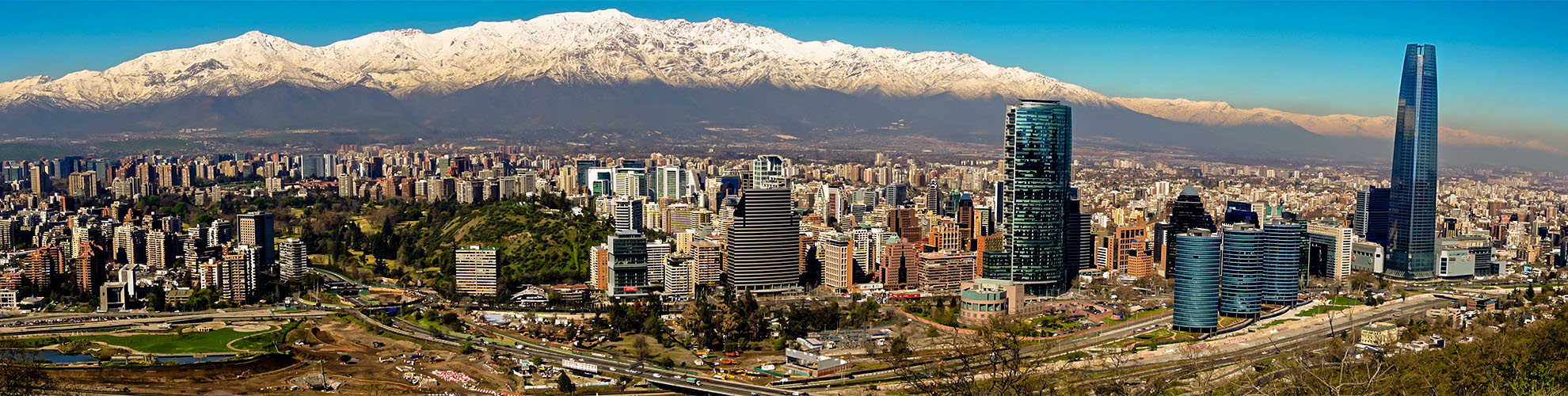
Santiago has Chile’s deepest private medical network, the largest cultural calendar, international schools, major shopping and the country’s principal airport. Retirees often explore Providencia, Las Condes, Vitacura, Ñuñoa and parts of La Reina because of services, parks and transit.
The city’s scale is both strength and weakness. Traffic is heavy, premium neighborhoods cost more, and winter air pollution can affect respiratory conditions. Choose a home near the clinic, metro line and daily services you will actually use. Crossing the city for routine care quickly becomes exhausting.
High-rise buildings should be evaluated for earthquake standards, elevators, emergency water, backup power, condominium finances and evacuation procedures. A spectacular view is not more important than building management.
Viña del Mar and Concón: Coastal Living Near Santiago
Viña del Mar offers beaches, apartments, restaurants, hospitals and a gentler pace than Santiago. Concón adds coastal scenery and newer developments. The area attracts retirees who want ocean views without becoming isolated from the capital.
Coastal fog, cool water, summer crowds and earthquake or tsunami exposure require realistic planning. Study evacuation maps before choosing a waterfront property. Salt air raises exterior maintenance costs, and steep hills can limit walkability.
Nearby Valparaíso is culturally fascinating, but its hills, aging buildings and variable security make block-by-block research essential. Visit at night and in winter, not only during a sunny festival weekend.
La Serena and Coquimbo: Sunshine and a Drier Coastal Climate
La Serena offers beaches, colonial character, a dry climate and access to the Elqui Valley. Coquimbo forms part of the same metropolitan area and expands housing and services. The region appeals to retirees who dislike heavy rain.
Healthcare depth is more limited than Santiago, so investigate specialist availability. Summer tourism changes traffic and rents. Coastal tsunami zones, water scarcity and earthquake resilience should be part of property due diligence.
Valdivia: Rivers, Green Landscapes and University Culture
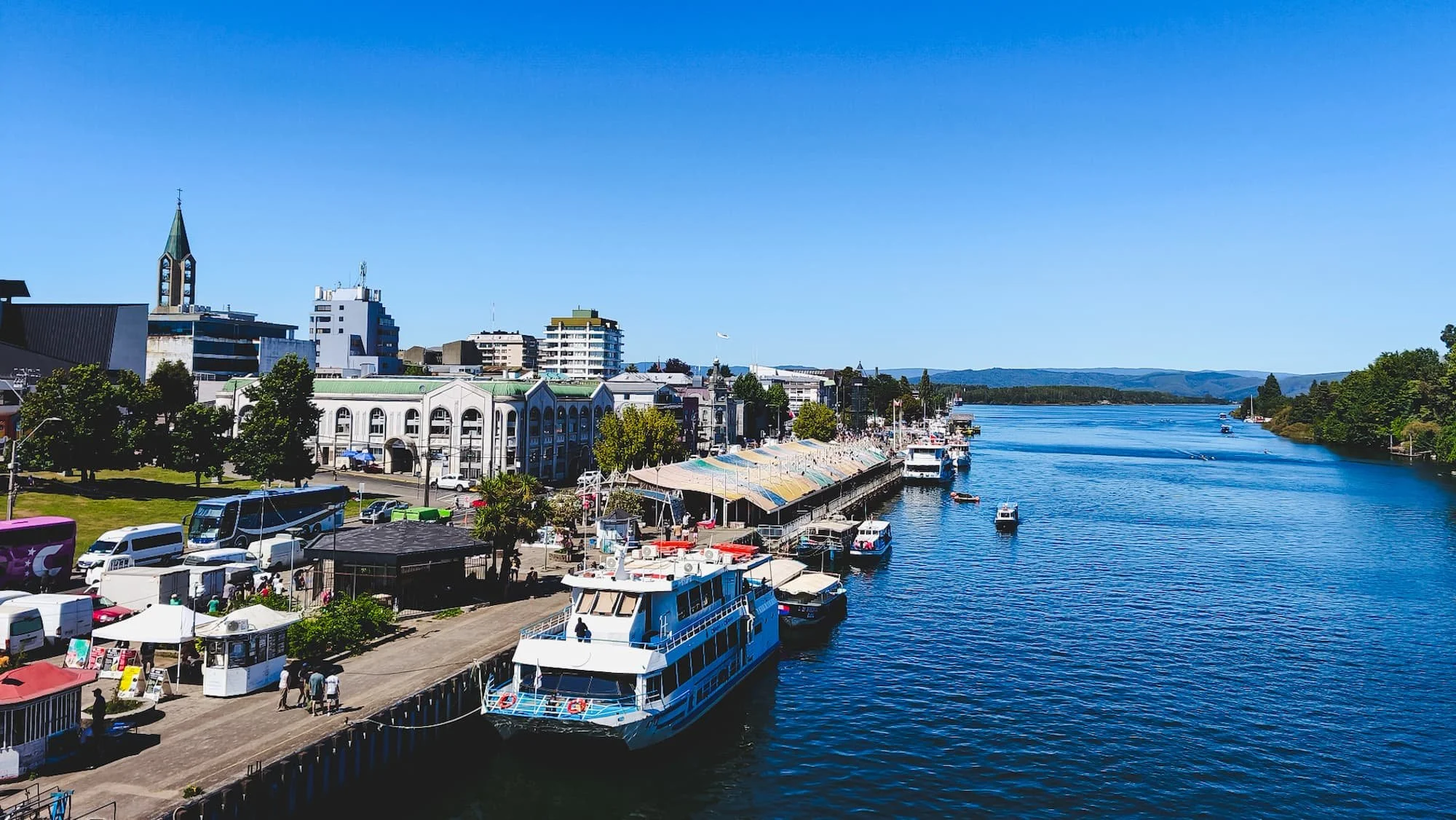
Valdivia is known for rivers, craft beer, markets, university energy and a lush southern setting. It has a manageable scale and strong local identity. Retirees who value greenery, cultural events and cooler summers may prefer it to the central coast.
Rain and humidity are major lifestyle factors. Inspect homes for insulation, heating cost, condensation and mold. Specialized medicine may require travel, so assess your health needs honestly before committing.
Puerto Varas and the Lakes Region: Scenery and Outdoor Life
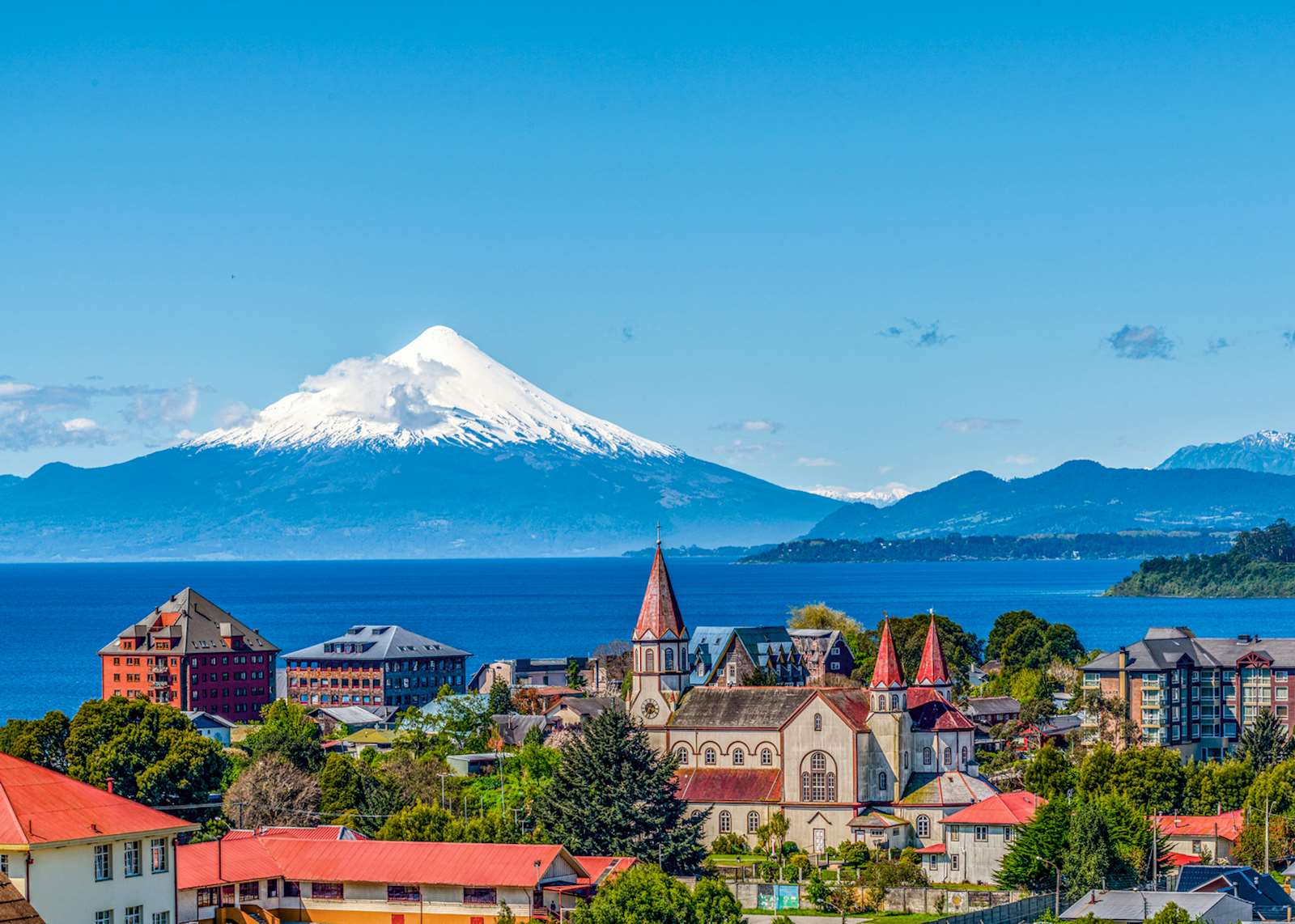
Puerto Varas sits beside Lake Llanquihue with views of Osorno Volcano. It offers restaurants, outdoor activities and access to Puerto Montt’s airport and services. The natural setting is one of the most attractive retirement environments in South America.
Popularity has increased housing costs. Winters are wet, houses need effective heating, and a car can be useful. Verify road access, drainage, internet, volcanic-risk maps and the drive to emergency care. Smaller nearby towns may be charming but less practical for aging in place.
Concepción: Regional Healthcare and a Practical Southern City
Concepción is a major university and commercial center with hospitals, an airport and access to the coast. It can offer better value than elite areas of Santiago while retaining big-city services.
The metropolitan area is spread across several municipalities, making neighborhood and transport choices important. Rain, earthquakes and industrial areas should be considered. It is more practical than picturesque, which can be a strength for full-time living.
Chillán and Central-Southern Wine Country
Chillán and nearby towns appeal to retirees who want agricultural markets, wineries, thermal areas and lower-density living. Housing may offer more space than the capital or premium coast.
The tradeoff is a smaller English-speaking community and fewer highly specialized services. Summer heat, winter heating and travel to larger medical centers deserve attention.
Healthcare in Chile: FONASA, ISAPRE and Private Care
Chile has a mixed healthcare system. FONASA is the public insurer; ISAPREs are private health-insurance institutions. Care is delivered through public and private networks, and access depends on enrollment, plan rules, contributions and provider agreements.
Foreign residents and some applicants with residence in process may be able to join FONASA when they meet the documentation and contribution rules. The Superintendencia de Salud lists documents that can include a passport, residence application and pension information. Eligibility should be confirmed for the individual case.
Private ISAPRE plans can offer access to preferred clinics, but older age, health declarations, plan networks, indexed prices and copayments matter. International insurance is another option, particularly during transition or for retirees who travel frequently.
Obtain written comparisons showing monthly premium, deductible, copayment, annual limits, emergency rules, prescription benefits, exclusions and the exact hospital network. Ask whether the plan is priced in UF and how increases work.
Medical Planning for Older Retirees
Choose housing by medical access before choosing it by view. Map the closest emergency department, preferred clinic, pharmacy, laboratory and rehabilitation provider. Confirm oncology, cardiology, dental, ophthalmology and home-care capacity if those services may matter.
Carry a Spanish medical summary with diagnoses, surgeries, allergies, medications and emergency contacts. Bring essential records, but do not travel with irreplaceable originals. Verify drugs by generic name and understand that prescriptions and brand availability differ.
Chile’s explicit health guarantees, known as GES, cover defined conditions for eligible FONASA and ISAPRE beneficiaries under specific pathways. Do not assume automatic coverage; learn how activation, designated providers and copayments work.
Renting a Home in Chile
Rent before buying for at least six to twelve months. Landlords commonly request proof of income, Chilean identity or tax numbers, deposits and sometimes a guarantor. New arrivals may negotiate prepaid rent or use a relocation service, but every payment should be documented.
Ask whether rent is in pesos or UF, what the gastos comunes include, how utilities are billed and who pays repairs. In apartment buildings, review noise, elevators, security, parking, storage, heating, water pressure and emergency systems.
In southern Chile, insulation and moisture control are crucial. On the coast, corrosion and tsunami zones matter. In Santiago, sun exposure, air-conditioning and winter pollution influence comfort. Visit the property morning, evening and after rain.
Buying Property in Chile as a Foreigner
Foreigners can generally buy Chilean urban real estate, but border, coastal, agricultural or strategically sensitive property can involve special rules. Property ownership does not itself create immigration residence.
Independent legal due diligence should review title history, liens, prohibitions, unpaid taxes, condominium debts, permits, boundaries, utilities and seller authority. The Conservador de Bienes Raíces maintains the property registration system, and notarial documents are part of the process.
Obtain a tax identifier suitable for the transaction and establish a lawful source-of-funds trail before transferring money. Understand the promesa de compraventa, closing conditions, penalties, broker commission, legal fees and registration timing. Never rely only on the seller’s agent.
Before buying near the ocean, study tsunami evacuation maps. Before buying in a hillside or forested area, review wildfire and landslide exposure. Before buying in the south, inspect drainage, septic systems, heating and access during winter.
Banking, Money Transfers and the UF
Opening a full Chilean bank account is often easier after receiving residence documentation and an identity card. Banks may request proof of address, income, tax status and source of funds. Policies vary, and some newcomers begin with limited digital products before qualifying for broader services.
Chile uses the peso for daily payments, but mortgages, rents, insurance and contracts may refer to the UF, an inflation-indexed unit whose peso value changes daily. Learn to convert UF before comparing long-term costs.
Keep at least two overseas cards, an emergency account outside Chile and multiple ways to transfer money. Ask the receiving bank what documentation is required before sending a property-sized transfer. Tax returns, pension letters, sale records and bank statements may be necessary.
Safety, Crime and Demonstrations
Chile has long been considered comparatively safe, but property crime, phone theft, vehicle theft and robbery are real concerns, particularly in crowded urban and tourist areas. Conditions can change, and retirees should review current local information rather than rely on an old reputation.
Use a low-profile phone, keep bags away from café chair backs, avoid leaving items in vehicles and use reputable transportation at night. In Santiago and Valparaíso, block-by-block differences matter. Secure buildings reduce some risks but do not replace situational awareness.
Demonstrations can disrupt central Santiago and other cities. Avoid confrontations and monitor local news. U.S. citizens can enroll in the Smart Traveler Enrollment Program and should save embassy contacts.
Earthquakes, Tsunamis, Wildfires and Emergency Preparation
Chile is one of the world’s most seismically active countries. Modern construction standards and public preparedness are strengths, but retirees still need a personal plan. Ask how a building performed in prior earthquakes, where utilities shut off and whether elevators have backup procedures.
Coastal residents must know tsunami evacuation routes. SENAPRED advises immediate evacuation toward safe ground when strong shaking makes it difficult to remain standing in a tsunami evacuation area. Do not wait for a phone alert when natural warning signs are present.
Keep water, shelf-stable food, medications, flashlight, radio, battery packs, cash, copies of documents, sturdy shoes and pet supplies. Southern and central communities may also face wildfires, floods, landslides, volcanic activity or winter storms. Use official hazard maps before signing a lease.
Spanish, Chilean Culture and Building a Social Life
Daily independence requires Spanish. Chilean Spanish uses rapid speech, shortened sounds and local vocabulary, so even people who studied elsewhere may need an adjustment period. Begin before moving and take in-person classes after arrival.
Join neighborhood organizations, hiking groups, churches, volunteer programs, cooking classes, wine clubs or university extension courses. Expat groups solve arrival problems, but local relationships create long-term belonging.
Chileans often value privacy and personal space. Friendships may take time but become meaningful. Learn local etiquette, national holidays and emergency terminology rather than expecting everyone to adapt to English.
Transportation, Driving and Domestic Flights
Santiago’s Metro is useful and extensive, and the RED bus system fills many gaps. Regional cities rely more on buses, colectivos, ride-hailing and cars. A walkable neighborhood can reduce costs and preserve independence as you age.
Foreign-license validity and conversion rules depend on status and agreements. Confirm requirements with the relevant municipal or transport authority. Chile has modern toll highways, often using electronic tags; rental and private vehicles can generate toll charges.
Domestic flights connect the long country, but retirees outside Santiago should study schedule frequency and winter disruptions. A city with an airport is not necessarily a city with convenient nonstop access to every medical destination.
Pets, Household Goods and Electrical Standards
Chile’s agricultural authority, SAG, controls pet entry. Requirements depend on species and origin and usually involve health and vaccination documentation. Confirm the exact certificate format and timing before travel.
Household-goods imports depend on residence status, item type and customs rules. Obtain written guidance from an experienced mover before shipping. Replacing furniture locally may be cheaper than paying freight, storage and clearance fees.
Chile uses 220-volt, 50-Hz electricity. U.S. appliances designed only for 110 volts can be damaged. Check labels before packing, and bring proper plug adapters only for dual-voltage devices.
Estate Planning, Inheritance and Family Law
Chilean succession law includes protected heirs and may affect local assets regardless of what a U.S. will says. Marriage regimes can influence ownership. Property purchases should be coordinated with an estate plan rather than treated as isolated transactions.
Ask Chilean and U.S. counsel how wills, beneficiary designations, trusts, probate, gifts and inheritance taxes interact. Decide who can act under local powers of attorney if illness prevents you from managing banking, healthcare or property.
Aging in Place and Long-Term Support
A retirement destination should still work ten years later. Evaluate elevators, stairs, sidewalks, public transportation, grocery delivery, home nursing, rehabilitation, assisted living and proximity to family or an international airport.
Chile has private residences and home-care services, but standards, staffing and costs vary. Visit facilities before they are urgently needed. Include a plan for cognitive decline, medical decision-making and emergency travel to the United States.
A Detailed 12-Month Moving Plan
| Timing | Key actions |
|---|---|
| 9–12 months | Define climate, medical and airport priorities; begin Spanish; model Chilean and U.S. taxes; review the treaty. |
| 6–9 months | Scout at least two regions; visit clinics; compare winter conditions; confirm the correct residence subcategory. |
| 3–6 months | Order civil and police records; obtain apostilles; assemble pension evidence; request written health quotes. |
| 1–3 months | Submit the residence application from abroad as instructed; prepare translations; arrange temporary housing and medication. |
| Arrival month | Follow permit activation rules; document entry; obtain local phone; begin identity-card and RUN/RUT steps. |
| First 90 days | Complete required registrations; choose FONASA, ISAPRE or international coverage; establish banking and accounting support. |
| Months 4–12 | Track tax status; file required returns; test the city through winter or peak season; delay buying until fully informed. |
Common Mistakes Retirees Make in Chile
The biggest mistake is treating Chile as one climate and one cost level. Other common errors include applying from the wrong location, missing document validity windows, confusing immigration with tax residence, ignoring the UF, buying before experiencing winter, choosing a coastal home without an evacuation plan and assuming Medicare works abroad.
Retirees also underestimate fast Chilean Spanish, condominium costs and winter heating. The safer sequence is tax modeling, scouting, temporary residence application, short-term housing, identity documents, healthcare setup and only then a long lease or property purchase.
Frequently Asked Questions About Retiring in Chile
Can an American retire in Chile?
Yes. Americans can apply under an appropriate temporary-residence subcategory, including routes for retirees or people with recurring income, subject to current requirements.
Is there a minimum pension amount?
Authorities evaluate sufficient and regular support, but applicants should verify the current documentary and income standard directly with SERMIG rather than rely on an old fixed dollar figure.
Must I apply from outside Chile?
Temporary-residence applications are generally submitted from outside Chile unless a stated exception applies.
Does Chile tax foreign pension income immediately?
Foreign individuals who establish residence or domicile generally receive a three-year period in which only Chilean-source income is taxed, but individual facts, filings and treaty rules matter.
Do the United States and Chile have a tax treaty?
Yes. The comprehensive income-tax treaty entered into force on December 19, 2023.
Can I receive U.S. Social Security in Chile?
Many beneficiaries can. The U.S.–Chile Social Security agreement coordinates coverage and benefits, but use SSA’s payments-abroad tool for your case.
Can foreigners buy property?
Foreigners can generally buy urban property, while sensitive border, coastal or other categories may require additional review. Ownership does not grant residence.
Can retirees join FONASA?
Some foreign residents and qualifying applicants with residence in process can enroll when documentation and contribution requirements are met. Confirm your circumstances with FONASA.
Is private healthcare good?
Chile has high-quality private clinics, particularly in Santiago and major regional cities. Coverage depends on plan networks, copayments and eligibility.
Is Chile safe for retirees?
Many areas support a comfortable lifestyle, but theft and robbery occur. Neighborhood selection and ordinary precautions remain essential.
How serious are earthquakes?
Earthquakes are a normal planning concern. Chile has strong building practices, but every household should have supplies, evacuation knowledge and a family plan.
Which city is best without a car?
Central Santiago and selected neighborhoods of Viña del Mar can work well without a car. Walkability varies sharply by hills, transit access and exact address.
Is Chile the Right Retirement Destination for You?
Chile offers an unusual combination of functioning infrastructure, modern cities, excellent private medicine, wine country, coastline and some of the world’s most dramatic landscapes. It can suit retirees who want Latin American culture with a comparatively structured environment.
It is not a bargain-basement destination, and natural hazards are part of life. The best candidate learns Spanish, plans taxes early, chooses healthcare before housing and treats seismic preparation as normal household management.
Spend time in at least two regions, rent through the least attractive season and calculate a budget with healthcare, heating and travel included. If Chile still feels right after that test, it can provide a secure, beautiful and deeply rewarding next chapter.
Official Resources and Further Reading
- Chile National Migration Service: temporary residence
- Servicio de Impuestos Internos
- U.S. Treasury: U.S.–Chile income-tax treaty
- U.S.–Chile Social Security agreement
- Chile Superintendencia de Salud
- SENAPRED emergency preparedness and hazard maps
- U.S. Embassy in Chile