Bolivia can offer a culturally rich, affordable and deeply individual retirement—but it asks more preparation than mainstream expat destinations. This guide connects the legal, medical, financial and location decisions so you can judge the country realistically.
Bolivia Retirement at a Glance
| Question | Planning answer |
|---|---|
| Currency | Boliviano (BOB); exchange availability and transfer conditions should be checked before moving money. |
| Language | Spanish is essential. Quechua, Aymara, Guaraní and other Indigenous languages are important regionally. |
| Residence | Bolivia uses temporary and permanent residence categories tied to a documented purpose and lawful means; verify the correct route with Migración. |
| Healthcare | Public and private systems exist; international retirees often favor private care in Santa Cruz, La Paz or Cochabamba. |
| Property | Foreign ownership is generally possible, but constitutional restrictions apply within 50 kilometers of international borders. |
| Best first step | Complete a slow medical and lifestyle trial in two cities at different elevations before pursuing a long lease or purchase. |
Why Retire in Bolivia?
Bolivia is one of South America's most distinctive retirement possibilities. It offers historic cities, Andean landscapes, low-cost local food, strong Indigenous traditions and a pace of life that can feel far removed from mass-market retirement destinations. The tradeoff is equally clear: administrative systems can be slow, specialist healthcare is concentrated, roadblocks can interrupt travel, and the country's geography places several appealing cities at medically significant elevations.
The best reasons to consider Bolivia are value, cultural depth, mild highland climates, fresh markets and the chance to build a genuinely local life. The strongest reasons to pause are health, altitude, infrastructure variability, language, political disruption and financial-system friction. Bolivia generally suits self-reliant retirees who enjoy learning how a place works more than retirees seeking turnkey convenience.
Retirement here is a city-by-city decision. Santa Cruz is tropical and commercially dynamic; Cochabamba has a springlike valley climate; Sucre offers colonial beauty and a smaller scale; Tarija is relaxed and wine-oriented; La Paz has the deepest administrative and cultural resources but sits at extreme altitude. The right choice depends more on lungs, mobility and medical needs than on photographs.
Reasons Bolivia appeals
- Lower local costs than many retirement destinations
- Exceptional Indigenous and colonial cultural heritage
- Several climates within one country
- Fresh produce, markets and traditional food
- Smaller cities with a slower daily rhythm
Challenges to plan around
- Very high elevation in major Andean cities
- Specialist care concentrated in urban centers
- Spanish is essential for independent living
- Roadblocks and demonstrations can halt travel
- Banking, currency and import friction
Bolivia can be inexpensive when a retiree lives locally. Costs rise when the household depends on imported medicine, private drivers, international insurance, frequent flights or goods priced through scarce foreign currency. A responsible budget therefore combines ordinary monthly costs with a large contingency reserve.
Geography, Climate and the Altitude Question
Bolivia spans the Altiplano, Andean valleys, dry southern regions, Amazonian lowlands and tropical eastern plains. Elevation varies from a few hundred meters around Santa Cruz to more than 3,600 meters in La Paz and roughly 4,000 meters in El Alto. That difference changes temperature, oxygen, ultraviolet exposure, exercise tolerance and medical suitability.
Cochabamba sits in a high valley at roughly 2,550 meters and is known for warm days and cooler nights. Sucre is near 2,800 meters. Tarija is lower, around 1,850 meters, with a generally milder climate. Santa Cruz is low, hot and humid, with seasonal smoke, mosquitoes and heavy rain. La Paz is cool, steep and exceptionally high.
Do not treat altitude as something everyone simply adapts to. It can worsen heart, lung and sleep disorders and complicate recovery from illness. Visit slowly, avoid immediate exertion and obtain medical advice before choosing a high city. A retiree who loves La Paz may still be healthier living lower and visiting occasionally.
Culture, History and Everyday Respect
Bolivia is a plurinational state with deep Aymara, Quechua, Guaraní and other Indigenous identities. Pre-Columbian civilizations, the Inca world, Spanish rule, mining history, independence movements and modern social struggles all shape public life. Retirees should approach clothing, ceremonies, markets and rural communities as living culture rather than tourist scenery.
Daily life rewards courtesy and patience. Greet people before asking a question, use formal Spanish until invited otherwise and expect important matters to be handled through relationships as well as paperwork. Time can be flexible socially, but government appointments and immigration deadlines are not.
Food varies strongly by region: salteñas, soups, anticuchos, silpancho, pique macho, saice, fresh valley produce, quinoa and Andean potatoes are common highlights. Markets offer value and community contact. Food and water hygiene, however, deserves extra attention for older adults or anyone with a weakened immune system.
Bolivia Residency Options for Retirees
Bolivia should not be marketed as having one automatic retirement visa that fits every pensioner. The immigration system provides temporary residence based on a defined purpose and supporting evidence, followed by longer-term options for people who satisfy the applicable requirements. A retiree may need to document economic solvency, lawful recurring income, address, identity and a clean record.
The correct path depends on nationality, intended activities, family ties, income type and whether the applicant expects to work or invest. A pension letter may be useful evidence, but it does not by itself establish which category or duration will be approved. Confirm the current category name, application location, fees, timetable and work permissions with the Dirección General de Migración before ordering documents.
Tourist status is not a long-term retirement plan. Overstays, informal border practices or contradictory explanations of purpose can create later problems. Enter lawfully, preserve the entry record and begin the correct procedure with enough time for delays.
Documents, Legalization and Foreigner Identification
A residence application can require a passport, entry record, local address, photographs, police or criminal-history certificates, evidence of solvency or recurring income, and civil-status documents for dependents. Bolivian authorities may also require locally obtained records or registrations. Exact lists vary by category.
Foreign public documents may require an apostille or consular legalization and an authorized Spanish translation. Order time-sensitive certificates only after mapping the application sequence. Check that names, middle names, dates and passport numbers match on every page.
After approval, residents normally complete identification and registration steps used for banking, contracts, taxes and healthcare. Keep digital and paper copies of every resolution, receipt and appointment record. Do not surrender the only original of an irreplaceable foreign document without receiving an official acknowledgment.
Temporary Residence, Permanent Residence and Absence Planning
Long-term residence commonly develops in stages rather than through immediate permanent status. The required time, permitted absences and proof of continuing ties must be confirmed for the specific category. Permanent residence is not automatic simply because someone owns a home or has stayed for several years.
Track every border crossing. Extended absences can affect residence continuity even when a permit card has not expired. Before a long trip, ask Migración whether authorization, reporting or a different document is needed.
Renew early. Bolivian holiday schedules, roadblocks, document corrections and appointment backlogs can turn a comfortable deadline into an overstay risk. Use a calendar with reminders at six months, three months and one month before expiry.
Bolivian Taxes and the Source-of-Income System
Bolivian taxation has traditionally emphasized Bolivian-source income, but that headline is not enough for retirement planning. Whether a pension, remote consulting payment, rental, dividend, interest receipt or capital gain is taxable depends on the income's legal source, the taxpayer's activities, applicable entity structures and current interpretation.
Do not assume that residence automatically means worldwide taxation, or that a foreign bank deposit is automatically exempt. A service performed while physically in Bolivia may raise different questions from a passive pension paid for prior work abroad. Local rental income and business activity can create registration, invoicing and filing duties.
Before moving, obtain a written analysis from a Bolivian tax professional who understands individuals with foreign assets. Ask about the National Tax Service, municipal property and vehicle taxes, VAT embedded in spending, transaction taxes, withholding, account reporting and the treatment of currency conversions.
U.S. Tax, Social Security and Medicare
U.S. citizens and green-card holders generally continue filing U.S. federal tax returns abroad. Foreign accounts may trigger FBAR and Form 8938 reporting. Foreign companies, trusts and certain pooled investments can create unusually complex U.S. forms and penalties.
Bolivia is not currently listed among the countries with a U.S. Social Security totalization agreement. A retiree who continues consulting or self-employment should get advice about coverage and contributions rather than assuming the systems coordinate. Many Social Security beneficiaries can receive payments abroad, subject to nationality and program-specific rules.
Original Medicare generally does not cover routine treatment in Bolivia. Some retirees keep Medicare for future U.S. care while purchasing local or international coverage. That choice should include the cost of last-minute travel, a temporary U.S. residence and care during the waiting period.
Cost of Living and Retirement Budget
Bolivia can provide strong value, especially for locally produced food, domestic help and housing outside premium districts. The budget becomes less predictable when it depends on imported pharmaceuticals, electronics, foreign-currency transfers or international evacuation.
| Monthly category | Planning range (USD) | Main variables |
|---|---|---|
| Rent | $350–$1,200+ | City, district, furnishing, security, elevator and building age |
| Utilities and internet | $70–$220 | Heating, cooling, gas supply, water storage and backup power |
| Food and dining | $250–$650 | Local markets versus imported foods and restaurant habits |
| Healthcare | $120–$900+ | Age, history, exclusions, deductible and evacuation benefits |
| Transport | $60–$450 | Walkability, taxis, private vehicle, domestic flights and fuel availability |
| Contingency | $300–$1,000 | Currency access, travel changes, medical transfers and imported needs |
These are broad planning bands, not price quotes. Collect current rental listings, insurance proposals and clinic fees for the exact city. Keep reserves in more than one institution and currency, with a lawful transfer trail.
Best Places to Retire in Bolivia
Cochabamba: balanced climate and practical city life
Cochabamba is often the most balanced starting point for retirees. It has a broad valley climate, good markets, restaurants, private medical options and domestic flight connections. The city is still high enough to affect some people, and traffic, air quality and water reliability vary by district.
Sucre: beauty, walkability and a smaller scale
Sucre's white historic center, university culture and relaxed pace make it one of Bolivia's most attractive retirement bases. It is calmer than La Paz or Santa Cruz and can be walkable in selected areas. Cobblestones, hills and an elevation near 2,800 meters affect mobility, while complex medical cases may require transfer.
Tarija: wine country and a gentler elevation
Tarija combines a pleasant scale, regional food, vineyards and a lower elevation than the major Altiplano cities. It appeals to retirees who value calm over international amenities. Flights, specialist healthcare and imported goods are more limited, so it needs a strong contingency plan.
Santa Cruz de la Sierra: low altitude and private services
Santa Cruz is Bolivia's commercial powerhouse and a logical option for retirees who cannot tolerate high altitude. It offers private clinics, shopping and a major airport. Heat, humidity, mosquitoes, flooding, traffic and seasonal smoke can be difficult. Reliable cooling and neighborhood drainage matter.
La Paz: culture and services at extreme altitude
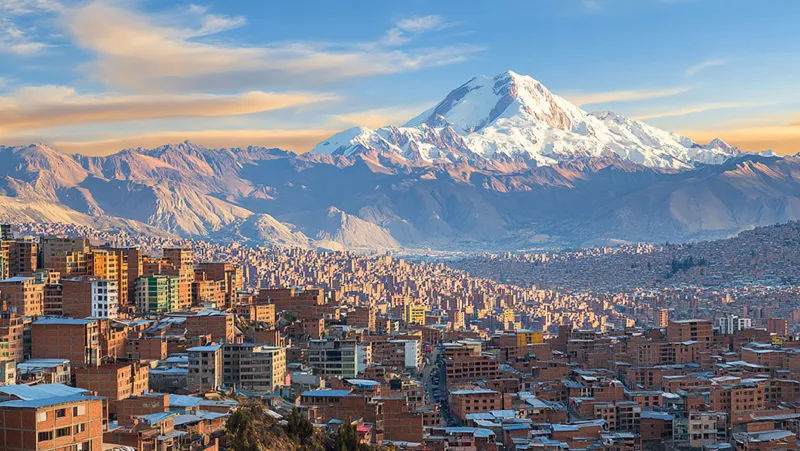
La Paz has government offices, museums, restaurants, established private hospitals and the Mi Teleférico network. Its geography is spectacular but physically demanding. The steep terrain, cool climate and altitude above 3,600 meters rule it out for some retirees. Lower neighborhoods are still high, although they may feel milder.
Smaller towns and rural life
Lake Titicaca communities, Samaipata and smaller valley towns attract people seeking nature and community. They offer fewer specialists, pharmacies, flights and emergency resources. A rural property should be evaluated for road access, water rights, title, internet, fire exposure and evacuation time.
Bolivia City Comparison
| City | Approx. elevation | Strongest fit | Main caution |
|---|---|---|---|
| Santa Cruz | 400 m | Low altitude, private services, airport | Heat, humidity, smoke and flooding |
| Tarija | 1,850 m | Quiet lifestyle, wine region, gentler climate | Fewer specialists and flights |
| Cochabamba | 2,550 m | Climate, food, central location | Air quality, water and moderate altitude |
| Sucre | 2,800 m | Historic beauty and smaller-city pace | Hills, cobblestones and limited complex care |
| La Paz | 3,600+ m | Culture, administration and major hospitals | Extreme altitude and steep terrain |
Elevation figures are approximate and vary by neighborhood. Medical suitability matters more than a city's popularity. A slow trial at the intended address is the best test.
Healthcare, Insurance and Medical Evacuation
Bolivia has public, social-security and private healthcare sectors. The public system has expanded through the Sistema Único de Salud, but eligibility, documentation, referrals, availability and facility resources require current local confirmation. Foreign retirees often use private clinics for faster access and continuity.
The strongest selection of private specialists is generally found in Santa Cruz, La Paz and Cochabamba. Sucre and Tarija have useful services, but advanced oncology, neurosurgery, complex cardiac care or intensive rehabilitation may require transfer. Outside major cities, ambulance and diagnostic capacity can be limited.
Compare local and international insurance based on age, pre-existing conditions, provider network, annual maximum, renewal guarantee, deductible, medications and evacuation. Ask whether the insurer pays the clinic directly or reimburses after treatment. Some facilities may require a deposit before admission.
Build a two-level plan: the clinic that handles routine and urgent care, and the destination for treatment Bolivia cannot provide. Keep a Spanish medical summary, medication list, scans of important records and an emergency contact who can make decisions.
Altitude, Air Quality and Infectious-Disease Planning
Altitude illness can range from headache and sleep disruption to dangerous pulmonary or cerebral edema. Older travelers and people with heart, lung or blood conditions need individualized advice. Oxygen cans sold to tourists are not a substitute for diagnosis, descent or emergency treatment.
Highland ultraviolet exposure is intense. Use sun protection even in cool weather. Dry air can worsen dehydration, skin conditions and respiratory discomfort. La Paz and Cochabamba can also experience air-pollution episodes.
In lower tropical areas, dengue, yellow fever and other mosquito-borne risks require current guidance. Vaccination decisions for older adults should be made with a travel-medicine clinician because benefits and contraindications vary. Smoke from regional fires can affect Santa Cruz and other lowland areas.
Renting a Home
Rent for six to twelve months before buying. Ask whether rent is set in bolivianos or tied to dollars, how exchange rates are calculated, what building fees cover and who pays utilities, repairs and municipal charges. Use a written Spanish lease reviewed by an independent professional.
Inspect water storage, gas, wiring, hot water, internet, mobile signal, elevators, backup power and earthquake condition. Highland homes can be cold indoors despite sunny days because insulation and central heating are limited. Lowland homes need ventilation, mosquito screens, drainage and dependable air conditioning.
Visit at night and after rain. Measure the real walking route to groceries and clinics. In La Paz and Sucre, a short distance can include steep grades and steps that materially change accessibility.
Buying Property and Land Restrictions
Foreigners can generally purchase ordinary urban property, but Bolivia's Constitution restricts foreign ownership or possession of state land, water, subsoil and certain rights within 50 kilometers of the border, subject to constitutional terms. Border-area and rural purchases demand specialized legal advice before any deposit.
Independent counsel should investigate the Derechos Reales registry, title chain, liens, boundaries, municipal approvals, taxes, condominium debts, water rights and seller authority. Informal possession, family disputes and unregistered construction can make a seemingly simple purchase difficult.
Property ownership does not grant immigration residence. Coordinate title structure with Bolivian inheritance and marital-property law. Preserve bank records and source-of-funds evidence for every transfer.
Banking, Bolivianos and Currency Risk
Banking can require resident identification, proof of address, income evidence and tax declarations. Requirements vary by institution. Ask about account maintenance, transfer limits, foreign-card charges and the documentation needed to receive an international wire.
Bolivia has experienced periods when access to U.S. dollars, official exchange channels, fuel or imported goods became difficult. Conditions can change quickly. Never base a retirement plan on one exchange rate or one bank. Keep lawful reserves outside Bolivia, multiple cards and enough local cash for a short disruption.
Use regulated channels. Informal currency exchanges create counterfeit, robbery, legal and documentation risks. For a home purchase or other major transfer, obtain the receiving bank's instructions before sending funds.
Safety, Crime and Demonstrations
Most retiree routines can be managed with ordinary precautions, but theft, express kidnapping, fraudulent taxis, distraction schemes and robbery occur. Use trusted transport, avoid displaying devices or jewelry, and do not leave valuables visible in a car.
Political demonstrations, civic strikes and roadblocks are a central planning issue. They can close highways, interrupt airport access, delay fuel and restrict food or medicine deliveries. Avoid confrontations and never attempt to force a vehicle through a blockade.
Monitor local news and official advisories. Keep several weeks of essential medication, an adaptable flight plan and emergency cash. Enroll in your embassy's traveler-notification program where available.
Earthquakes, Floods, Landslides, Fires and Drought
Bolivia's hazards vary by region. Highland and valley cities can experience earthquakes, landslides, cold snaps and water shortages. Lowland regions can face severe rain, flooding, heat, smoke and wildfire. Mountain and rural roads are vulnerable to seasonal damage.
Before leasing or buying, ask how the property performed in the last major rain, drought or fire season. Check retaining walls, drainage, roof condition, water tanks, alternate access and nearby slopes or channels.
Maintain water, shelf-stable food, headlamps, radio, battery packs, copies of documents, medication and pet supplies. The practical goal is not disaster anxiety; it is the ability to remain safe when transport and shops close temporarily.
Transportation, Driving and Domestic Flights
Mi Teleférico makes parts of La Paz and El Alto unusually accessible, but hills and station connections still matter. Other cities rely on buses, micros, trufis, taxis and ride services. Accessibility and safety standards vary.
Driving requires patience and defensive habits. Confirm current license rules, insurance, vehicle registration and road conditions. Night driving outside cities carries added risk from lighting, animals, road damage and limited rescue capacity.
Domestic flights can save long road journeys, but weather, demonstrations and operational changes affect schedules. Retirees in smaller cities should allow generous connections for international flights or specialist appointments.
Language, Communications and Daily Independence
Spanish is not optional for long-term independence. Government offices, leases, pharmacy discussions, emergency services and household employment are primarily Spanish-language environments. Begin before moving and continue with local instruction.
Fiber internet and modern mobile service are available in many urban districts, but reliability must be tested at the exact address. Use two networks if remote access is important and keep offline copies of critical contacts.
Bolivia commonly uses 230-volt, 50-Hz electricity, while plug types can vary. Check the label on every imported appliance; a plug adapter does not convert voltage or frequency. Surge protection is sensible.
Pets and Household Goods
SENASAG controls animal entry. Requirements can include a veterinary certificate, rabies vaccination, parasite treatment and inspection within defined time windows. Airlines add their own crate, temperature and breed rules. Confirm the current Bolivian format before the veterinary appointment.
Household-goods imports depend on status, inventory and customs treatment. Obtain a written quote that separates freight, storage, broker and tax costs. Imported electronics may need voltage review and can be expensive to replace or repair.
Estate Planning, Inheritance and Incapacity
Bolivian succession and family-law rules can affect local real estate, accounts and marital property. A foreign will alone may not produce the intended result. Coordinate Bolivian and home-country counsel before buying or changing ownership.
Create valid powers for healthcare, banking and property management. Decide who can act during hospitalization, how they will access funds and whether foreign documents require apostille, translation or local notarization.
Aging in Place and Long-Term Support
Evaluate the home you may need ten years from now. Hills, high altitude, uneven sidewalks and buildings without elevators can become serious barriers. Prioritize level access, a walk-in shower, nearby pharmacy, food delivery and a reliable driver or taxi plan.
Home nursing, rehabilitation and assisted-living options vary. Visit providers before a crisis and verify licensing, staffing, medication management and hospital-transfer procedures. Build a financial and logistical plan for care abroad if local services no longer meet your needs.
A 12-Month Bolivia Retirement Plan
| Timing | Priority actions |
|---|---|
| 9–12 months | Review medical suitability for altitude; begin Spanish; model home-country and Bolivian tax exposure; shortlist two cities. |
| 6–9 months | Complete a slow scouting stay; visit clinics; test transport and internet; verify the current residence category. |
| 3–6 months | Order civil and police records in sequence; obtain apostilles; request insurance quotes; create currency and emergency plans. |
| 1–3 months | File as instructed; arrange temporary housing; prepare medication, pet and banking documentation. |
| First 90 days | Complete identification and registration; select clinics; establish phone, banking and local emergency contacts. |
| Months 4–12 | Experience the difficult season, track immigration deadlines, refine taxes and rent before considering a purchase. |
Common Mistakes Retirees Make in Bolivia
The largest mistakes are underestimating altitude, buying property before independent title review, assuming a generic retirement visa exists, relying on one bank or exchange channel and choosing a beautiful rural location without an emergency route.
Retirees also underestimate indoor cold in highland homes, smoke and humidity in the lowlands, Spanish requirements and the effect of roadblocks on flights or medical appointments. A staged move—health test, legal review, temporary residence, rental, healthcare setup and only then purchase—reduces most of these risks.
Frequently Asked Questions About Retiring in Bolivia
Can a U.S. citizen retire in Bolivia?
Yes, if the person qualifies for an appropriate Bolivian residence category and completes the required documentation. Bolivia does not have one automatic retirement visa that should be assumed to fit every pensioner.
Does Bolivia have a pensioner or rentista visa?
Recurring pension or investment income may help document economic solvency, but applicants must confirm the current temporary-residence category and evidence with Migración rather than relying on an old visa label.
Which Bolivian city is best for retirees?
Cochabamba often offers the broadest balance of climate and services. Sucre suits people seeking beauty and a smaller scale, Tarija offers calm and lower elevation, Santa Cruz suits those avoiding altitude, and La Paz works only for retirees who tolerate extreme elevation.
Is Bolivia inexpensive?
Local housing, food and services can be affordable, but private healthcare, imported medicine, international insurance, flights and foreign-currency friction can materially raise the budget.
Does Bolivia tax foreign retirement income?
Bolivia generally emphasizes source-based taxation, but the source and character of pensions, investments, consulting and other receipts require professional analysis. Do not assume every foreign payment is exempt.
Can foreigners buy property in Bolivia?
Foreigners can generally buy ordinary urban property, but constitutional restrictions affect certain assets within 50 kilometers of international borders. Rural and border-area purchases require specialized review.
Is healthcare good in Bolivia?
Private healthcare can be useful in major cities, but highly complex specialties and emergency capacity are uneven. International insurance and evacuation planning may be appropriate.
Is La Paz safe for older retirees?
Neighborhood and crime precautions matter, but the larger issue for many older adults is La Paz's extreme altitude, steep terrain and cold climate. Medical screening should come before a housing decision.
Can I receive U.S. Social Security in Bolivia?
Many beneficiaries can receive payments abroad, subject to SSA rules. Bolivia does not currently have a U.S. Social Security totalization agreement.
Does Medicare work in Bolivia?
Original Medicare generally does not cover routine care in Bolivia except in narrow circumstances. Retirees need separate local or international coverage.
Do I need Spanish?
Yes. Spanish is essential for contracts, immigration, medical care, emergencies and an independent social life.
Should I buy a home right away?
No. Rent through the difficult weather season, verify water and medical access, and obtain independent title and structural review before buying.
Official Resources
- Dirección General de Migración
- Servicio de Impuestos Nacionales
- Bolivia Ministry of Health and Sports
- SENASAG animal-entry information
- Bolivian Customs
- U.S. State Department: Bolivia information
- U.S. Embassy in Bolivia
Explore More Retirement Guides
Compare Bolivia's altitude, healthcare, residence options and costs with other South American retirement destinations:
Nearby country guides
Browse every destination
Use the main directory to explore every published and upcoming retirement guide.
Retirement Guides by CountryTags: Bolivia retirement, retire in Bolivia, moving to Bolivia, Bolivia expat guide, Bolivia residency, Cochabamba retirement, Sucre retirement, Bolivia healthcare, cost of living, retirement abroad